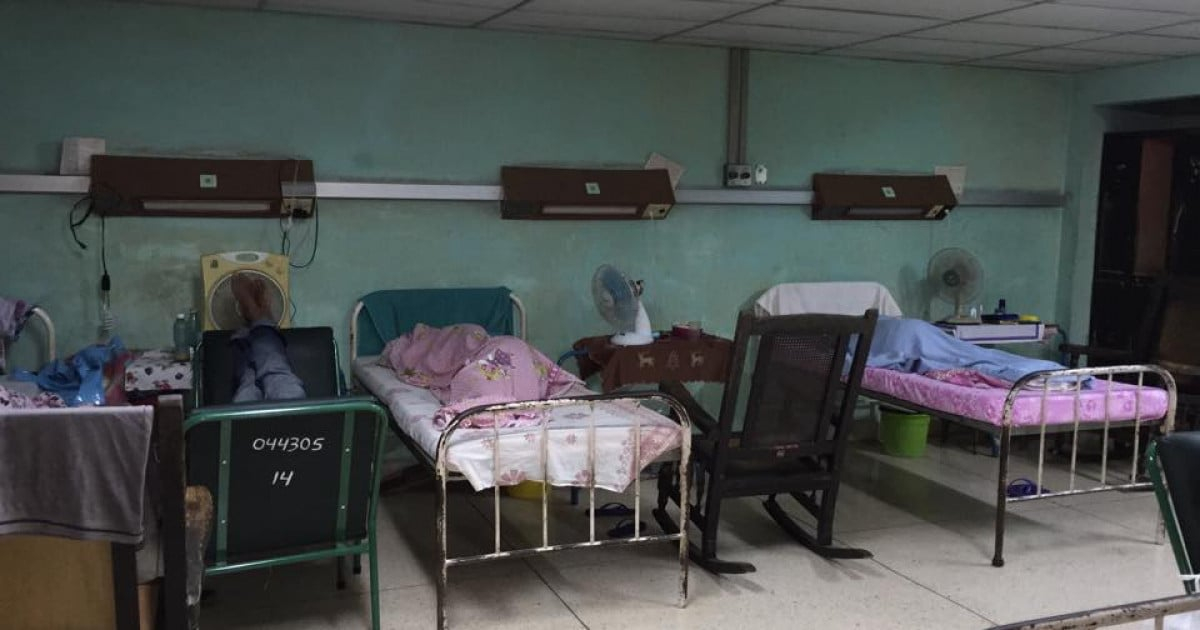
Dr. Alberto Tejeda Illas, a medical professional from Santiago de Cuba, has issued an open letter to Tedros Adhanom Ghebreyesus, the Director-General of the World Health Organization (WHO). In his letter, Tejeda highlights the harsh realities faced by patients and healthcare workers in Cuba, warning that during the director's visit, authorities will prevent him from truly understanding these conditions.
Shared on Facebook this Tuesday, the letter criticizes the orchestrated manner in which the international official's visit is being conducted, claiming it will be tightly controlled by Cuban authorities.
"There's news that you are visiting Cuba. Unfortunately, you will not genuinely experience the Cuban healthcare system," Tejeda begins.
He goes on to assert that the director will be given a curated tour, showcasing only well-stocked institutions without power outages, where staff are plentiful, and conversations are limited to those who echo approved narratives.
Overlooked Challenges in Cuban Healthcare
Dr. Tejeda lists several challenges that will likely be omitted from the WHO director's itinerary: small garbage dumps, waste accumulating for weeks, water leaks fostering infections, widespread hunger, long lines at pharmacies, and healthcare facilities in severe disrepair.
He also points out the harsh reality that patients must often purchase medications on the black market at inflated prices, while healthcare workers' salaries fail to keep pace with inflation.
Struggles Faced by Healthcare Professionals
Tejeda paints a vivid picture of professionals completing grueling shifts amidst deteriorating hospital conditions and even dealing with bed bug infestations, only to return home unsure of their next meal.
The doctor from Santiago further criticizes the restrictive migration policies imposed on healthcare professionals, a situation he himself has experienced and publicly condemned multiple times.
He challenges the notion that these crucial healthcare workers are so essential to the system that they must be "kept captive" to prevent them from emigrating or even traveling abroad for leisure.
The Impact of Sanctions and Controlled Narratives
Tejeda anticipates that during the visit, the international official will encounter pre-arranged opinions blaming the country's internal issues on the U.S. embargo.
Moreover, he warns that healthcare professionals are unlikely to express their true opinions to the WHO chief due to fear of repercussions for speaking critically.
"Fear still outweighs hunger, and it will remain this way until diplomacy becomes synonymous with democracy," Tejeda concludes.
Tejeda's Ongoing Advocacy Against Migration Restrictions
This is not the first time Dr. Tejeda has addressed a health authority through an open letter. On June 12, he wrote to José Ángel Portal Miranda, Cuba's Minister of Public Health, revealing that he had been denied a passport for three years despite having resigned from his job over a year and a half ago, with no ties to the Ministry of Public Health (MINSAP).
His revelation sparked outrage among regulated Cuban doctors, many of whom shared similar experiences and condemned the limitations on their freedom to move.
Days later, Tejeda documented that authorities removed the explicit explanation from the government platform Soberanía regarding why passport requests from specialist doctors were denied, replacing it with a generic message directing applicants to the Ministry of the Interior (MININT) offices.
These restrictions are based on Decree 306 of 2012, which conditions the exit of certain essential professionals on obtaining the necessary authorization.
As of January 2024, Prisoners Defenders had recorded 1,402 cases of Cuban healthcare professionals affected by migration restrictions.
WHO Director's Visit Amidst Cuba's Health Crisis
Tedros Adhanom Ghebreyesus arrived in Havana on Sunday for a three-day official visit, which includes tours of healthcare institutions and biotechnology research centers, as well as meetings with Cuban authorities.
On Monday, the international official stated that the organization is exploring ways to enhance its support for Cuba's healthcare system amid challenges posed by U.S. sanctions and shortages of fuel and electricity.
The visit occurs amid a severe health crisis. Last August, Miguel Díaz-Canel himself acknowledged that only 30% of essential medications from the national basic list were available, with over 98,500 people, including around 12,000 children, awaiting surgery.
On Monday, the WHO chief visited the William Soler Pediatric Hospital and Cardiocenter in Havana and met with Díaz-Canel, expressing a willingness to seek international resources to support Cuba's healthcare system.
Key Issues in Cuban Healthcare and WHO Visit
What are the main criticisms outlined by Dr. Alberto Tejeda regarding the WHO director's visit?
Dr. Tejeda criticizes the orchestrated nature of the visit, highlighting that the WHO director will only see a curated version of the healthcare system, avoiding the true conditions and challenges faced by patients and healthcare workers in Cuba.
How do patients acquire necessary medications in Cuba according to Dr. Tejeda?
Dr. Tejeda states that patients often resort to buying medications on the black market at inflated prices due to shortages in pharmacies.
What migration restrictions do Cuban healthcare professionals face?
Healthcare professionals face significant migration restrictions, being unable to emigrate or travel abroad without specific authorization, according to Decree 306 of 2012.