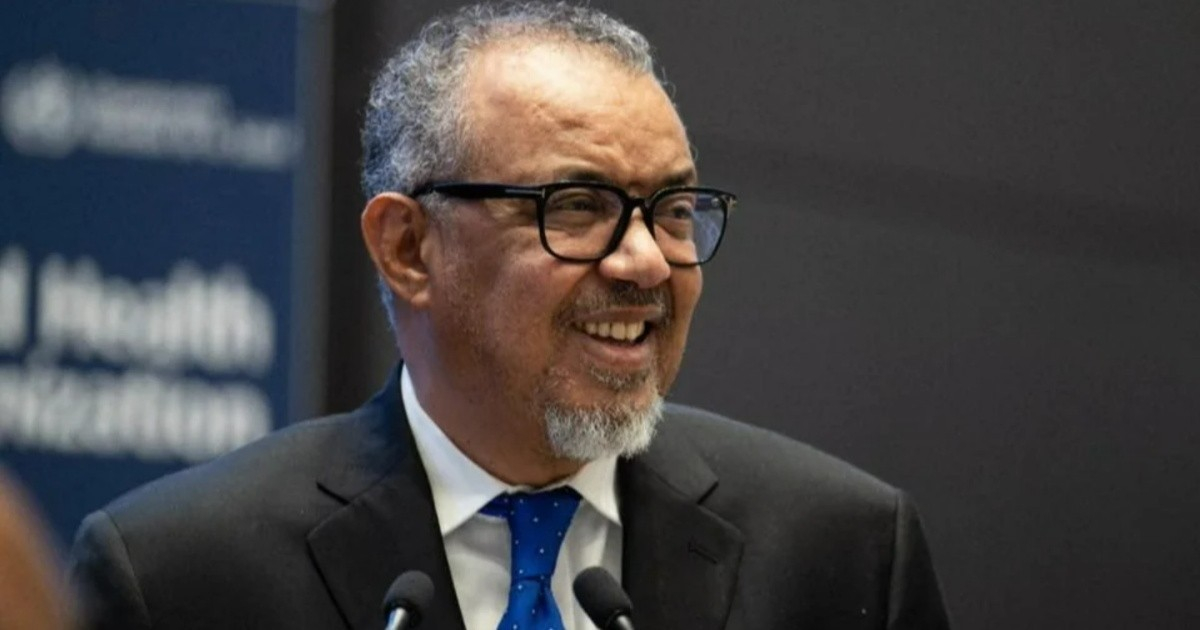
Tedros Adhanom Ghebreyesus, the Director-General of the World Health Organization, arrived in Cuba this Sunday for a three-day official visit. His itinerary includes tours of healthcare centers and biotechnology research facilities in Havana, along with meetings with officials from the Ministry of Public Health (MINSAP), according to state-run media reports.
The visit lacks a public schedule detailing specific hospitals or laboratories. MINSAP will choose the locations, effectively turning the tour into a showcase of the facilities the Cuban regime wishes to present to the United Nations official.
Previous Visits and Current Realities
This marks Tedros' second visit to the island in his current role; his first was in 2018 during the III International Health Convention in Cuba. His term at the helm of the multilateral organization extends until 2027.
The stark contrast between the official visit and the documented realities is striking. Leading up to Tedros' arrival, only 19 of the 26 dialysis machines at Havana's Institute of Nephrology were operational due to a lack of parts, and power outages forced shifts to extend into the early morning hours. The Milanés Polyclinic in Matanzas had been without electricity for weeks—disconnected from the grid after failing to operate a solar power system—and was unable to perform urgent tests.
Critical Infrastructure Failures
In early November, part of the front structure of the Banes Teaching Hospital in Holguín collapsed; the area had been closed off three months earlier due to the risk of collapse. On November 16, a fire in the electrical room of the perinatal unit at the Provincial Hospital of Cienfuegos necessitated the relocation of pregnant women and new mothers.
The Minister of Public Health, José Ángel Portal Miranda, admitted in early November that hospitals were dealing with broken generators, elevators, boilers, laundries, and water systems, acknowledging the "justified dissatisfaction" of the public.
Healthcare System Under Strain
A doctor who worked at Santa Clara's Arnaldo Milián Castro Hospital disclosed on Saturday that she was forbidden to diagnose hepatitis, leptospirosis, or dengue and endured shifts exceeding thirty consecutive hours. The Saturnino Lora Hospital in Santiago de Cuba announced an opening for 401 vacant positions, indicative of an unprecedented staff exodus: Cuba's medical workforce shrank from over 106,000 physicians in 2021 to slightly more than 75,000 in 2024, a loss of nearly 30,800 professionals in three years due to emigration and the abandonment of state medicine.
Tedros is not oblivious to this situation. In March, he described Cuba's healthcare scenario as "deeply concerning" and cautioned that "people's health cannot be left at the mercy of unstable electrical supply and geopolitics." Nevertheless, in his statement, he attributed the issues to external factors, omitting the regime's role in the crisis: the mass export of doctors as a revenue source—estimated between $6 billion and $8 billion annually by the U.S. Department of State—the management of the military conglomerate GAESA, or the suppression of critical voices within the healthcare sector.
The Cuban regime will likely use the visit as a propaganda tool amid heightened pressure from Washington.
Frequently Asked Questions about Cuba's Health Crisis
Why is the WHO Director visiting Cuba?
Tedros Adhanom Ghebreyesus is visiting Cuba to tour healthcare and biotechnology research facilities and meet with Cuban health authorities.
What issues are Cuban hospitals facing?
Cuban hospitals are experiencing equipment failures, power outages, and staff shortages, leading to extended shifts and difficulty in providing urgent care.
How has the Cuban medical workforce changed recently?
Cuba's medical workforce has declined by nearly 30,800 professionals over three years due to emigration and the abandonment of state medicine.