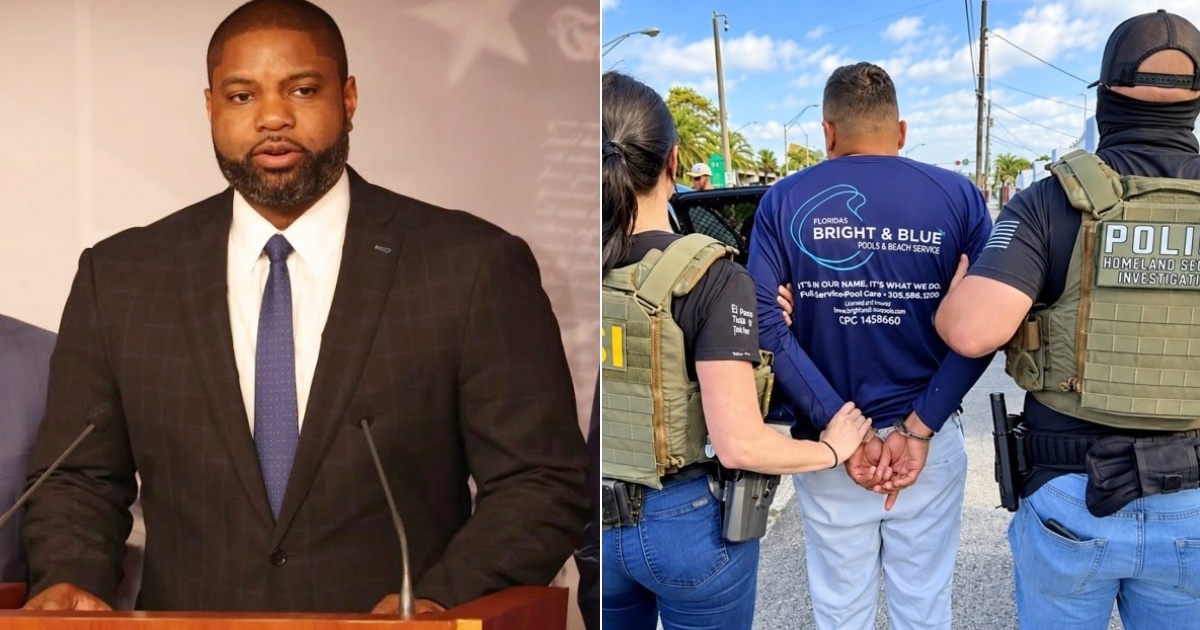
Florida's governor-elect, Byron Donalds, has issued a stark warning to cities within the state considering terminating their immigration cooperation agreements with the U.S. Immigration and Customs Enforcement (ICE). This reaction follows Tallahassee's decision to evaluate its participation in the federal 287(g) program.
"Florida will never become a sanctuary state under my watch. It's crucial for our cities to adhere to both federal and state laws—no exceptions," Donalds asserted on November 19 in response to a tweet by journalist Gary Fineout from Politico.
This statement from the Republican leader came after Tallahassee's City Commission unanimously voted to discuss the potential withdrawal from the 287(g) agreement in an upcoming meeting. Although this vote does not immediately end the collaboration with ICE, it sets the stage for further examination of the legal implications and procedural steps involved.
Donalds, who triumphed over Democrat David Jolly in the November 3 gubernatorial election, is set to take office in January 2027. His stance sharply contrasts with Jolly, who advocated for local authorities to decide on their involvement in the 287(g) program during his campaign.
Understanding the 287(g) Agreements
The 287(g) program, rooted in federal immigration law, empowers ICE to authorize certain state and local law enforcement officers to perform immigration enforcement functions. This is conducted under federal supervision, following specific training. The scope of responsibilities can vary, including identifying those subject to immigration processes, accessing federal information, and executing administrative immigration orders.
Under Governor Ron DeSantis's administration, Florida has prioritized collaboration between local law enforcement and federal authorities to enforce immigration laws.
The Tallahassee City Commission is now tasked with deciding whether to maintain their current agreement or proceed towards its termination, with no definitive date set for a decision at this time.
The Tallahassee Debate Reignites
Interim Mayor Jacqueline "Jack" Porter initiated the debate, expressing her readiness to move forward with exiting the 287(g) agreement, as reported by the Tallahassee Democrat and cited in Newsweek. Mayor Jeremy Matlow added that, in his view, state law did not mandate Tallahassee to enter into this agreement.
Commissioner Dianne Williams-Cox cautioned about potential penalties, stating, "While it may not have been required, there are consequences."
Police Chief Lawrence Revell noted that the department's involvement is minimal, with only one officer trained and granted access to the immigration control database.
This isn't Tallahassee's first encounter with this debate. In 2025, the commission narrowly voted to maintain the ICE agreement, but the recent unanimous vote suggests a willingness to revisit that decision.
Other Florida Cities Face Similar Controversies
In Doral, the City Council postponed its discussion on the ICE agreement, resulting in a 4-1 vote. Councilwoman Maureen Porras stood alone in opposing the delay, while activists voiced their disapproval.
Key West presents another case, where the city commission initially voted to end their 287(g) agreement in June 2025, only to reverse the decision days later following warnings about potential state-imposed penalties.
Legal Implications and Warnings from the Attorney General
Florida's Attorney General, James Uthmeier, supported Donalds's position, referencing a similar situation in Doral. Uthmeier emphasized that withdrawing from a 287(g) agreement could signal unlawful sanctuary policies and a lack of commitment to federal immigration enforcement.
The Attorney General's office communicated with Doral's Mayor Christi Fraga, stressing that ending a 287(g) agreement without valid reasons could constitute a sanctuary policy against Florida law.
State legislation does not mandate local governments to enter 287(g) agreements but prohibits policies that restrict cooperation with federal immigration authorities. Chapter 908 of the Florida Statutes governs this cooperation, allowing the governor to act against officials who fail to meet their legal duties, including suspension. The Attorney General can also seek court intervention to enforce compliance and challenge illegal sanctuary policies.
While the Attorney General's view highlights municipal obligations, canceling a 287(g) agreement alone does not automatically lead to a legal violation. Outcomes would depend on specific circumstances and applicable legal provisions.
FAQs on Florida's Immigration Cooperation Agreements
What is the 287(g) program?
The 287(g) program allows designated state and local law enforcement officers to enforce federal immigration laws under ICE supervision, after receiving specialized training.
Why are some Florida cities re-evaluating their ICE agreements?
Cities like Tallahassee are reconsidering their participation in ICE agreements due to concerns about the legal implications and potential penalties associated with withdrawal.
What could happen if a city cancels its 287(g) agreement?
Canceling a 287(g) agreement could result in legal challenges and penalties if deemed a sanctuary policy, as state law requires cooperation with federal immigration authorities.