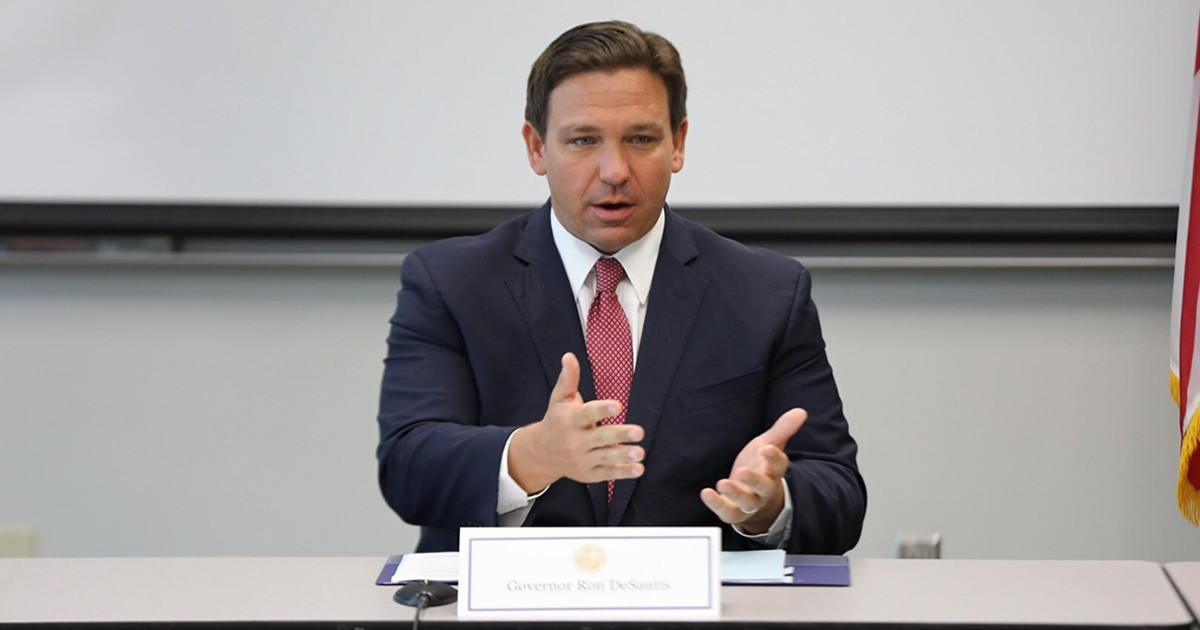
Ron DeSantis, the Governor of Florida, is pushing for a "Taxpayer Bill of Rights" to prevent local governments from introducing new fees, charges, or taxes to offset the revenue loss from Amendment 3.
This proposal follows warnings from state Chief Financial Officer, Blaise Ingoglia, who cautioned that local governments might resort to "alternative methods"—such as hiking sales taxes, instituting new service fees, or creating special tax districts—to recoup the income they will lose once the amendment takes effect on January 1, 2027.
"No rate increases if the Legislature steps in. Pass a Taxpayer Bill of Rights, cap local spending, and shield against new local taxes and charges," DeSantis wrote on X.
Understanding the Impact of Amendment 3
The governor emphasized that he intends to collaborate with the Legislature before his term concludes in January to establish this safeguard, though he mentioned he would likely let lawmakers determine the timing of any special session: "After all, I am currently in a transitional phase."
The measure, which received nearly 62% of the vote on November 3, will enhance the homestead property tax exemption for non-school taxes in three phases: in 2027, it will cover the first $150,000 of assessed value; in 2028, it will rise to $250,000; and from 2029 onward, it will adjust annually based on inflation.
The existing system only exempts the first $25,000 of all taxes and the next $25,000 to $50,000 for non-school taxes, making the expansion quite significant.
Key Requirement for Recent Cuban Homebuyers
To qualify for the expanded exemption from the outset, homeowners must have established their permanent residence in Florida and activated their homestead status before January 1, 2027. This is particularly crucial for Cubans who recently settled in areas like Miami-Dade, Hialeah, Doral, Kendall, or Broward and became permanent residents in 2025 or 2026. Those who manage to register their homestead in time can benefit starting in 2027; others will need to wait until their fifth year of residence with homestead to access the larger exemption.
The application must be submitted to the county property appraiser no later than March 1, 2027. Certain counties, such as Broward, allow late submissions until September of that year.
Potential Financial Impact: Local Fees Instead of Taxes
DeSantis's main concern is that municipalities, facing severe budget shortfalls, might shift the financial burden onto residents through other means. For instance, Hialeah anticipates losing up to $17 million in the first year and $28 million in the second, and is considering up to 20% pay cuts for non-union employees.
Miami-Dade estimates a loss of approximately $386 million in 2027 and nearly $697 million in 2028. Statewide, the Office of Economic and Demographic Research projected that the cumulative impact could exceed $11.8 billion annually once the measure is fully implemented.
Amendment 3 also restricts how property tax revenue can be spent: it may only be used for public safety, education, infrastructure, natural resources, voter-approved bonds, labor obligations, and county officials' operations.
Governor-elect Byron Donalds, who will take office on January 5, 2027, has expressed his intent to go further by completely eliminating the property tax on primary residences if financial calculations permit.
FAQs on Florida's Amendment 3 and Its Implications
What is the main objective of Florida's Amendment 3?
The main goal of Amendment 3 is to expand the homestead property tax exemption for non-school taxes in phases, significantly increasing the amount exempt from taxation starting in 2027.
How can recent Cuban immigrants benefit from the expanded tax exemption?
Recent Cuban immigrants can benefit from the expanded exemption if they establish their permanent residence in Florida and activate their homestead status before January 1, 2027. This allows them to take advantage of the tax benefits starting in 2027.
What are the potential financial impacts for local governments?
Local governments may face significant financial shortfalls as a result of Amendment 3, leading them to consider alternative revenue sources such as increased fees or budget cuts to offset the loss in property tax revenue.