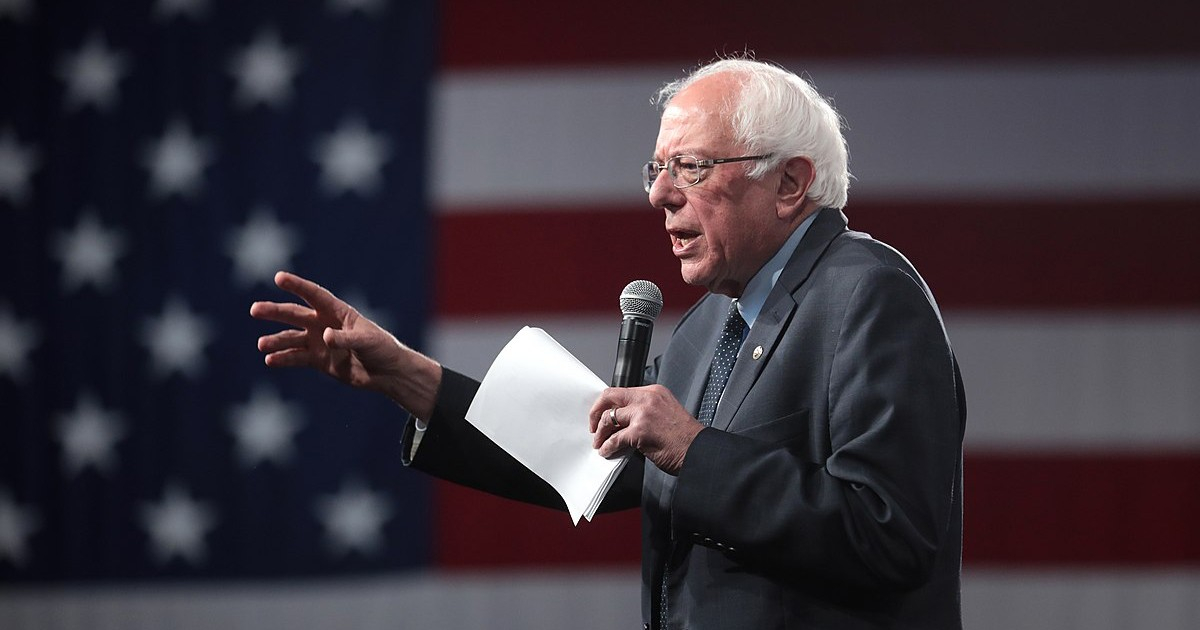
Independent Senator Bernie Sanders has unveiled a bold legislative agenda, detailing his strategy to advance universal healthcare in the United States. In an exclusive interview with The Associated Press, Sanders shared his intentions to leverage his forthcoming role as chair of the Senate Health, Education, Labor, and Pensions Committee to champion this cause.
Anticipating the Democrats' control of the Senate in January, Sanders introduced a four-year transition plan towards a single-payer, federally funded universal healthcare system, aiming to phase out most private insurance.
"This is no longer just an idealistic dream. This is where the American people are," stated the Vermont legislator.
The initial phase of the plan includes lowering the Medicare eligibility age from 65 to 55, adding dental, vision, and hearing coverage, and ensuring healthcare for all children under 18.
In subsequent years, the eligibility age would decrease to 45 in the second year, 35 in the third, eventually covering the entire population by the fourth year.
Gradual Implementation and Financial Hurdles
Sanders acknowledges the scale of the transformation, stating, "Transforming a system that constitutes 18% of the U.S. GDP doesn't happen overnight," which is why the plan is designed to be gradual.
The most immediate challenge is the fiscal cost. The Congressional Budget Office estimated in 2022 that merely reducing the eligibility age to 60 would increase federal deficits by $155 billion between 2026 and 2031, set against a national deficit already at $2 trillion, about 6.2% of GDP.
To fund the program, Sanders suggests redirecting private insurance premiums into payroll contributions from employers and households, combined with higher taxes on the wealthy and new levies on Wall Street and large corporations.
Navigating Legislative Challenges
To overcome the usual 60-vote threshold in the Senate, Sanders plans to use budget reconciliation to pass at least the first stage with a simple majority. The new Congress will see Democrats holding a 56-44 majority, the party's largest advantage in 16 years, following the midterm elections on November 3rd.
Sanders' goal extends beyond improving access to primary care; he also seeks to lower the costs of prescription drugs.
There are signs of support among his party's leadership, including House Democratic Leader Hakeem Jeffries, who has vowed to work "from day one" to restore Affordable Care Act subsidies and reverse Medicaid cuts, agreeing on lowering the Medicare eligibility age and adding new coverage options.
"Jeffries has essentially endorsed the first year of Medicare for All," Sanders noted.
The President and Political Reality
The biggest hurdle remains the White House, as any legislation passed by Congress would require the signature of President Donald Trump, who has dismissed the proposal as "Medicare for None."
Nevertheless, Sanders remains hopeful. "Donald Trump might be erratic, but he's not foolish. He's a smart guy and a shrewd politician," he said, suggesting that the President might acknowledge the healthcare system's flaws and act accordingly.
Beyond Healthcare: Wages and AI Policies
Sanders' agenda is not limited to healthcare. He also advocates for raising the federal minimum wage from $7.25—unchanged since 2009—to $20, through a similarly phased approach over four years, along with the PRO Act to bolster union rights.
Regarding artificial intelligence, Sanders proposes a moratorium on new data centers and a pause on developing advanced systems until federal safeguards are in place, alongside legislation to permanently ban AI capable of surpassing human abilities.
Frequently Asked Questions About Sanders' Healthcare Plan
What is the main goal of Bernie Sanders' healthcare plan?
The main goal of Sanders' healthcare plan is to transition to a single-payer, federally funded universal healthcare system that covers all Americans.
How does Sanders propose to fund the universal healthcare system?
Sanders proposes to fund the system by redirecting private insurance premiums into payroll contributions from employers and households, increasing taxes on the wealthy, and imposing new taxes on Wall Street and large corporations.
What are the additional policy proposals included in Sanders' agenda?
In addition to healthcare reform, Sanders' agenda includes raising the federal minimum wage to $20, enhancing union rights, and implementing a moratorium on AI development until federal safeguards are established.