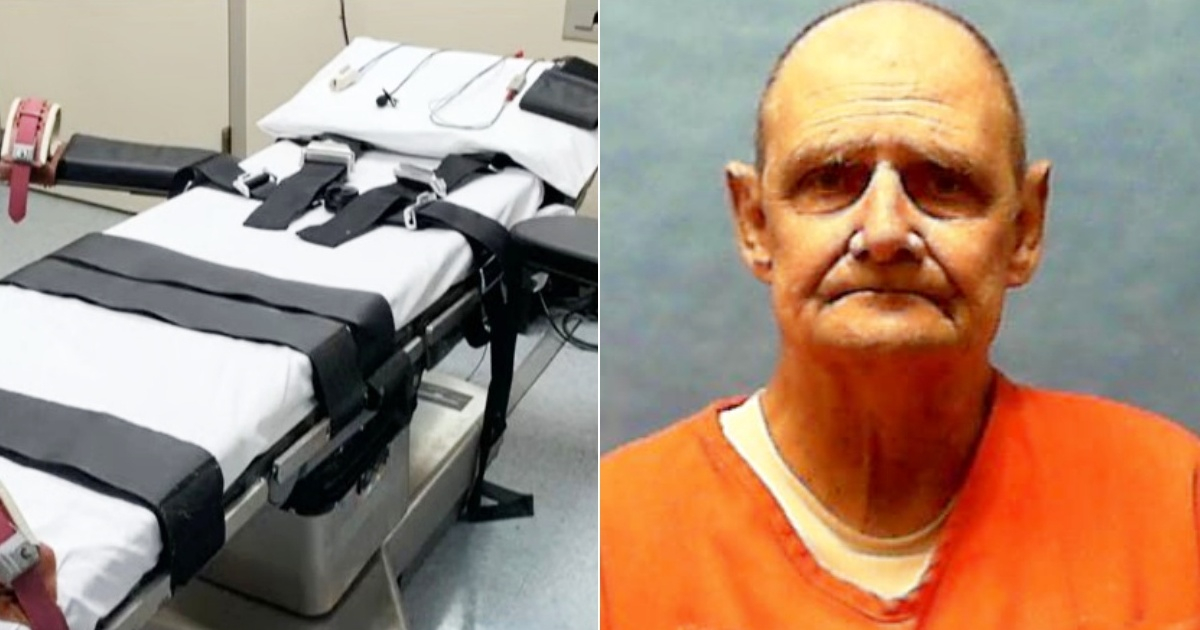
Florida's governor, Ron DeSantis, signed the execution order for Willie Seth Crain Jr., aged 80, who was found guilty of the kidnapping and murder of seven-year-old Amanda Victoria Brown. The young girl vanished in September 1998 in Hillsborough County, not far from Tampa. Tragically, her body was never recovered.
Crain's execution is scheduled for December 10, 2026, at 6:00 p.m., via lethal injection at the Florida State Prison in Raiford.
Should the other two planned executions proceed as anticipated, Crain will become the 22nd individual executed in the state this year, setting an unprecedented record in the modern era of Florida's death penalty.
The Case Against Crain: A Look Back
In November 1999, Crain was sentenced to death for premeditated first-degree murder and was also handed a life sentence for kidnapping.
Despite the confirmation of his convictions by the courts, Crain has consistently asserted his innocence over nearly 27 years.
The Disappearance of Amanda Brown
In September 1998, Crain met Kathryn Hartman, Amanda's mother, at a bar in Hillsborough County, where Hartman's older daughter worked. This encounter occurred just days before Amanda vanished.
The following day, Crain visited Hartman's mobile home in Seffner, east of Tampa. He spent time with Amanda, assisting her with schoolwork and playing with her. Later, they went to Crain's trailer to watch movies before returning to Hartman's residence for the night.
Hartman testified that Crain gave her five Valium pills for bodily pain. She fell asleep and awoke on September 11, 1998, to find both Crain and Amanda missing. When Hartman contacted Crain, he claimed to be loading his boat at a dock and denied knowing Amanda's whereabouts.
Hartman reported Amanda's disappearance, prompting an extensive search in the Tampa Bay area. Initially questioned and released, Crain was later arrested and charged with Amanda's kidnapping and murder.
Investigators suspected Crain, a commercial crab fisherman, disposed of Amanda's body in Old Tampa Bay, where he set his traps. Despite an exhaustive search, Amanda's remains were never found.
Evidence Leading to Crain's Conviction
During the trial, the prosecution presented biological evidence linking Crain to Amanda's disappearance, including traces of her blood found in Crain's bathroom and underwear through forensic analysis. Prosecutors also pointed to fresh scratches on Crain's body.
The defense challenged the evidence, suggesting the scratches could have resulted from Crain's work with crab traps. The absence of Amanda's body was a key point for the defense in questioning the prosecution's case.
Despite the lack of a body, the prosecution argued that the evidence was sufficient to prove both kidnapping and premeditated murder. Additionally, three women testified during sentencing that Crain had sexually assaulted them years earlier, with threats involving using their bodies as crab bait if they spoke out.
Crain had a history of sexual offenses against minors. In 1985, he was convicted of sexual assault in a separate case and sentenced to 20 years, but was paroled in 1997, about a year before Amanda's disappearance.
Crain's Legal Struggles and Appeals
Following his conviction, Crain fought to overturn the verdict, arguing insufficient evidence for premeditated murder and objecting to jury instructions on kidnapping elements. His legal team also questioned certain aggravating circumstances and the constitutionality of the death penalty, claiming his criminal record hindered a fair trial.
In 2004, the Florida Supreme Court upheld the convictions and sentences, rejecting the appeal's main arguments. Crain has since been on death row. DeSantis's recent order establishes the execution date and schedule for any remaining legal proceedings.
Florida's Execution Surge Under DeSantis
The order against Crain comes amid a surge in executions in Florida under DeSantis's leadership. In 2025, the state conducted 19 executions, far surpassing its previous annual record of eight since the U.S. reinstated the death penalty in 1976.
Florida matched that number in 2026 with the execution of Jesse Guardado on November 5. Guardado was convicted of murdering Jackie Malone, a 75-year-old community activist, in 2004 in Walton County.
Before Crain's execution, two others are scheduled:
- November 19: Thomas Mitchell Overton, convicted of murdering Susan and Michael MacIvor in the Florida Keys.
- December 1: Ricardo González, convicted of killing officer Steven Bauer during a 1992 bank robbery.
If all three executions occur as planned, Florida will end 2026 with 22 executions, exceeding the previous year's record.
DeSantis has justified the increased executions by citing the long wait victims' families have endured for justice. In his first six years as governor, Florida conducted nine executions, with the pace significantly increasing in his final two years, totaling over thirty, according to Florida Bulldog.
DeSantis is set to leave office in January 2027 after completing his second consecutive term, the maximum allowed by the state's constitution.
Calls for a Halt to Executions
The rise in executions has drawn criticism from anti-death penalty organizations and exonerees. A group of activists, including former death row inmates, has urged governor-elect Byron Donalds to impose a temporary execution halt when he takes office.
The organization Floridians for Alternatives to the Death Penalty supports a moratorium to review death penalty procedures and their application pace. Jeff Hood, a spiritual advisor to executed inmates, sent a letter to Donalds requesting a six-month suspension from January 5 to July 5, 2027, accompanied by an independent investigation.
Donalds, however, stated in March that he would ensure swift justice for violent offenders if elected governor.
As Crain's execution date approaches on December 10, efforts continue by organizations advocating for a reevaluation of Florida's death penalty policy.
Frequently Asked Questions About Willie Seth Crain Jr.'s Case
What led to Willie Seth Crain Jr.'s conviction?
Crain was convicted of the kidnapping and murder of seven-year-old Amanda Victoria Brown, who disappeared in 1998. Despite the lack of a body, forensic evidence and witness testimonies led to his conviction.
When is Crain's execution scheduled?
The execution is set for December 10, 2026, at 6:00 p.m., at Florida State Prison in Raiford.
How has Florida's execution rate changed under Governor Ron DeSantis?
Under DeSantis, the rate of executions has significantly increased, with a record number of 22 executions potentially set for 2026, surpassing previous records.
What criticisms have arisen regarding the increase in executions?
Critics, including anti-death penalty organizations and exonerees, argue for a temporary halt and review of the death penalty procedures in Florida, citing concerns over its application.