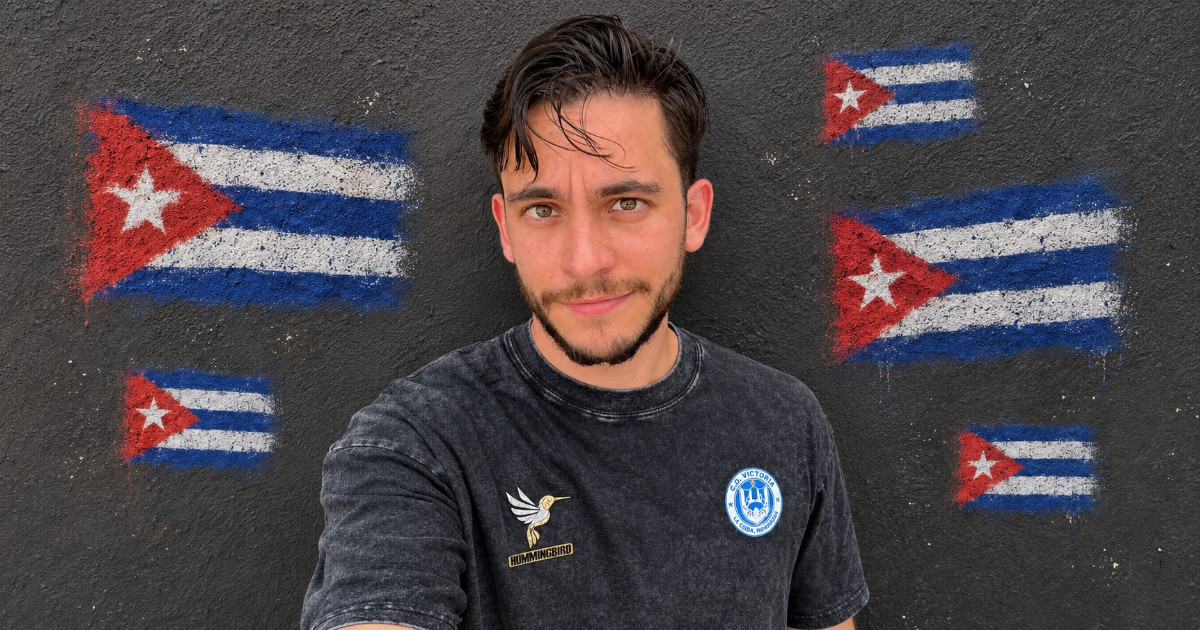
A statement made by Uruguayan-American influencer Carlos Eduardo Espina has sparked a heated debate within the Cuban community. Espina claimed that most Latinos outside of Florida have a negative view of Miami's Cubans, which led to nearly four thousand comments in just six hours on Saturday, revealing a deep divide among Cubans.
Espina shared his controversial opinion last Tuesday on X, amassing over 439,000 views and almost 14,000 positive reactions. He linked his statement to the presidential prospects of Marco Rubio, asserting that those who believe Rubio could secure the Latino vote "don't understand" the hostility toward Miami's Cuban community. The statement was not supported by polls or factual data, leading many to question his portrayal of a personal opinion as a universal truth.
Support and Criticism from the Community
Among those who agreed with Espina, the responses were emphatic. "Carlos just spoke the plain truth. I have friends in Minneapolis, Chicago, Wisconsin, Detroit, Atlanta, Seattle, and we all think the same. There's a saying that they left the village, but the village never left their heads," wrote one commenter.
Another added, "A controversy based on reality. Cubans are often seen as thinking we're the center of the world, walking around with very little humility. Initially, it's an identifiable trait, but it eventually becomes tiresome and creates rejection and embarrassment."
Cubans residing in Texas, California, Washington, and Canada acknowledged this perception. "I'm Cuban and proud of it, but what Carlos Eduardo says is true: when you leave Miami, this is what you hear," admitted one user. Even some residents within Florida conceded the same point: "Not just outside of Florida: in Florida, too."
Defending Miami's Cuban Identity
The backlash was equally strong. "Being Cuban is not a flaw; it's an identity we carry with pride. It's unfair to generalize and judge millions for the actions of a few. Miami's Cubans are hardworking, entrepreneurial, and resilient," countered another commenter.
Another defended the historical legacy: "In 1960, when the diaspora began, Miami was just a small town. Is there another Hispanic group that has achieved this? I'd love to hear that story."
Several pointed out the political undertones in Espina's remarks, noting his role as a speaker at the 2024 Democratic National Convention. "Carlos, you're an influencer with significant reach on social media. It's unfortunate you're promoting division among Latinos. You can't generalize that all Cubans are like this," one user criticized.
Another voice from within the community added nuance: "I'm Cuban and don't share the pro-Trump fanaticism of many Cubans in Florida. But criticizing political stances is one thing, and stigmatizing an entire community is another. Generalization is also a form of prejudice."
The Political Context
The controversy emerged just three days after Byron Donalds narrowly won Florida's governorship by a margin of only 1.26 points, in an election where the Cuban-American vote largely supported the Republican, while the overall Latino vote favored Democrat David Jolly.
"What I see is criticism of people for voting Republican. I think the biggest fear among Cubans is the spread of the communism we've had to escape, and that's why the majority lean Republican," summarized one commenter, highlighting the underlying tension in the debate.
Frequently Asked Questions About the Cuban Community and Political Dynamics
Why is there a negative perception of Miami's Cuban community among some Latinos?
Some Latinos perceive Miami's Cuban community as lacking humility and being overly self-centered, which can lead to feelings of rejection and embarrassment.
What impact does political affiliation have on the Cuban community's reputation?
The political leanings of Miami's Cuban community, particularly its tendency to support Republican candidates, contribute to perceptions and divisions within the broader Latino community.
How significant is the Cuban-American vote in Florida elections?
The Cuban-American vote is crucial in Florida, often swaying election outcomes due to its significant size and distinct political preferences.