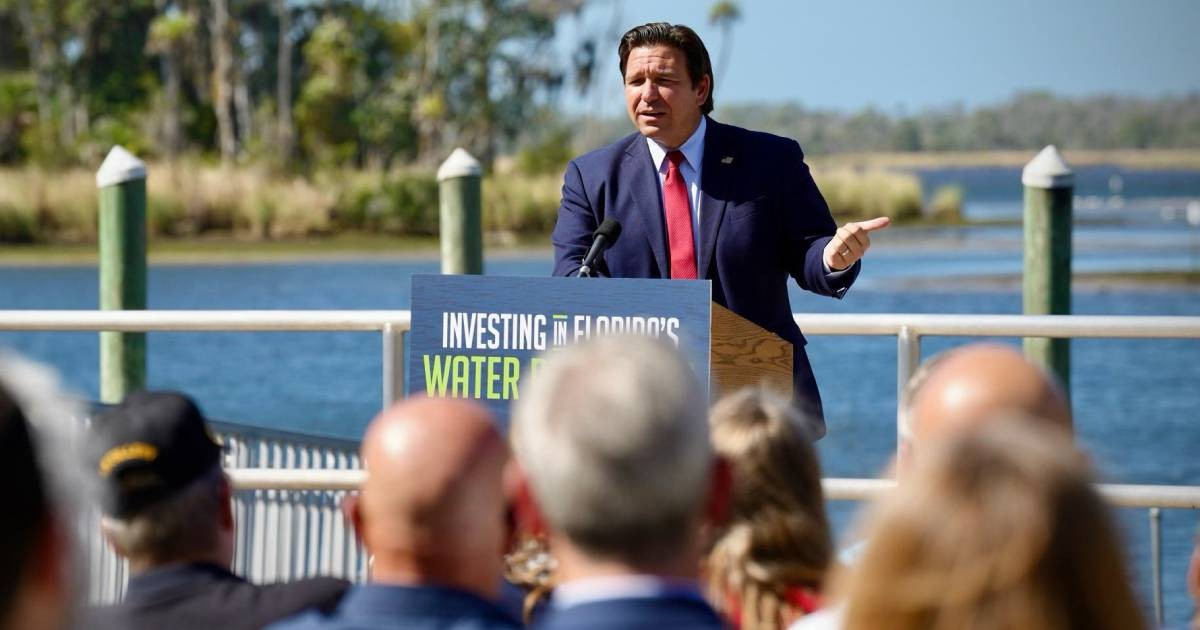
Florida Governor Ron DeSantis has expressed his intention to call a special legislative session before the close of 2026. His goal is to implement the property tax reduction approved by voters and prevent local governments from offsetting the revenue loss with new charges.
This move follows the passage of Amendment 3, which garnered about 62% of the vote on Tuesday, November 3, surpassing the 60% threshold required to amend the state Constitution.
According to a report by NBC Miami, DeSantis stated during a press conference in Tallahassee on Wednesday that he aims to complete the legislative work before January 1, 2027, when the reform is set to take effect.
"This needs to be done before January 1, and we will do it before January 1," he declared.
The governor outlined his plans to establish guidelines for future expansions of the homestead tax exemption and to approve a "taxpayer bill of rights" that would prevent cities and counties from compensating for lost revenue through new fees or other means.
However, the call for a special session has not yet been finalized. Before the elections, incoming leaders of both legislative houses expressed doubts about the necessity of convening an extraordinary session before January.
The incoming Senate President, Jim Boyd, believes the matter can wait until January, while the future House Speaker, Sam Garrison, cautioned that the measure is not something that can be executed in just three days.
"I'd rather do it right than do it fast," Garrison commented.
Former State Senator Jeff Brandes also questioned the urgency of the session, warning that local governments are facing financial challenges due to reduced revenue.
When Will the Tax Cut Be Reflected?
For homeowners in Miami-Dade, including residents of Hialeah, Kendall, and Doral, the new exemption will apply to the 2027 tax year. The savings will not appear on 2026 bills but will be reflected in those issued in November 2027.
Amendment 3 increases the primary residence tax exemption from approximately $50,000 to $150,000 in 2027 and $250,000 in 2028, applicable only to taxes not funding public schools.
These initial increases are already enshrined in the state Constitution. Additional legislation will need to address other aspects of the reform, including procedures for future exemptions.
Miami-Dade Property Appraiser Tomás Regalado, as noted by Axios, estimates that homeowners could save an average of $1,700 in 2027 and $2,700 in 2028, though the actual benefit will depend on each home's value and tax rates.
Not all homeowners will receive the same benefit. Those who establish residency in Florida after December 31, 2026, will be required to wait until their fifth year of eligibility to access the expanded exemption, subject to applicable constitutional limits.
The reform has also raised concerns among local governments. According to a CBS News report, state economists estimate that the reform could reduce local government revenues by about $12 billion annually by 2031, potentially impacting public service funding.
With his term ending in January, DeSantis has expressed his desire to set the implementation of the amendment in motion. However, it remains up to the Legislature to decide whether to hold a special session before Governor-elect Byron Donalds takes office on January 5.
FAQs on Florida's Property Tax Changes
What is the purpose of the special legislative session proposed by DeSantis?
Governor DeSantis aims to implement the voter-approved property tax cut and prevent local governments from introducing new fees to offset revenue losses.
When will homeowners see the tax savings from the new exemption?
Homeowners in Miami-Dade will see the tax savings reflected in their November 2027 bills, applicable for the 2027 tax year.
How much could homeowners save with the new tax exemption?
Homeowners could save an average of $1,700 in 2027 and $2,700 in 2028, although actual savings will depend on individual home values and tax rates.