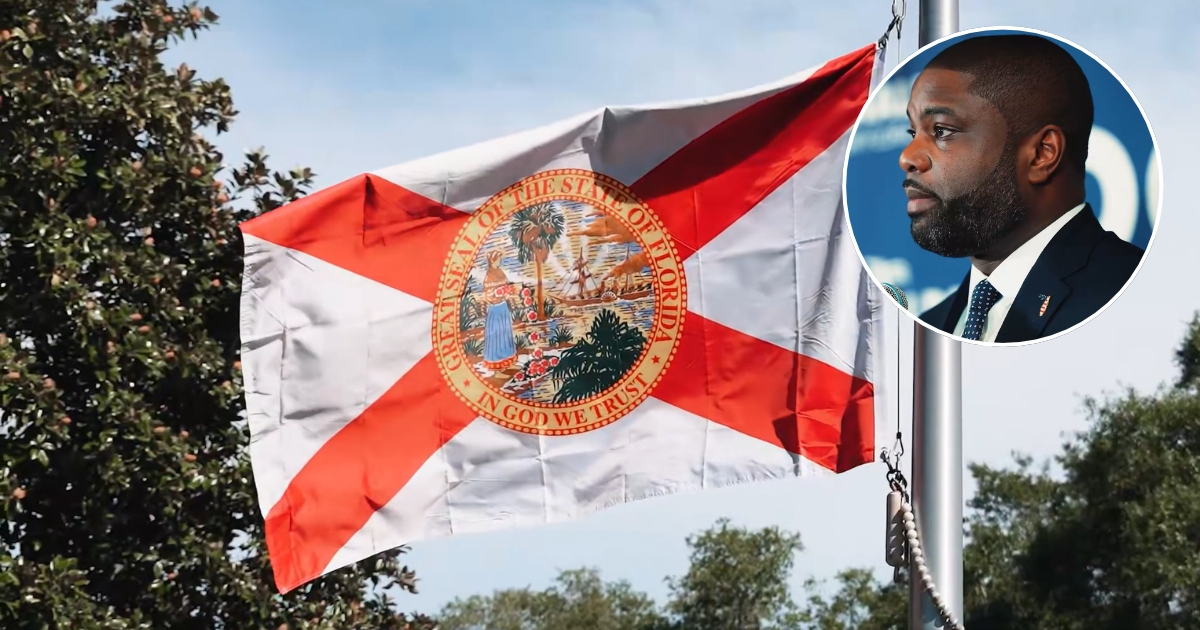
The election victory of Republican candidate Byron Donalds as the governor of Florida, juxtaposed with Democratic wins across the rest of the United States, has reignited political tensions among Latino immigrants, leading to sharp criticism of Cuban Americans who support President Donald Trump.
"A Latino's worst enemy is a Cuban," remarked Alexander Lobo in a Facebook post that has sparked intense reactions following the elections held on November 3rd.
In his post, Lobo criticized Cubans who traversed Central America to reach the United States, managed to regularize their immigration status, and now align with the MAGA (Make America Great Again) movement spearheaded by Trump.
Using harsh language, Lobo accused these immigrants of forgetting the hardships they endured before securing their documentation.
Mixed Electoral Outcomes and Cuban Reactions
The post emerged amid an electoral backdrop of contrasting results. While Democrats regained control of both the House and the Senate, Florida remained under Republican leadership with Donalds' win, supported by Trump.
Donalds secured approximately 50% of the vote, compared to the 48.7% garnered by Democrat David Jolly, according to preliminary figures. However, Jolly prevailed in Miami-Dade—a region with a significant Cuban population—indicating a more divided electoral landscape than the state-level Republican victory might suggest.
Cubans Defend Their Diversity
Lobo's message found numerous supporters, but it also prompted responses from Cubans who opposed being collectively labeled for the political choices of some of their fellow countrymen.
"I'm Cuban and I disagree with you; I love all my Latino brothers," replied one user, defending everyone's right to seek a better life.
Another Cuban, who claimed to have lived outside the island for 23 years, acknowledged that some immigrants have forgotten their roots but argued against judging an entire nationality based on that behavior.
Among those echoing the criticism, one user lamented that some Cubans support restrictive immigration policies even when parts of their own families remain undocumented.
Others questioned the lack of solidarity shown by immigrants who received opportunities to settle in the U.S. but now face deportation processes.
Meanwhile, some openly defended their political stances. "My Latino family came legally, and we are MAGA," stated one individual.
Calls for Unity and Understanding
The debate also touched other communities, including Venezuelans, with several participants urging against generalizations and nationality-based attacks.
"Don't generalize; don't create stigmas," urged one user.
Historical Tensions and Political Shifts
The clash is not new. Back in March 2025, Mexican Edán Méndez criticized Cubans who voted for Trump, recalling the solidarity shown to them by other Latin Americans when they fled Cuba.
"They were the first to support Donald Trump because they thought Trump was only targeting Mexicans and Central Americans," he stated at the time.
More recently, in August 2026, Honduran Jeffry Ulloa, residing in Miami, issued a harsh message against those supporting deportations.
"Many Cubans here in Miami always felt untouchable," he asserted, warning that immigration measures were also affecting citizens from the island.
Cuban Republicans Explain Their Votes for Democrats
On the eve of the November 3rd elections, Lisbeth Arzola Fadragas, a Cuban Republican who had previously voted for Trump, revealed she supported Democrats this time.
"Today I voted for my family. Today I voted for my clients," she explained, referring also to immigrants working without having regularized their status.
Another Miami-based Cuban, Miriam Bidot, also identified as a Republican, defended her Democratic vote due to reasons related to immigration, healthcare, and opposition to discrimination.
These positions coexist with significant support for the Republican Party. A survey conducted by N+ Univision and YouGov between October 2 and 15 showed Donalds leading with 51% preference among Cuban American respondents, compared to 42% for Jolly.
Understanding Cuban American Political Dynamics
Why did Byron Donalds' victory in Florida cause controversy?
Byron Donalds' victory highlighted the political divide, as Florida remained Republican while Democrats made gains nationally, sparking debate over Cuban American support for Trump.
How did Cuban Americans respond to the criticism of their political choices?
Many Cuban Americans expressed disapproval of being collectively judged based on the political choices of some, emphasizing diversity and individual rights.
What historical context influences Cuban American political preferences?
Cuban American political preferences are influenced by historical experiences of fleeing the island, solidarity from other Latin Americans, and diverse perspectives on U.S. immigration policies.