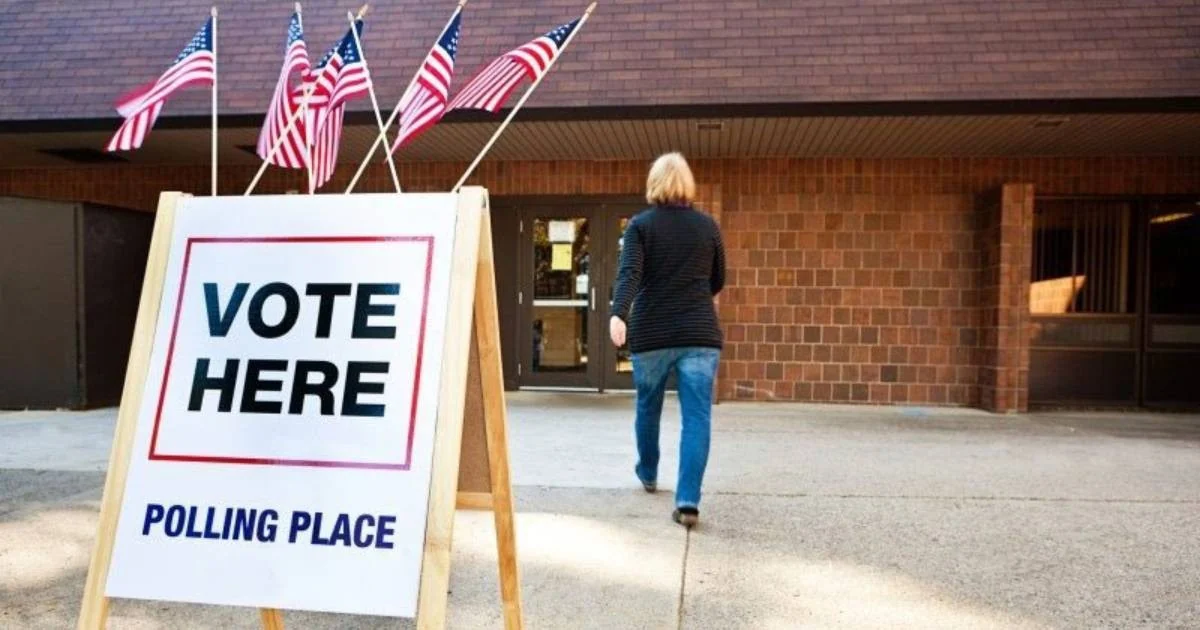
With just five days remaining until the pivotal November 3rd elections, Miami-Dade voters are gearing up to make critical decisions on who will govern Florida, who will represent the state in Washington, and how local taxation and government operations might change.
This election holds particular significance for the Cuban-American community, amidst ongoing debates over deportations, Donald Trump's immigration policies, and the longstanding support of the exile community for the Republican Party.
An election guide from Axios Miami highlights the major contests, from the gubernatorial race to the congressional elections and referendums that could directly impact residents' finances.
High-Stakes Contests for Cuban-Americans: Governor and Senate
Florida's gubernatorial race features Republican Byron Donalds, endorsed by Trump, against former Republican congressman, Democrat David Jolly. Recent state polls show Donalds leading, albeit with varying margins. Among Miami-Dade's Cuban-Americans who expressed an electoral preference, the FIU Cuba Poll 2026 indicated 60% support for Donalds, compared to 24% for Jolly, while 39% of those surveyed remain undecided.
In the federal Senate contest, Republican Ashley Moody, who took over Marco Rubio's seat when he became Secretary of State, is facing off against Democrat Angie Nixon. The FIU poll gave Moody 51% of the expressed preferences, with Nixon at 26%, leaving 44% of respondents still uncertain in this race.
Nixon recently stirred controversy with her statements on Cuba. After a vague response to CBS News regarding the dictatorial nature of the Cuban regime, she clarified on Thursday in an exclusive interview with CiberCuba, "Cuba is a dictatorship, absolutely. I am not a communist, I am not a socialist."
Congressional Showdown: María Elvira Salazar vs. Eliott Rodríguez
One of the most closely watched congressional battles is in Florida's 27th District, encompassing areas like Miami, Little Havana, and Coral Gables. Republican Congresswoman María Elvira Salazar is seeking her fourth term against Democrat Eliott Rodríguez, a Cuban-American journalist and former CBS Miami anchor.
An August poll indicated a 45% tie between the two candidates, while a more recent survey by RedBox Research from October 20-23 showed Salazar leading with 49% compared to Rodríguez's 46%. The campaign has also seen significant debate over immigration policies, with Salazar criticizing Trump's deportation tactics in September for being excessively harsh.
In other South Florida districts, Republicans Mario Díaz-Balart and Carlos Giménez aim to retain their seats against Democratic challengers Nicole Locklin and Phil Ehr, respectively.
Property Tax Changes and Local Referendums: Economic Implications
Voters will also address proposals with potential economic impacts. A key measure is Florida's Amendment 3, which would increase the homestead property tax exemption for non-school taxes to $150,000 in 2027 and $250,000 in 2028. Though this would provide tax relief to eligible homeowners, Miami-Dade estimates a potential reduction in annual revenue by approximately $386 million in the first year, possibly affecting public services. To pass, the proposal requires 60% voter approval.
Additionally, the measure would lower the annual cap on the increase of the taxable value of non-homestead properties from 10% to 5%. Homeowners establishing residence in Florida after 2027 would generally need to wait until their fifth year of exemption to access the expanded benefit.
The county will also vote on seven local referendums, including one to establish an independent commission to set commissioner salaries. In Miami-Dade's County Commission District 5, Vicki Lopez and Rob Piper are competing, and Miami city voters will decide on authorizing $450 million in public debt for fire station renovations and a new public safety headquarters.
The Cuban Vote: Balancing Republican Support and Deportation Concerns
The elections occur amid political contradictions for Cuban-Americans. According to the FIU Cuba Poll 2026, 68% of those expressing a preference would vote for their district's Republican congressional candidate, compared to 28% who would choose a Democrat. Overall, 12% of respondents were still undecided. Moreover, 87% support resuming the processing of immigration benefits for Cubans already in the United States.
The study, conducted from September 4 to 29, indicates that dissatisfaction with certain immigration measures has not yet led to a widespread shift away from the Republican Party among Miami-Dade's Cuban-Americans.
Voting Information for Miami-Dade Residents
Early voting is available until Sunday, November 1, from 7:00 a.m. to 7:00 p.m., at 28 designated centers in Miami-Dade. On Election Day, November 3, polling stations will be open from 7:00 a.m. to 7:00 p.m., and mail-in ballots must be received by election officials before 7:00 p.m. that day. Voters can check their polling place, review a sample ballot, and obtain updated information on the official Miami-Dade Elections website.
Key Questions about the Miami-Dade Elections
Who are the main candidates in the Florida gubernatorial race?
The main candidates are Republican Byron Donalds, supported by Donald Trump, and Democrat David Jolly, a former Republican congressman.
What is Florida's Amendment 3 about?
Amendment 3 proposes to increase the homestead property tax exemption for non-school taxes, providing tax relief but potentially reducing Miami-Dade's revenue by approximately $386 million annually.
How does the Cuban-American community view the upcoming elections?
The Cuban-American community shows strong support for Republican candidates, although some dissatisfaction exists with certain immigration policies. The FIU Cuba Poll 2026 shows 68% favoring Republicans, with 87% backing the resumption of immigration benefits processing for Cubans.