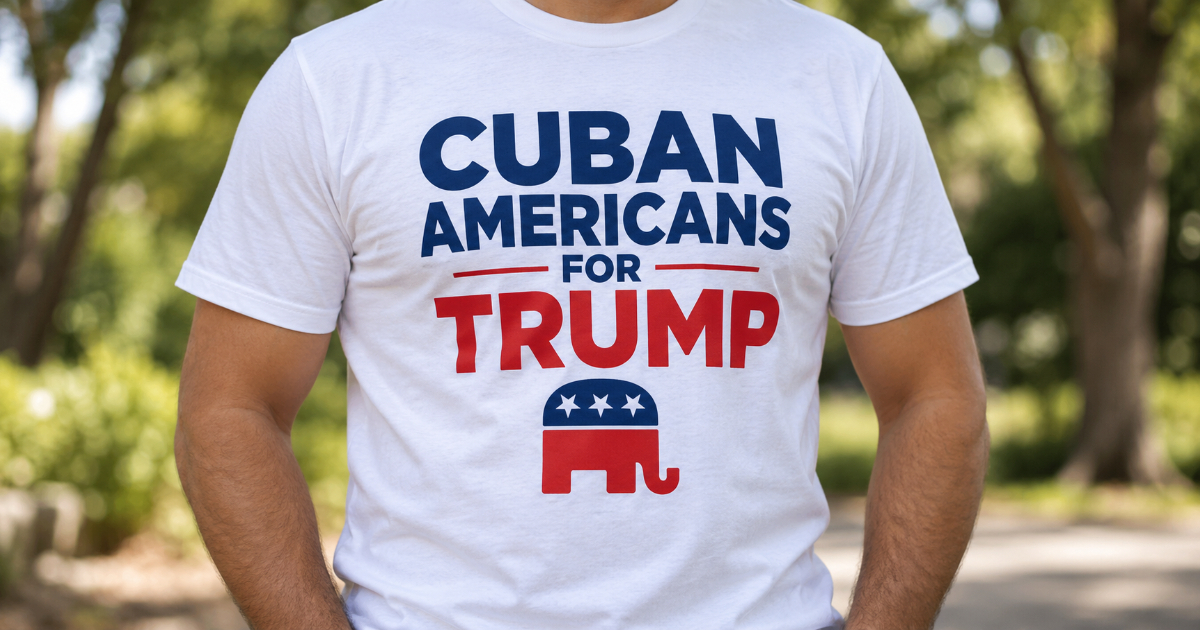
Despite widespread disapproval of deportations under the Trump administration, a significant portion of Cuban Americans in Miami-Dade remain loyal to the Republican Party. According to the 2026 FIU Cuba Poll, released by Florida International University, 68% of respondents plan to vote for Republican candidates in the upcoming November 3 elections, even though three out of four oppose deportations of undocumented Cuban immigrants with no criminal record.
This political paradox emerges from a survey of 1,004 Cuban American adults in Miami-Dade, conducted between September 4 and 29, with a margin of error of ±3.1 percentage points. While 76% disapprove of increased deportations—63% strongly so—this sentiment has not swayed their electoral preferences, with Republican congressional support matching a previous high from the 2024 poll.
The ongoing debate over the Trump administration's immigration policies underscores the complexity within the community. "Despite their disillusionment with Trump, Cuban Americans remain anchored in the Republican Party," said Guillermo J. Grenier, the poll's lead researcher and sociology professor at FIU. He noted that while 53% of registered voters are Republicans, 63% disapprove of deportations, and half are dissatisfied with the economic management.
Support for deportations is minimal across different community segments. Among post-2020 arrivals, 92% disapprove, with a mere 3% in support. Similar opposition is found among non-citizens and Democrats, each at 93%. Even within Republicans, who show the highest relative approval, 63% disapprove.
In contrast, older and earlier migrant groups show slightly more support; 31% of pre-1995 migrants and 30% of those over 76 approve of the policy.
On another front, 87% of respondents urge the resumption of immigration benefits processing for Cuban residents in the U.S., with broad backing from 86% of Republicans, 90% of Democrats, and 86% of independents. This contrasts with a Human Rights Watch report from May 2026, highlighting that 26% of the 4,353 Cubans deported to Mexico between January 2025 and March 2026 had no U.S. criminal record.
The poll also finds that despite deportation opposition, there's robust support for pressuring the Cuban regime. Seventy-seven percent endorse a "maximum pressure" policy on Havana, 65% approve of blocking oil imports to Cuba, and 73% support potential U.S. military action against the Cuban government.
Simultaneously, there is considerable backing for humanitarian efforts: 73% favor unrestricted medicine sales to Cuba, 70% support food sales, and 74% advocate for private sector aid to ease the crisis. "Cuban Americans want a tougher stance on Havana while advocating for a better life for the Cuban people," Grenier summarized. "Those supporting maximum pressure also back medicine sales, food, and private sector assistance."
In Florida's electoral races, Byron Donalds leads David Jolly for governor (60% to 24% among named candidates), and Ashley Moody is ahead of Angela Nixon in the Senate race (51% to 26%). Looking to 2028, Marco Rubio is the favored Republican presidential nominee with 58%, far outpacing J.D. Vance (8%) and Ron DeSantis (7%).
The Cuban American voting pattern starkly contrasts with the broader Latino electorate. A recent FIU/YouGov survey shows 54.6% of nationally registered Latinos plan to vote Democrat for Congress, with Trump's approval at just 32.9% among Hispanics. Cuban Americans in Miami-Dade continue to be a unique demographic within Latino voters.
Cuban American Political Views and Trends
Why do Cuban Americans support Republicans despite disapproving deportations?
Cuban Americans have historically aligned with the Republican Party due to shared views on strong anti-communism policies and a desire for a tough stance on the Cuban regime, which can outweigh their disapproval of specific policies like deportations.
What percentage of Cuban Americans oppose Trump's deportation policies?
According to the FIU Cuba Poll, 76% of Cuban Americans disapprove of Trump's deportation policies, with 63% expressing strong disapproval.
How does Cuban American political behavior differ from the broader Latino electorate?
Cuban Americans in Miami-Dade are more likely to support Republican candidates compared to the broader Latino electorate, which tends to favor Democrats, as reflected in a national survey showing 54.6% of Latinos plan to vote Democrat for Congress.