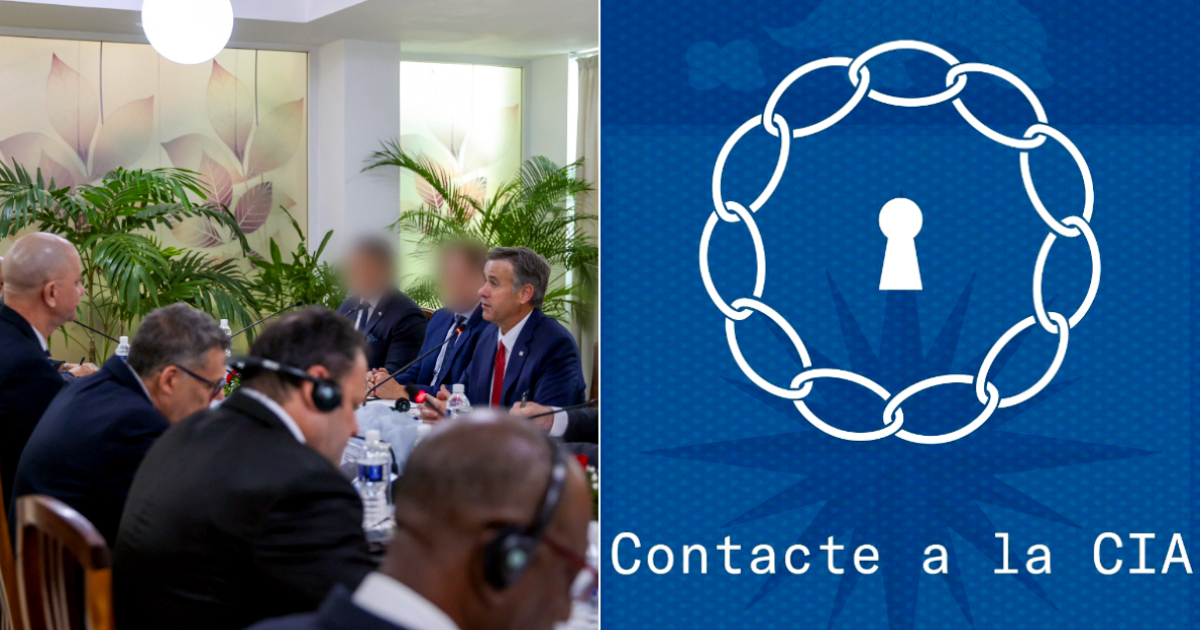
The public call from Marco Rubio and the Central Intelligence Agency (CIA) urging Cubans to discreetly collaborate with U.S. intelligence services marks a new chapter in the ongoing pressure strategy on Havana. This effort seems to be advancing along two parallel paths: engaging with current leaders and probing for information, contacts, and potential weaknesses within the power structure.
Following months of back-and-forth communication between Washington and the Cuban regime, whose officials have adamantly refused to negotiate changes to the political system, the Communist Party's (PCC) leadership role, or the establishment of multi-party elections, the U.S. has stepped up its pressure tactics.
The contradiction is stark: while the U.S. administration demands changes that would undermine the foundations of Cuba's power, Havana's interlocutors persist in maintaining these very structures.
Espionage Efforts Amid Political Stalemate
Despite ongoing talks that have involved high-level contacts and proposals extending beyond traditional migration and security issues, President Trump continues to speak of a potential agreement, while the CIA ramps up efforts to gather intelligence and seek out internal divisions within Cuba's ruling elite.
In May, CIA Director John Ratcliffe made an unusual trip to Cuba, meeting with Interior Minister Lázaro Alberto Álvarez Casas and other security officials, confirming the existence of communication channels between the intelligence services of the two countries amidst growing political confrontation.
Subsequent reports of indirect contacts between Rubio and Raúl Guillermo Rodríguez Castro, a close aide and grandson of Raúl Castro known as "El Cangrejo," suggested that discussions hit a snag when Washington suggested the removal of Miguel Díaz-Canel. Havana also reportedly rejected a proposal linking energy assistance to economic reforms and privatizations.
Public Recruitment for Intelligence Gathering
The most visible shift came when Rubio publicly invited Cubans seeking change on the island to work discreetly with the CIA. Hours later, the agency echoed the call, providing instructions in Spanish for securely establishing contact.
This move highlights the U.S.'s interest in cultivating contacts with individuals who can offer insights into the workings of Cuban institutions. The CIA's strategy suggests that Washington does not view Cuba's leadership as a monolithic entity, but rather as a structure with potential divergent interests and rivalries.
Nevertheless, there is insufficient public information to confirm whether the CIA has successfully recruited new sources within Cuban institutions or if high-ranking officials are willing to cooperate with the U.S. What is clear is the U.S. drive to gain information from within the system.
Balancing Diplomacy and Covert Operations
Despite intelligence activities, President Donald Trump reiterated his openness to reaching an agreement with Cuba, even humorously suggesting deploying military ships to Cuban shores during a political event in Florida.
This juxtaposition of pressure and readiness to negotiate has characterized much of U.S. policy toward Havana in recent months. Cuban responses have ranged from reaffirming political boundaries to dismissing U.S. initiatives.
Deputy Foreign Minister Carlos Fernández de Cossío mocked the CIA's call as a sign of U.S. intelligence desperation, while Foreign Minister Bruno Rodríguez Parrilla warned of resistance within Cuba. These reactions do not resolve the fundamental impasse: Washington demands political and economic reforms, while Havana insists on the non-negotiability of its single-party system.
This situation raises a critical question: Is the U.S. preparing alternatives to negotiations solely dependent on the current ruling elite? The visit by Ratcliffe to Havana indicates direct communication with Cuba’s security apparatus, while reports of contacts within Raúl Castro's circle suggest exploration of other channels within the elite. The CIA's intensified operations further underscore an interest in understanding internal power dynamics.
The public recruitment appeal adds a new dimension to this process, though it does not imply a concrete operation to replace leaders or a defined transition plan. The Trump administration appears to keep both avenues open: striking a deal with certain sectors of Cuban power or enhancing its pressure and information-gathering capabilities if talks remain unproductive.
The question remains whether Havana's leaders will alter their stances or if Washington will find interlocutors within the state apparatus willing to negotiate what the current leadership refuses to discuss. For now, Trump continues to tout the possibility of an agreement, while the CIA seeks new information sources. Two parallel paths persist against a regime steadfast in declaring its political monopoly non-negotiable.
FAQs on U.S.-Cuba Relations and Espionage Efforts
What is the current U.S. strategy towards Cuba?
The U.S. strategy involves both diplomatic negotiations with Cuba's leadership and intelligence efforts to gather information and identify potential fractures within the ruling structure.
How has the CIA been involved in U.S.-Cuba relations?
The CIA has intensified its operations in Cuba, focusing on exploring internal divisions within the governing elite and identifying possible sources willing to cooperate with the U.S.
Have there been any recent negotiations between the U.S. and Cuba?
Yes, there have been high-level contacts and proposals, but these have been complicated by Cuba's refusal to discuss political system changes, leading to stalled negotiations.
What was the significance of Marco Rubio's public call to Cubans?
Marco Rubio's public call was significant as it openly invited Cubans to collaborate with the CIA, reflecting a shift in tactics towards recruiting informants from within Cuba.