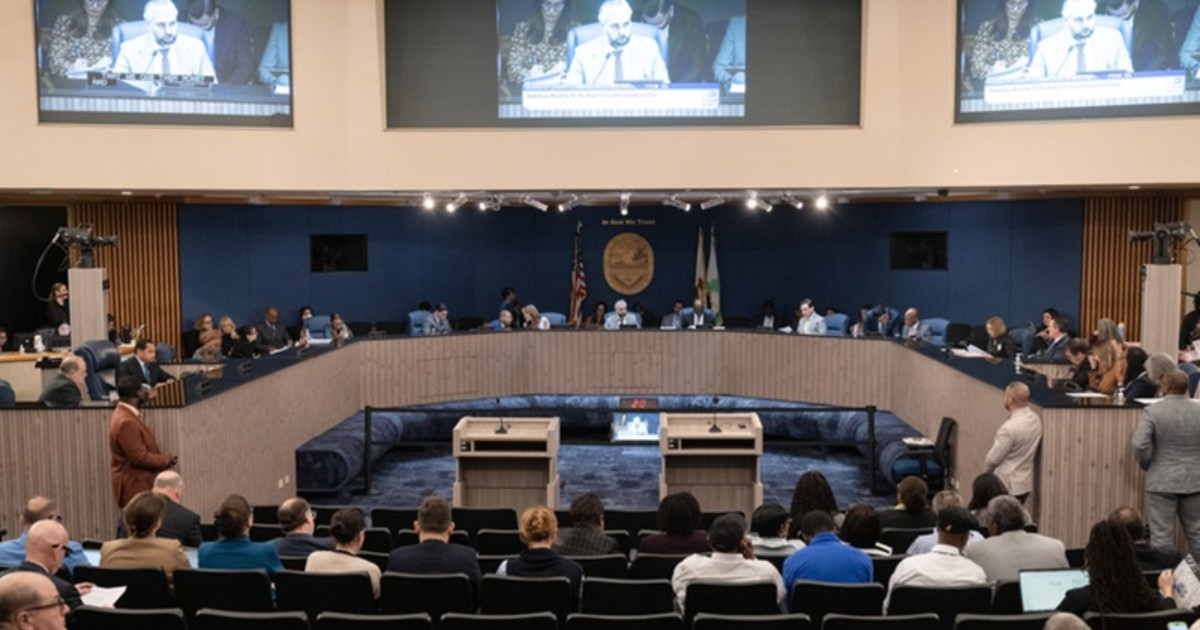
As Florida approaches the November 3 elections, Amendment 3, which seeks to expand the homestead property tax exemption, has stirred significant debate among Miami-Dade's political figures. The measure has led to a pronounced divide, largely along party lines, as highlighted in a report by Axios.
Republican officials, many of whom are Cuban-American, strongly advocate for the amendment, while its most vocal critics include the county's Democratic mayor and African-American legislators. In late September, this divide was brought into sharp focus when Tomás Regalado, Miami-Dade's property appraiser and former Miami mayor, organized a press conference at the iconic Versailles restaurant alongside other elected officials.
The event was attended by key figures such as State Representative Alex Rizo of Hialeah, Tax Collector Dariel Fernández, Election Supervisor Alina García, and Coral Gables Mayor Vince Lago. Regalado argued that the amendment could significantly reduce the tax burden on a homestead property, lowering taxes from approximately $6,000 to $4,300 in the first year and then to $3,000 in the second year.
While Rizo admitted the measure isn't flawless, he described it as "a step in the right direction." A surprising endorsement for the amendment came from Sheriff Rosie Cordero-Stutz, who broke ranks with the Florida Sheriffs Association, which opposes the proposal, to offer her support. Cordero-Stutz emphasized that "tax relief and public safety are not mutually exclusive" and urged agencies to cut unnecessary expenses.
Opposition's Concerns
On the opposing side, Mayor Daniella Levine Cava has formed the political action committee "No on 3 Protect Our Homes," warning that Amendment 3 poses a threat to public safety, emergency response, as well as essential services like roads, parks, and libraries. Levine Cava cautioned that the county could lose up to 19 fire stations and more than 600 firefighters, and be forced to close 10 of its 51 libraries if the amendment passes.
State Senator Shevrin Jones from Miami Gardens offered a blunt assessment, comparing the proposal to "putting lipstick on a pig." Commissioner Oliver Gilbert also expressed concerns about potential cuts to bus fares, parks, and emergency services.
Understanding Homestead and Amendment 3
In Florida, a homestead refers to the primary residence of a property owner, which qualifies for a partial property tax exemption if legal criteria are met. This exemption does not automatically extend to secondary homes or investment properties. Amendment 3, set for a vote on November 3, aims to:
- Increase the exemption to $150,000 in 2027.
- Raise it further to $250,000 in 2028.
- Preserve taxes allocated for school districts.
- Reduce the annual cap on the assessed value increase of other properties from 10% to 5%.
The proposal has sparked a debate between those advocating for homeowner tax savings and officials cautioning against potential reductions in public services. Amendment 3 also includes provisions for future inflation adjustments and new restrictions on how local tax revenues can be used.
Potential Economic Consequences for Miami-Dade
In September, Miami-Dade approved a $12.9 billion budget, overcoming a deficit exceeding $400 million through measures like water and sewer rate hikes, job cuts, and strategic reserve allocations. The county anticipates that Amendment 3 could result in a $359 to $445 million annual loss in tax revenue, representing 10-20% of the general fund's income.
Local Republicans dismissed these warnings as "scare tactics," pointing to a Florida TaxWatch estimate that suggests an average annual savings of about $1,500 for a Miami-Dade homeowner with a homestead.
Governor Ron DeSantis' Position
Noticeably absent from the forefront of the debate is Governor Ron DeSantis, who was originally a major proponent of the measure. Although he intends to vote in favor, DeSantis has chosen not to be the "face" of the campaign, stating that the version passed by the Legislature fell short of his expectations.
His initial proposal sought to gradually eliminate taxes on primary homes and included a state compensation fund for local governments, elements that did not make it into the final version. According to a Mason-Dixon poll conducted for NBC6/Telemundo, support for the amendment stands at 55%, five points shy of the 60% needed to amend Florida's Constitution on November 3.
FAQs About Florida's Amendment 3
What is the main goal of Florida's Amendment 3?
Amendment 3 aims to expand the homestead property tax exemption, providing increased tax relief to homeowners by raising the exemption amount over the coming years.
How might Amendment 3 impact public services in Miami-Dade?
Critics, including local officials, warn that the amendment could lead to significant revenue losses, potentially resulting in cuts to public services such as fire stations, libraries, and emergency response capabilities.
Who are the main supporters and opponents of Amendment 3?
The amendment's supporters are primarily Republican officials, many of whom are Cuban-American. Opponents include the Democratic mayor of Miami-Dade and African-American legislators who express concern over potential public service reductions.