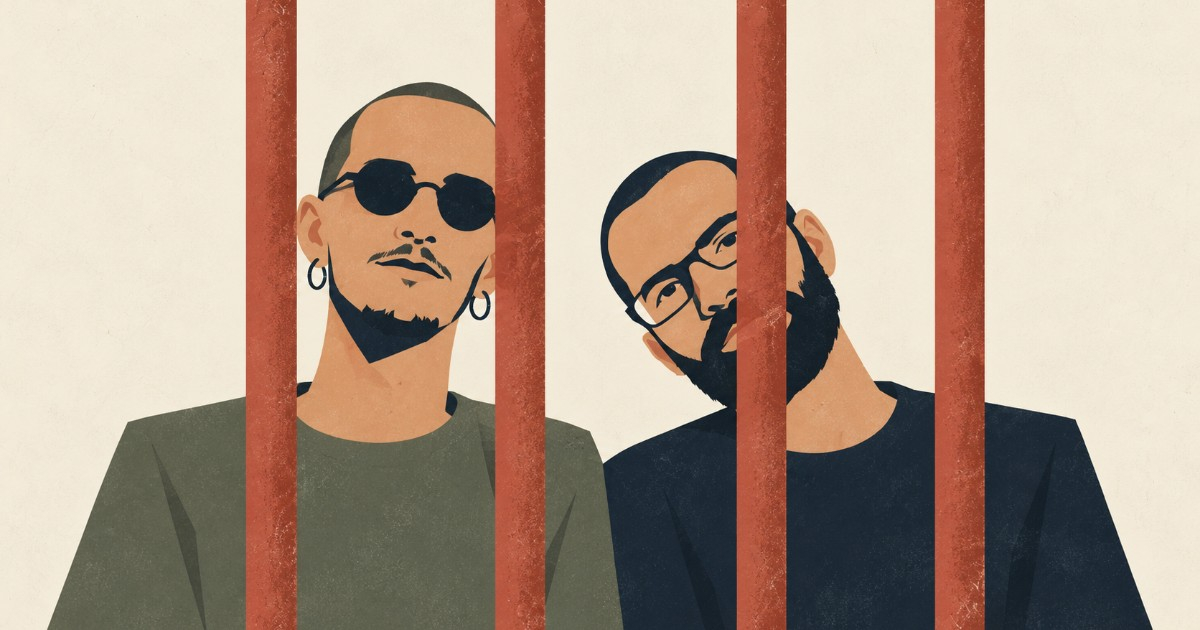
In Cuba, creating videos that challenge authority, criticize the Communist Party, or call out police actions can lead to criminal charges. This is precisely what the human rights group Cubalex is highlighting in its assessment of the case against the young creators of El4tico. The Cuban regime's Prosecutor's Office is seeking prison sentences ranging from eight to ten years for these individuals.
Ernesto Ricardo Medina and Kamil Zayas Pérez have been behind bars since February 6, 2026. They produced independent audiovisual content that tackled Cuba's economic, social, and political issues, questioned government decisions, and encouraged public discourse.
The Legal Battle Over Free Speech
On October 7, Cubalex released a legal analysis indicating that the Holguín Provincial Prosecutor's Office is using these critical expressions as the basis for charges against the young men. The organization points to serious issues concerning freedom of speech, legality, and political opinion discrimination within the case.
The Prosecutor's provisional conclusions, dated September 15, request eight years in prison for Medina and ten for Zayas. As reported by CiberCuba on October 2, the Holguín Provincial Court has moved to proceed with a trial. The requested sentences have yet to be finalized as convictions.
Turning Political Dissent into Criminal Evidence
One alarming aspect of the case is the use of videos shared on Instagram, Facebook, and YouTube to support charges of propaganda against constitutional order. According to Cubalex, the Prosecutor's Office views these posts, which criticize Cuba's political realities and governance structures, as significant to their accusations.
The organization argues that expressing dissenting political opinions does not inherently constitute criminal propaganda. Criticizing those in power, exposing societal issues, and sharing political views are expressions of free speech, even when they unsettle authorities.
Public Platforms and Heightened Penalties
The analysis further questions why the public nature of digital platforms is being used as a factor to intensify penalties. Under this rationale, the broad reach of their posts could justify harsher punishment for those who successfully disseminate their critiques.
The case file also references critiques of the Cuban Communist Party and the youths' connections with exiled opposition figures. Individuals like Yunior García Aguilera, Carolina Barrero, and Amelia Calzadilla have been mentioned in past coverage by CiberCuba.
Associating with dissidents or opposing the official narrative does not inherently prove criminal activity. According to Cubalex, using these circumstances as incriminating factors exemplifies the misuse of criminal law against dissenters.
Targeting Criticism of Police Practices
The second charge contested by Cubalex involves defamation of institutions, organizations, and national heroes and martyrs. The accusation encompasses critical remarks made by the youths about state institutions, including the National Revolutionary Police (PNR), a key tool for maintaining internal control.
Cubalex warns that criminalizing such critiques limits citizens' rights to hold authorities accountable and demand accountability for their actions. Challenging a public institution isn't inherently defamation. The Prosecutor's Office must substantiate any alleged criminal act, not just penalize political expressions that conflict with the state's narrative.
Accusation of Incitement Deemed Vague
The third charge against El4tico's members is incitement to commit crimes. According to the Prosecutor's narrative reviewed by Cubalex, the young men allegedly urged members of the Revolutionary Armed Forces (FAR) and the Ministry of the Interior (MININT) to seize power and alter the constitutional order.
However, Cubalex identifies a major legal flaw: the Prosecutor's Office cites Article 268 of the Penal Code without clearly specifying the criminal act the defendants allegedly incited. It is insufficient to attribute political statements to the accused without identifying the allegedly promoted criminal behavior and proving the necessary elements under criminal law.
This issue is particularly concerning when the accusations could result in up to a decade of imprisonment.
Ongoing Detention and Rights Violations
Medina and Zayas were arrested on February 6 in Holguín during operations by State Security and the police. Their homes were searched, and technological equipment used to produce and share content, including a computer, camera, and phones, was confiscated.
Since late March, they have been held in Holguín Provincial Prison after being detained in police facilities. The reported irregularities began with their arrests. Cubalex questioned the legality of the home searches, noting that officials did not properly present the necessary warrant and highlighted the lack of procedural safeguards.
In August, CiberCuba reported a new Cubalex complaint when the youths had been incarcerated for six months without a public prosecutorial request or a trial date. The subsequent release of provisional conclusions does not resolve the issues surrounding the conditions of their detention, the extension of pre-trial detention, or the basis of the accusations.
The families of the young men have also rejected the criminalization of their work. Mileydis Medina Machín, Ernesto's mother, has publicly defended the critical and peaceful nature of El4tico's content and questioned whether their interactions with exiled individuals can be considered evidence of criminal activity.
The Broader Context: Suppressing Independent Thought in Cuba
The El4tico case reveals more than just the Prosecutor's requests for eight and ten-year sentences. It demonstrates how the Cuban regime's judicial system can be wielded to target those who publicly challenge authority.
The young men did not lead a political party or control a state-run media outlet. Through an independent audiovisual project, they shared perspectives on the country's situation and critiqued the government's decisions.
Cubalex sees the legal response to this expression as indicative of a deeper problem: employing Penal Code provisions to discourage criticism and punish the spread of ideas counter to the official discourse.
The repression reported against El4tico fits into a documented pattern of criminalizing dissent by Cubalex throughout 2026, encompassing actions against citizens for social media posts and other expressions of political dissatisfaction.
The fundamental right to criticize a government, expose its mistakes, and demand political changes should not lead to imprisonment. This is the core issue that Medina and Zayas's case raises.
As the legal process unfolds, both remain detained. Their families and human rights organizations continue to demand their release and respect for procedural guarantees.
The prison requests still need judicial review. However, Cubalex's analysis already highlights a reality frequently denounced by Cuban activists: in a system that does not tolerate organized political opposition or independent scrutiny, even a critical video can become grounds for seeking years of imprisonment.
Understanding the Legal Implications in Cuba
What are the charges against the El4tico creators?
The creators of El4tico face charges of propaganda against constitutional order, defamation of institutions, and incitement to commit crimes.
Why is Cubalex concerned about the legal proceedings?
Cubalex is concerned because the charges seem to criminalize political expression and dissent, potentially violating freedom of speech and demonstrating a misuse of criminal law against political opposition.
How have the families of the accused responded to the charges?
The families have rejected the criminalization of the youths' work, defending the peaceful and critical nature of their content and questioning the basis for the charges.