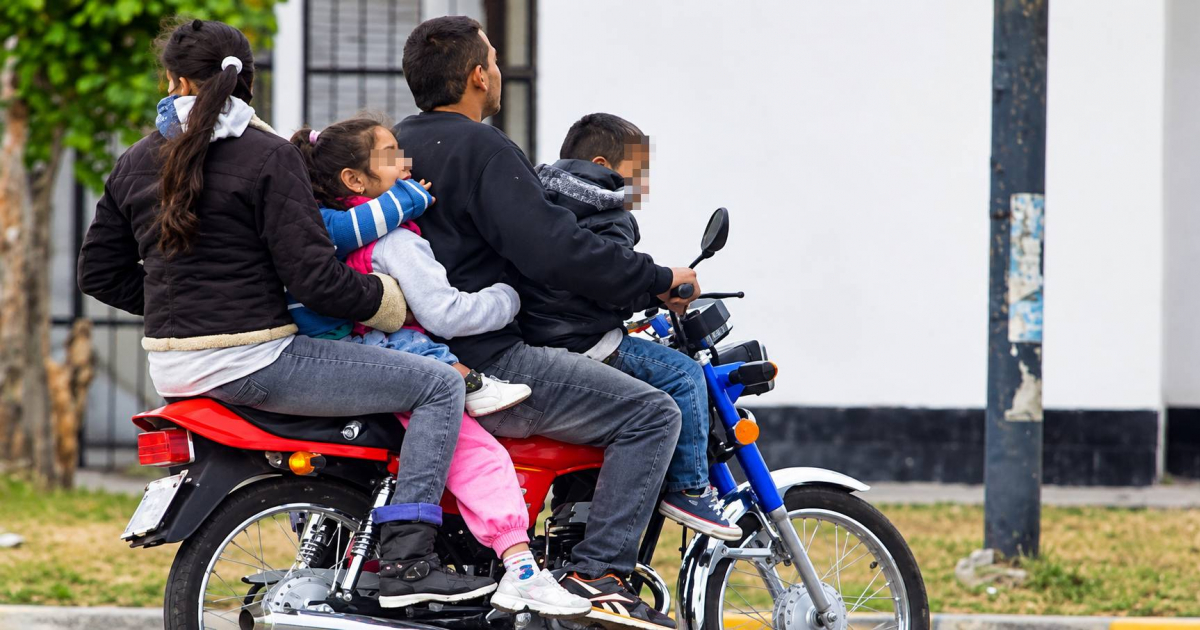
In response to the alarming misuse of electric scooters by minors, traffic authorities in Villa Clara have ramped up road surveillance operations. This growing trend has emerged as a significant risk factor on the province's roads.
The Cuban News Agency reported that this call for stricter road discipline comes at a crucial time. Villa Clara ended 2025 with over 500 traffic incidents, nearly a hundred more than in 2024, placing it among the regions with the highest accident rates in the country, alongside Havana, Granma, Cienfuegos, and Sancti Spíritus.
Electric scooters and motorcycles—commonly known as "motorinas"—are at the heart of the issue. Nationwide, these vehicles were involved in 52% of accidents, causing 32% of the fatalities and 42% of the injuries, according to the National Road Safety Commission's data from March 2026.
In Villa Clara, the statistics for accidents, fatalities, and injuries related to scooters have worsened. This prompted the National Directorate of Traffic to label the provincial situation as "particularly challenging" and to demand enhanced preventive measures and dissemination strategies.
The dangers extend beyond collisions. Between January and October of 2025, electric scooters were responsible for 32 fires in the province: 20 in homes, 10 on public roads, and two in state institutions, with estimated damages of 95 million pesos.
Current Cuban legislation classifies electric scooters with up to 1,000 W and speeds of 50 km/h as motor vehicles, requiring a driving license, helmet, and registration.
Article 93 of the Road Safety Code explicitly prohibits driving without a license or learner's permit. Adults who permit minors to drive are held accountable, facing potential fines and vehicle confiscation.
The law also restricts children under 12 years old from riding bikes outside recreational areas, residential neighborhoods, or low-traffic roads.
The regime's response to the road chaos included a set of 2026 regulations. The Ministry of Transport's Instruction No. 1/2026 issued temporary operating licenses for electric scooter and tricycle owners, valid until December 31 of this year, while Resolution 47/2026 outlined the homologation process for vehicles assembled from parts.
However, the gap between written law and its real-world implementation remains wide, as evidenced by the continued rise in accidents.
The surge in these vehicles is a direct result of the island's ongoing fuel crisis. Unable to obtain gasoline, thousands of Cubans turned to "motorinas" as a mobility alternative, while the systems for control, registration, and road education did not expand accordingly.
The primary causes of accidents identified in Villa Clara include "driver distractions, failure to yield, pedestrian violations, and irresponsible alcohol consumption," according to the traffic authorities' data from October 2025. During this period, over 40,000 fines were issued, 717 repeat offenders were penalized, and 53 driving licenses were permanently revoked in the province.
Understanding Villa Clara's Road Safety Challenges
What measures are being taken to address traffic violations by minors in Villa Clara?
Traffic authorities in Villa Clara have intensified road surveillance and enforcement operations to curb the misuse of electric scooters by minors, which has been a significant risk factor on the roads.
Why are electric scooters so popular in Cuba?
The popularity of electric scooters, or "motorinas," in Cuba is largely due to the ongoing fuel crisis. Many Cubans have turned to these vehicles as an alternative mode of transportation due to the scarcity of gasoline.
What are the legal requirements for operating an electric scooter in Cuba?
Under Cuban law, electric scooters up to 1,000 W and 50 km/h are considered motor vehicles, requiring drivers to have a license, helmet, and vehicle registration.