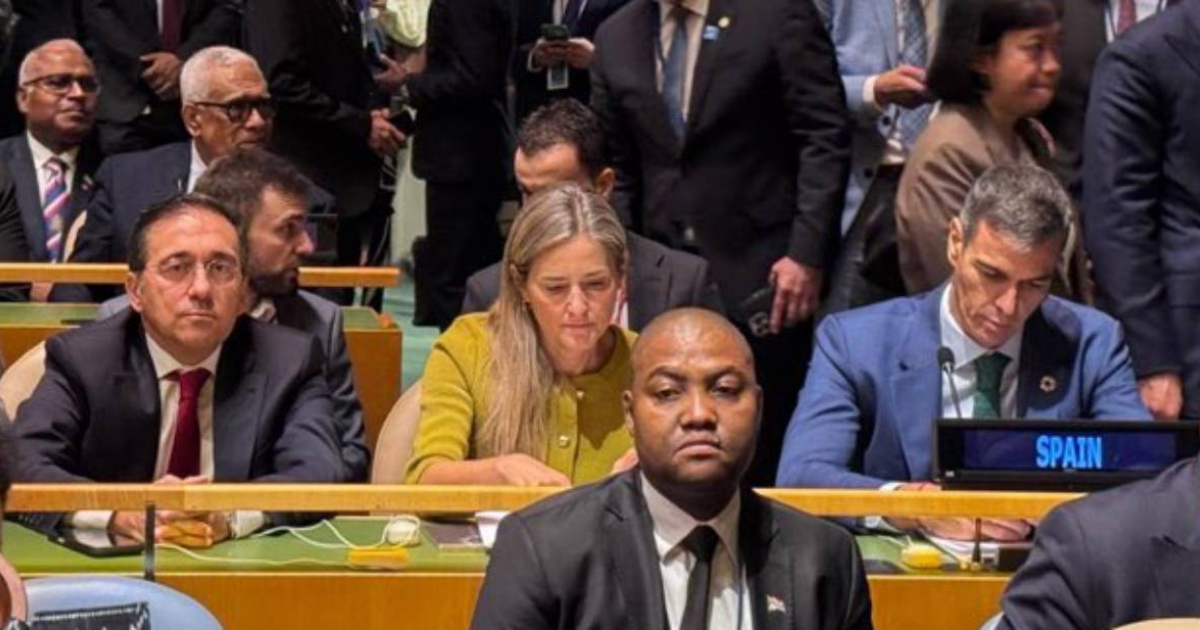
Spain's Foreign Affairs Minister, José Manuel Albares, announced in New York that the Spanish government is committed to defending Spanish companies operating in Cuba. He condemned the extraterritorial reach of U.S. sanctions, which have been impacting these businesses.
"The Spanish government will always stand by its companies, wherever they conduct business globally, and we do not accept the extraterritoriality of laws and sanctions," the minister stated, as reported by EFE.
European Support for Spain's Stance
Albares made these remarks during an event hosted by the Atlantic Council, coinciding with the United Nations General Assembly. His statement comes at a time when Spain's top three hotel chains—Meliá, Iberostar, and Barceló—have already exited Cuba due to pressure from Washington.
The Spanish diplomat emphasized that this position is backed by the European Commission and that any dealings concerning Cuba must adhere to international law. "Everything related to Cuba must respect its sovereignty, territorial integrity, and, of course, international law," he asserted.
Spain's Position on Military Interference
Albares also firmly stated Spain's opposition to any military aggression toward Cuba or any Latin American country. "The use of force in any Latin American nation, including Cuba, is something we completely rule out," he declared.
Despite these declarations, the reality for Spanish businesses on the island is stark. Meliá, Iberostar, and Barceló have withdrawn from Cuba following Executive Order 14404, signed by Donald Trump on May 1, 2026, which intensified secondary sanctions against foreign enterprises tied to GAESA—the Cuban military conglomerate overseeing tourism on the island. The deadline to sever these connections expired on June 5.
Challenges for Spanish Businesses
Meliá Hotels International, which had been in Cuba for over three decades with investments totaling 465 million euros, handed over its 34 hotels on July 24, incurring losses of 75 million euros in the first half of the year. Iberostar ceased managing 12 hotels associated with Gaviota as of June 1, and Barceló confirmed its departure as well.
Albares's comments followed a day after Trump, addressing the UN General Assembly, threatened to wield military power in Latin America if U.S. interests were jeopardized, labeling Cuba as a "completely failed state." In response, the Cuban delegation left the room during Trump's speech.
Dialogue and Humanitarian Efforts
The Spanish minister further noted that Madrid maintains open communication with Cuban regime authorities. "We have a dialogue with them to ensure that Spain's interests, as well as those of the entire Latin American community, are respected," he explained.
Albares also highlighted Spain's humanitarian aid to the Cuban population. "We strive to assist the Cuban people by sending food, medicines, and solar panels to help alleviate the electricity shortage," he added.
However, the Spanish government's support for its business sector in Cuba has not found favor in Parliament. On September 17, the Spanish Congress of Deputies rejected a proposal by Sumar, with 170 votes against 163, urging the government to lead a pro-Cuba stance within the European Union against Washington's sanctions.
Spain and Cuba: Business and Diplomatic Relations
What actions has Spain taken to support its businesses in Cuba?
Spain has declared its intention to defend its companies in Cuba against U.S. sanctions, emphasizing the need for adherence to international law and rejecting the extraterritorial application of these sanctions.
How has the European Commission responded to Spain's stance on Cuba?
The European Commission has supported Spain's position, which aligns with respecting Cuba's sovereignty and international law.
What is the current status of Spanish hotel chains in Cuba?
Spanish hotel chains such as Meliá, Iberostar, and Barceló have withdrawn from Cuba due to increased U.S. sanctions and their ties with GAESA, the Cuban military's tourism conglomerate.