The state-aligned portal, Cubadebate, recently solicited its audience to submit photos capturing acts of solidarity among Cubans. However, instead of support, the initiative was met with a wave of criticism, highlighting the government's failure to address the ongoing crisis of essential services.
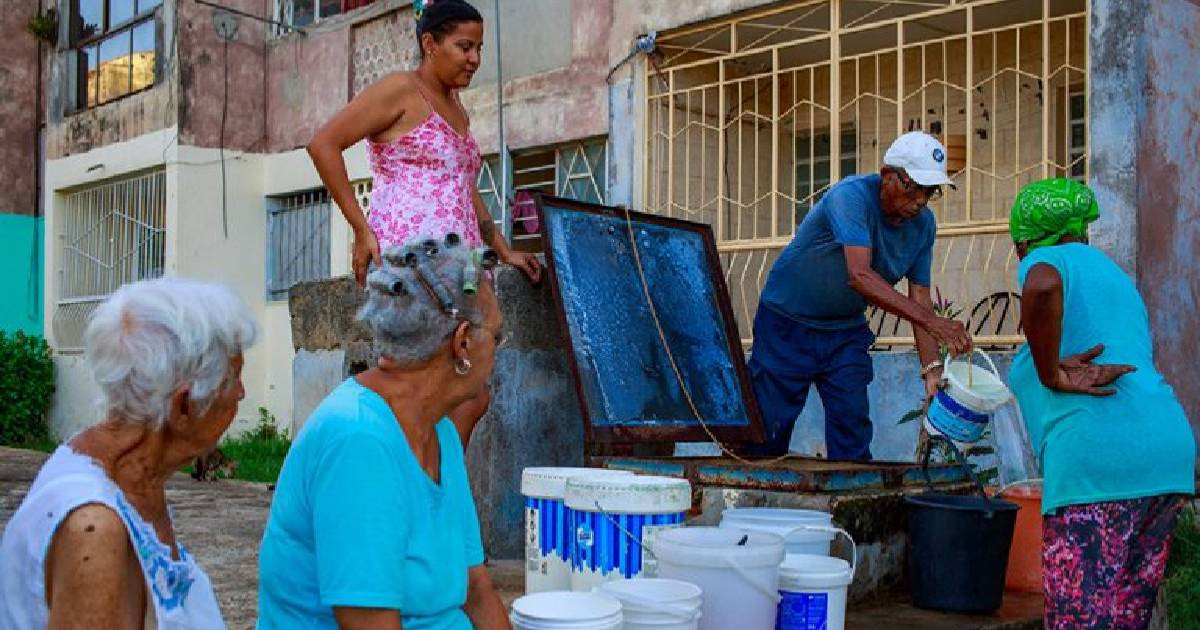
Under the title "Reader's Call: Share a Photo That Speaks of Solidarity," the publication featured an image of residents in Mulgoba, Havana, with a man drawing water from a building's cistern, emphasizing that "in challenging times, a single gesture can make a difference."
The response on Cubadebate's Facebook page was swift and overwhelming. Rather than sharing images of mutual aid, readers expressed their frustration, directly questioning the state's accountability.
"The talk of neighborly solidarity is just the state washing its hands of responsibility," a commenter remarked.
Another was more blunt: "In the 21st century, water and electricity should be guaranteed by the government. If it can't, then it's time for change."
A reader expanded on the constitutional aspect: "Access to potable water isn't about neighborly goodwill; it's a human and constitutional right the state must ensure. Days without water isn't a chance for mutual aid praise but a direct violation of the government's constitutional duty. Solidarity is important, but it must never replace the state's legal obligation to ensure basic living conditions."
The Cuban Constitution of 2019, in Article 76, stipulates the right to water and mandates the state to create conditions to ensure it, a point echoed by many commenters.
Others pointed out the divide between the populace and those in power: "I'd like to see the ministers and government insiders showing solidarity," one reader noted. Another added, "A photo of the rulers sharing their wealth would go viral."
Reports emerged of homes in higher areas of La Víbora and Vieja Linda without water since June 23. One reader highlighted the escalating price in the informal market: "A bucket of water costs 500 pesos, what solidarity are they talking about? Enough is enough."
Frustration was also voiced through sarcasm: "It's all well and good when it's a task for a couple of days, but when it's daily, it's unbearable, you're wearing us out."
"The people are united... too bad the government isn't united with the people," one reader summarized the disconnect between citizens and those who should govern.
In March, Cubadebate referred to the situation on the Island as "difficult days," prompting an outcry on social media. In August, the outlet published a report on Puerto Rico's water crisis, receiving over 1,000 comments within two hours, with readers pointing out the hypocrisy of addressing foreign issues while Cuba's water crisis affects millions.
The backdrop is an unprecedented water emergency. Official figures indicate nearly three million Cubans regularly face water scarcity, and millions more experience intermittent supply.
In Havana, over half a million residents lacked regular access to water services in July. Additionally, 87% of the pumping system relies on the electrical grid, meaning every blackout directly disrupts supply.
The government's response has been calls to utilize "local potentialities" and promises of gradual improvements. Recently, leader Miguel Díaz-Canel announced potential relief for Havana's severe water supply crisis by late September.
Understanding Cuba's Water Crisis
What prompted the criticism against Cubadebate's photo initiative?
Cubadebate's call for photos of solidarity among Cubans was meant with criticism as it highlighted the government's inability to address basic service deficiencies, such as water and electricity, which are seen as governmental responsibilities.
How are electrical blackouts affecting water supply in Cuba?
Since 87% of Cuba's water pumping systems rely on electricity, any blackout directly interrupts the water supply, exacerbating the water crisis.
What does the Cuban Constitution say about the right to water?
Article 76 of the Cuban Constitution of 2019 recognizes the right to water and obligates the state to create conditions to ensure access to this essential resource.