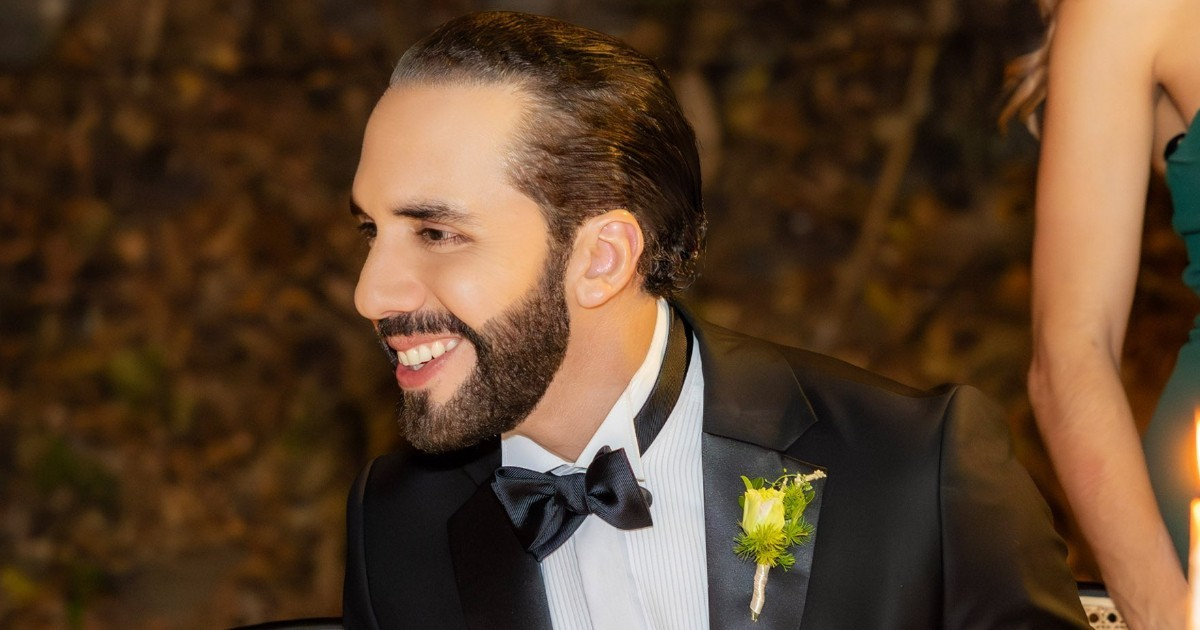
A Cuban citizen, Jorge Luís Torre Tamayo, recently took to Facebook to pen an open letter to the President of El Salvador, Nayib Bukele. The letter, timed with the start of the school year, contrasts Bukele's educational initiatives with the longstanding ideological indoctrination prevalent in Cuban schools.
The catalyst for Torre Tamayo's message was a speech delivered by Bukele on August 23 to an audience of 30,000 young people at the Jorge "El Mágico" González Stadium in San Salvador. During the event, Bukele announced the provision of 50,000 scholarships and pledged an educational investment exceeding 8% of the GDP, amounting to more than $3 billion annually.
"A few days ago, I listened intently to your speech in front of thousands of Salvadoran youths. It moved me deeply," Torre Tamayo writes, reflecting on the speech. "As you spoke, my thoughts were with Cuba."
What struck Torre Tamayo most was not the numbers, but the tone of Bukele's message: "You didn't need to conjure up an enemy. You didn't resort to the rhetoric of 'imperialism.' You refrained from turning that assembly of students into a political rally or demanding loyalty to the Government."
This contrast evoked mixed emotions in Torre Tamayo, encapsulated in his words: "Joy for El Salvador and sorrow for Cuba."
A Call for Educational Reform in Cuba
Torre Tamayo portrays the Cuban educational system as a tool wielded by those in power: "For decades, we were led to believe education was a gift from the Revolution, one we had to repay with gratitude, obedience, and political loyalty."
He further criticizes that "schools ceased to be merely places for learning Mathematics, Physics, Chemistry, Literature, or History. Instead, they became venues for ideological indoctrination."
In light of this grim reality, Torre Tamayo advocates for a transformative educational model for Cuba—one that fosters independent thinking rather than blind obedience, universities that welcome diverse perspectives, and a society where young people can "innovate without fear, succeed without needing permission, travel without becoming enemies, and return without proving political allegiance."
Demand for Change and Opportunity
Highlighting the systemic indoctrination from an early age as a regime tactic, he demands that Cuba stops "teaching its youth to perpetually blame external forces" and instead, equips them to build opportunities within their own borders.
The letter encapsulates its essence with a powerful statement: "Cuba needs Bukele! Not necessarily the man, but the essence of his message: education free of slogans, opportunities, preparedness, accountability, order, future prospects, and a government dedicated to paving paths for its youth, not shackling them to an ideology."
Finally, Torre Tamayo extends an invitation to Bukele to visit a free Cuba and address its youth. He expresses hope that "on that day, they will hear something vastly different from what generations before were told: study, prepare, work, dream, build your country."
"After decades of being taught only to endure, Cuban youth deserve to learn how to prosper as well," he concludes.
Understanding the Educational Differences Between Cuba and El Salvador
What are the main criticisms of the Cuban educational system according to Jorge Luís Torre Tamayo?
Torre Tamayo criticizes the Cuban educational system for being a tool of political indoctrination, emphasizing obedience and loyalty to the regime rather than fostering independent thinking and diverse perspectives.
How does Nayib Bukele's educational approach differ from Cuba's?
Bukele's approach focuses on providing opportunities for education and personal growth without political indoctrination, encouraging young people to innovate and succeed without fear or political constraints.
Why does Torre Tamayo want Bukele to visit a free Cuba?
Torre Tamayo hopes Bukele can inspire Cuban youth with a message of hope and prosperity, teaching them to build and dream for their future, unlike the current message of endurance.