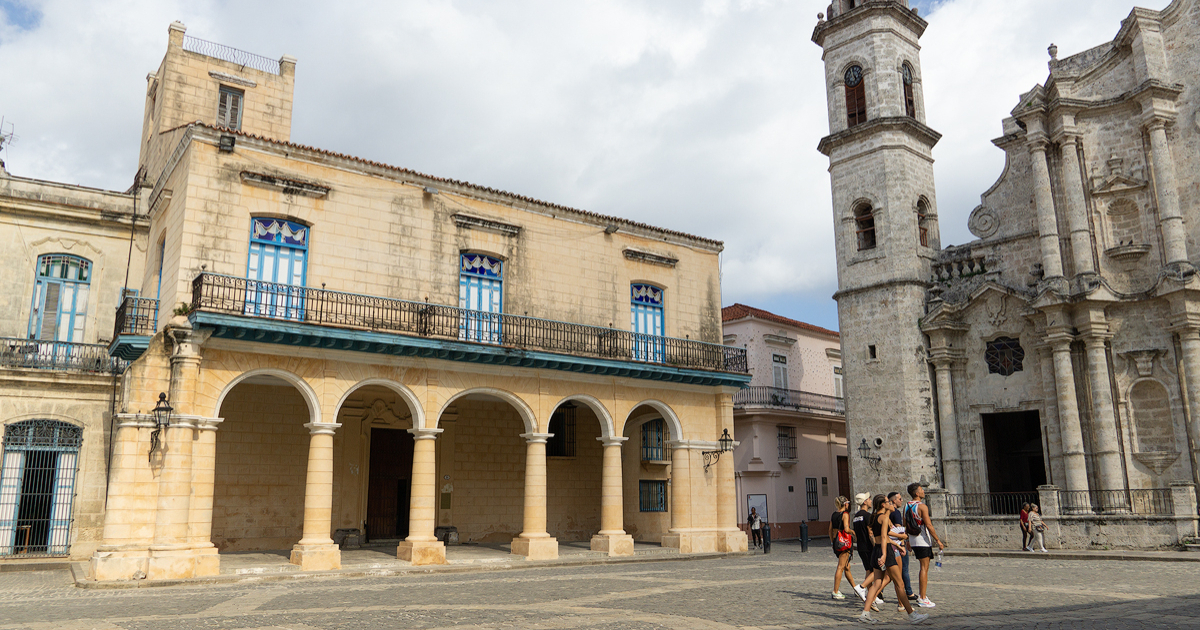
The international tourism sector in Cuba is experiencing its most significant decline in decades, with just 419,863 foreign visitors arriving between January and July 2026.
Data released by the National Office of Statistics and Information (ONEI) on Tuesday reveals that the island welcomed 419,863 international travelers during the first seven months of the year. This number represents only 37.2% of the visitors recorded in the same timeframe in 2025, indicating a loss of nearly 709,000 foreign tourists.
The state agency's report also accounts for total travelers, including Cuban residents living abroad, totaling 794,492 people. This is merely half of those recorded in the equivalent period of 2025, showing a decrease of 787,773 travelers.
The Decline of Key Tourism Markets
The most significant drop was observed in the Canadian market, which saw 350,737 fewer visitors compared to the previous year. Following this, Cuban expatriates contributed 52,021 fewer travelers, and visitors from the United States decreased by 39,944. Noticeably, there were also substantial declines in arrivals from Russia, Mexico, Argentina, Spain, China, Colombia, and France.
This downturn isn't an isolated incident but part of a worsening trend month by month. In January, the decline was 9%, escalating to 60.7% by the end of June, with only 387,591 international visitors compared to 985,606 during the same period in 2025. May experienced an especially sharp drop, with only 30,883 tourists arriving on the island.
Structural Issues and International Sanctions
The collapse stems from a combination of structural issues. Notably, the exodus of international hotel chains, pressured by U.S. sanctions against the military conglomerate GAESA that dominates much of Cuba's tourism sector, has been evident.
In 2026, seven chains ceased operations on the island, affecting 46% of the rooms managed under this model. Blue Diamond Resorts vacated 62 hotels, totaling over 12,900 rooms by the end of May. Iberostar discontinued operations in 12 of its 18 locations starting in June and fully withdrew by July. Meliá Hotels International completed its exit on July 24, ceasing to manage its 34 hotels on the island.
Consequently, 73% of the country's hotel facilities remain closed, leaving about 25,000 workers without employment, as acknowledged by Prime Minister Manuel Marrero Cruz at the end of July. Hotel occupancy plummeted to 21.5% in the first quarter, with some reports suggesting it fell below 10% in May and June.
Additional Challenges Facing Cuban Tourism
Beyond the departure of international operators, other challenges exacerbate the situation: fuel shortages lead to flight cancellations and complicate internal transportation; chronic power outages undermine visitor experiences; and Cuban hotels have been removed from booking platforms like Booking.com, Expedia, and Trivago, and blocked from global distribution systems such as Galileo, Worldspan, and Sabre.
The regime blames the crisis on the U.S. embargo, sanctions from the Office of Foreign Assets Control (OFAC), and Cuba's designation as a state sponsor of terrorism. However, the sector's collapse is also due to decades of centralized management, crumbling infrastructure, and reliance on a military-controlled hotel model.
To put the decline into perspective: in 2018, a record year, Cuba received 4.71 million international visitors. By the end of 2025, the figure was only 1.81 million—the lowest since 2002, according to Infobae—and the current trend for 2026 suggests even lower numbers by year-end.
Frequently Asked Questions About Cuba's Tourism Decline
What are the main reasons for the decline in Cuban tourism?
The decline is attributed to several factors, including the withdrawal of international hotel chains due to U.S. sanctions, deteriorating infrastructure, fuel shortages, and chronic power outages.
How have U.S. sanctions impacted Cuban tourism?
U.S. sanctions have pressured international hotel chains to cease operations, leading to a significant reduction in available accommodations and contributing to the overall decline in tourism.
Which countries have reduced their visitor numbers to Cuba the most?
The most significant reductions in visitor numbers have come from Canada, the United States, and Cuban expatriates, along with declines from Russia, Mexico, Argentina, Spain, China, Colombia, and France.