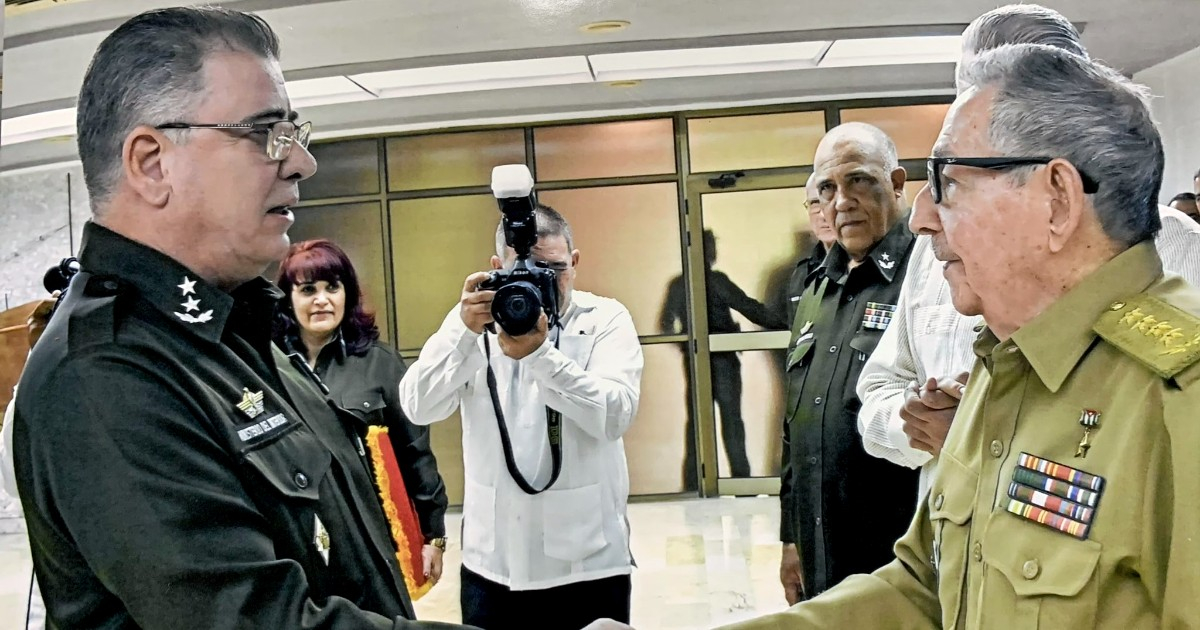
Recent reports suggest the Trump administration is seeking a Cuban counterpart similar to Delcy Rodríguez's role in Venezuela. However, a former U.S. official has cautioned against dealing with figures like Interior Minister Lázaro Alberto Álvarez Casas or Raúl Guillermo Rodríguez Castro, known as "El Cangrejo," warning that such negotiations could be disastrous for the Cuban people.
Emilio T. González, a retired U.S. Army officer born in Havana and raised in Tampa, raised this alarm in an opinion piece for The Washington Times. González, who has held positions on the National Security Council and led the U.S. Citizenship and Immigration Services (USCIS), argues that the Trump administration should avoid engaging with these individuals.
The Search for a Cuban Ally
Media reports indicate that the Trump administration is exploring a strategy in Cuba akin to its approach in Venezuela. This involves identifying someone within the power structure willing to cooperate with Washington during a potential transition period. The New York Times disclosed in early August that U.S. intelligence agencies were tasked with finding such a pragmatic figure within or near the Cuban regime.
However, intelligence assessments have highlighted the difficulty in pinpointing such a figure in Cuba. Many potential successors belong to the regime's hardline sectors, complicating Washington's strategy.
The Influence of MININT
González emphasized that the Ministry of Interior (MININT) is the most corrupt and feared institution in Cuba, tied to systematic human rights abuses, human trafficking, drug trade, and espionage. He described it as the "praetorian guard" of the communist regime.
MININT holds sway over the National Revolutionary Police, State Security, Border Guard Troops, intelligence, counterintelligence, prisons, and immigration, as well as overseeing the Committees for the Defense of the Revolution. More than 1,200 political prisoners are reportedly held in prisons controlled by this state apparatus.
The U.S. sanctioned MININT and Álvarez Casas in January 2021 under the Global Magnitsky Act for severe human rights abuses. In July 2025, these sanctions were expanded, barring the minister and his family from entering the United States. "El Cangrejo," a key figure in the Castro family circle, was also sanctioned by the U.S. in June 2026.
Controversial Figures and International Ties
In August 2026, The New York Times reported on "El Cangrejo's" alleged connections to a migrant trafficking network in Mexico, based on testimonies from New York court convicts. An insider from the "Cuban Mafia in Quintana Roo" claimed to have gifted him a high-speed boat, a Rolex watch, a Suzuki motorcycle, and Louis Vuitton clothing.
Washington's Cautious Approach
The debate over potential Cuban interlocutors follows CIA Director John Ratcliffe's visit to Havana in May 2026, where he met with Álvarez Casas and conveyed Trump's message about the possibility of dialogue contingent on "fundamental changes" on the island.
González also highlighted MININT's international reach, noting its involvement in establishing and training Nicaragua's Interior Ministry and restructuring Venezuela’s intelligence services during the Chávez era. Among the 32 Cubans killed during the military operation that captured Maduro, some were reportedly MININT officers.
The Cuban Power Structure
Regarding Cuba's power architecture, González asserted that the Armed Forces, through the economic conglomerate GAESA, control up to 70% of the Cuban economy, while MININT manages the country's internal political control. He concluded by warning that involving figures like General Álvarez and Colonel Rodríguez would be catastrophic for the Cuban people.
González closed his analysis with a direct warning to Washington: "These are not the allies you seek. Policy planners would be wise to steer clear."
Key Questions on U.S.-Cuba Relations
Why is the Trump administration looking for a Cuban counterpart?
The administration aims to find a figure within Cuba's power structure who could facilitate cooperation with Washington during a potential transition, similar to the approach taken in Venezuela.
Who are Álvarez Casas and "El Cangrejo"?
Álvarez Casas is Cuba's Interior Minister, and "El Cangrejo" is Raúl Guillermo Rodríguez Castro, a key figure linked to the Castro family. They are considered potential interlocutors in U.S.-Cuba relations but are associated with the regime's repressive apparatus.
What role does MININT play in Cuba?
MININT is a central force in Cuba's government, controlling security, intelligence, immigration, and other key sectors, and is involved in human rights abuses and corruption.