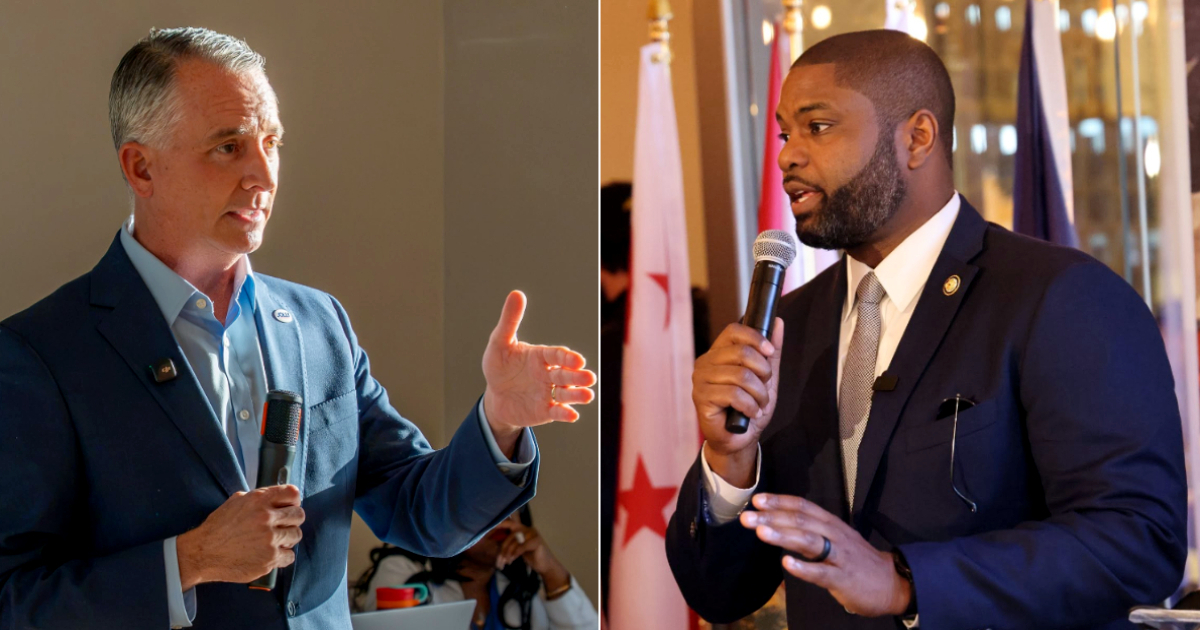
With Florida's primary elections behind us, the candidates vying for the governor's seat on November 3rd are focusing on their policies regarding Cuba. Republican Byron Donalds and Democrat David Jolly are set to replace Governor Ron DeSantis, each advocating for a democratic Cuba and condemning the communist regime, albeit through different political strategies.
Significance of the Cuban-American Vote in Florida
The race holds particular significance in Florida, where Cuban-American voters wield substantial political influence, and Republicans have managed to secure an edge over Democrats. Jolly, a former Republican turned Democrat, is keen to show that his party can compete for this vote without relinquishing a critical stance towards Havana.
Donalds: Advocating Regime Change and Maximum Pressure
Donalds has been more vocal in his approach. In February, he labeled the Cuban government as a "brutal and murderous communist dictatorship" and declared, "The regime must go." By April, he had gone further, supporting a "total regime change." When asked about potential military action in Cuba, he indicated he would not stand in the way of decisions made by President Donald Trump or Secretary of State Marco Rubio.
Donalds envisions a future for Cuba characterized by freedom, respect for private property, the return of exiles, and close economic ties with Florida. He has suggested that a free Cuba could become a "great partner for Florida." His stance aligns with the national policy of increasing pressure on Havana and resonates with the Cuban-American Republican sector who believe the focus should be on dismantling the Cuban system rather than reforming it.
Jolly: A Democrat's Challenge in Winning Cuban-American Support
Jolly has maintained a less confrontational tone but hasn't pursued a policy of rapprochement with the regime. The Democratic candidate supported federal charges against Raúl Castro for the downing of Brothers to the Rescue planes, calling it an act that demands justice.
He has also expressed hope that Trump and Rubio will succeed in achieving "a free Cuba" and has acknowledged Rubio's expertise on U.S.-Cuba relations. Unlike Donalds, Jolly has not anchored his campaign on the concept of "total regime change" nor proposed military intervention similar to other Florida Democrats.
His challenge is to prove that a Democrat can criticize Cuban communism and advocate for democratic transition without fully adopting the Republican agenda.
DeSantis's Legacy: Institutionalizing Hardline Cuba Policy
Outgoing Governor Ron DeSantis has played a pivotal role in cementing a hardline policy towards Cuba in Florida. In May, he signed HB 905, a law that strengthens state restrictions concerning countries of concern, including Cuba, and imposes new limitations and sanctions on specific relations and operations.
The legislation also allows for the temporary suspension of some restrictions on Cuba if the federal government alters its diplomatic status. Essentially, DeSantis combined pressure on the current regime with the possibility of a different relationship with a future democratic Cuba.
As such, Donalds would not be starting from scratch if he assumes office in Tallahassee. He would inherit a state policy already characterized by confrontation with Havana, though his political alignment with Trump and Rubio could lead to greater coordination with Washington.
FAQs on Florida's Political Stance on Cuba
What are Byron Donalds' views on Cuba?
Byron Donalds advocates for a total regime change in Cuba, describing the government as a brutal communist dictatorship. He supports increased pressure on Havana and envisions a free Cuba with close economic ties to Florida.
What is David Jolly's approach to U.S.-Cuba relations?
David Jolly maintains a critical stance towards the Cuban regime but opts for less confrontational methods than his opponent. He supports justice for acts of aggression by the regime and hopes for successful efforts by Trump and Rubio to achieve a free Cuba.