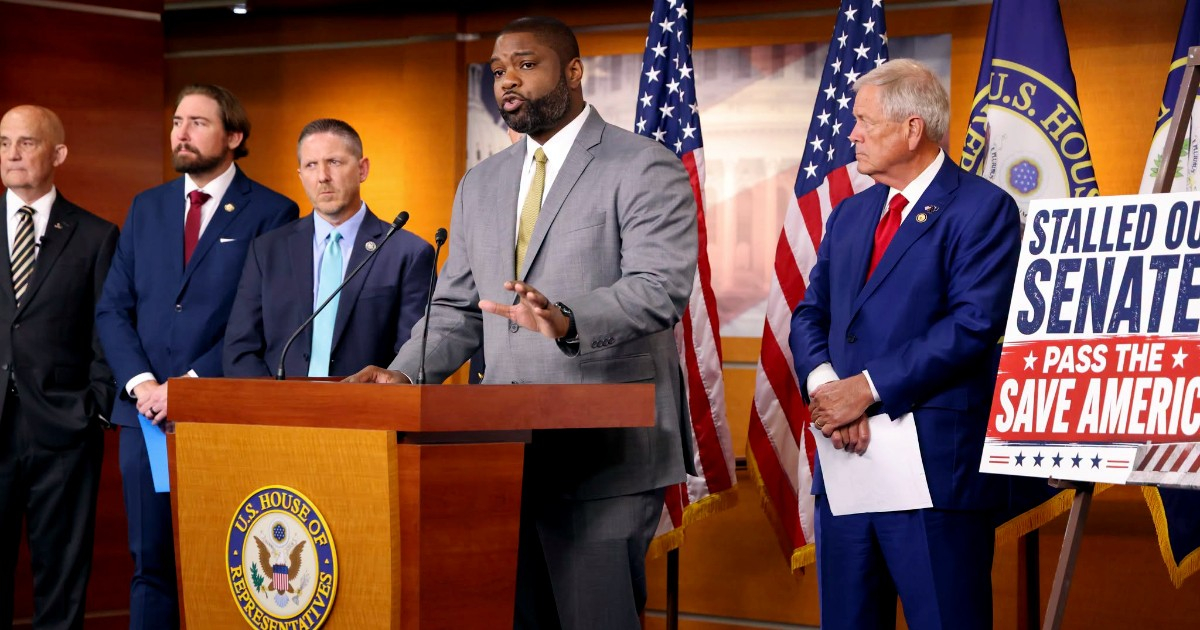
Byron Donalds, a 49-year-old former congressman who has the backing of former President Donald Trump, emerged victorious in Florida's Republican primary on Wednesday. This win positions him as the party's nominee for the gubernatorial race slated for November 3.
Hailing from Naples, located in the southwestern part of the peninsula, Donalds secured 48% of the Republican votes, leaving his 10 competitors far behind.
Jay Collins, the vice governor under outgoing Governor Ron DeSantis, came in a distant second, managing to capture only 25% of the vote.
The Trump Influence on Florida's GOP
Donalds' victory highlights the strong influence of the Trump faction within Florida's Republican Party. Trump had endorsed Donalds as early as February 2025, even before he officially declared his candidacy. By the time of the primary, Donalds had a commanding 49-point lead in the polls over his Republican rivals.
Governor DeSantis, barred by state law from seeking a third consecutive term, chose not to publicly support any candidate during the primaries, including his own deputy.
A Historic Bid for the Governorship
In the upcoming November election, Donalds will face off against Democrat David Jolly, a former congressman from the Tampa Bay area. Jolly left the Republican Party in 2018 and registered as a Democrat last year, securing his primary with 61% of the vote.
The race carries historical significance: if Donalds wins, he would be the first black governor of Florida and the first black Republican governor elected in U.S. history.
Upon his primary victory, Donalds called for unity within his party while taking aim at his Democratic opponent: "It's time for the Republican Party to come together. By working together, we can make Florida more affordable and uphold the Florida dream for our families, seniors, and youth. (...) My Democratic opponent would raise taxes, increase the cost of living, and bring the radical left's agenda to the Sunshine State. Florida cannot afford the liberal David Jolly."
Republican Stronghold in Florida
The political landscape appears favorable for Republicans: the party has governed Florida since 1999 and holds a supermajority in the state legislature, with 27 of 40 Senate seats and 83 of 120 House seats.
The shift of Hispanic voters—especially Cuban Americans—toward the Republican Party has been a crucial factor in this political transformation, affecting even former Democratic strongholds like Miami-Dade.
Donalds has made his tough stance against the Cuban regime a central theme of his campaign. He has labeled Cuba a "brutal and murderous communist dictatorship" and expressed support for "full regime change in Cuba" during an appearance on NBC's "Meet the Press."
Jolly, meanwhile, is positioning himself as a candidate who can attract independents and disenchanted moderate Republicans, betting that national discontent with Trump could convert into votes in a state that has increasingly leaned to the right.
The last Democrat to win the Florida governorship was Lawton Chiles, who served from 1991 until his death in office in December 1998. Since then, the party has failed to reclaim the position, making Jolly's candidacy a high-stakes gamble for Democrats come November 3.
FAQs About the Florida Gubernatorial Race
Who is Byron Donalds?
Byron Donalds is a former congressman from Naples, Florida, who won the Republican primary for governor with the endorsement of former President Donald Trump.
What is significant about Donalds' candidacy?
If elected, Byron Donalds would become the first black governor of Florida and the first black Republican governor elected in the history of the United States.
Who is David Jolly?
David Jolly is a former congressman from the Tampa Bay area who switched from the Republican to the Democratic Party. He won the Democratic primary with 61% of the vote.
What has been the Republican Party's recent history in Florida?
The Republican Party has governed Florida since 1999 and holds a supermajority in the state legislature. The party's influence has grown with the support of Hispanic voters, particularly Cuban Americans.