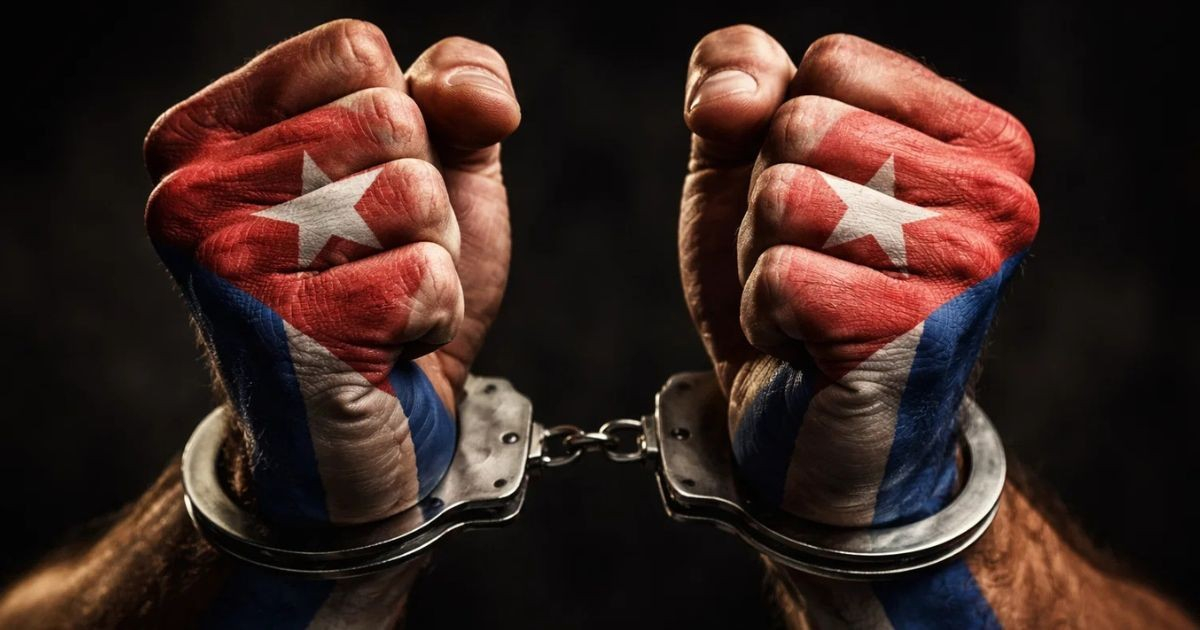
As of July 2026, Cuba has reached an unprecedented total of 1,327 political prisoners, according to the organization Prisoners Defenders (PD). This marks the highest number ever documented by the group, with 36 new additions to their list in the past month alone, 15 of which are linked to civilian protests.
The case that has sparked the most outrage involves Alex Javier Hernández González, a 13-year-old boy who was detained on July 22 in Santiago de las Vegas, Boyeros, Havana, without a warrant following demonstrations against power outages. His mother reported that four uniformed police officers brutally beat him on the head, neck, and back, while he pleaded, "Stop hitting me, I'm just a child."
The police also obstructed the creation of a medical report for his injuries, citing a missing signature, and tried to blame the injuries on fellow protesters. However, Alex directly identified the officers as the perpetrators.
Increased Repression Amidst Anniversaries
Alex Javier remains detained at "El Combinadito," a juvenile detention center operated by the Ministry of the Interior (MININT) in Guanabacoa, with no charges disclosed against him. The crackdown in July intensified around the fifth anniversary of the July 11, 2021 protests, affecting not just demonstrators but also artists, journalists, digital activists, and even those showing solidarity with prisoners.
Two independent musicians, Pedro Ernesto Farías ("El Feno") and Rolando Almenteros ("El Bohemio"), were violently detained on July 7 in the Santos Suárez neighborhood for filming a protest video about the blackouts; Rolando was beaten during his arrest and remains isolated in El Vivac detention center.
Widespread Detentions and Forced Exile
Activist Lumey Guzmán from Alamar was also detained that day after responding to a summons from State Security; PD notes her initial disappearance as a short-term forced disappearance, a pattern documented in Cuba by the United Nations.
In a striking example of the regime's extremity, Aniley Martínez Ramírez was imprisoned for bringing food to political prisoner Lizandra Góngora Espinosa, who is serving a 14-year sentence on Isla de la Juventud, suffers from sickle cell anemia, and was in solitary confinement in July.
Out of the documented 1,327 prisoners, 459 suffer from severe medical conditions, 150 are women, and 41 were minors at the time of their detention. Over the past year, the list has grown by 275 new cases, averaging 23 per month.
The government also reaffirmed sentences for individuals previously acquitted: Ana Ibis Tristá Padilla faces 14 years in prison, and Jarol Varona Agüero 13 years, despite their initial acquittal due to lack of evidence. The Supreme People’s Court upheld these sentences based solely on testimonies from counterintelligence officers.
From behind bars, Ana Ibis communicated with PD, maintaining her innocence and stating that the judges who initially acquitted her were pressured by State Security: "We are not dead, nor are we silenced," she declared.
Adding to the direct repression is the systematic use of forced expatriation: Luis Manuel Otero Alcántara was deported to the United States on July 18, nine days after fully serving his five-year sentence, without being allowed to remain in Cuba. Meanwhile, Maykel Osorbo was unexpectedly transferred to the maximum-security prison in Guanajay and was missing for nearly 48 hours, as the Inter-American Commission on Human Rights recommended overturning his nine-year sentence.
Between August 2021 and the end of July 2026, the Cuban regime has amassed a staggering 2,148 political prisoners in just five years, as documented by Prisoners Defenders.
Cuban Political Prisoners: Key Questions Answered
What is the total number of political prisoners in Cuba as of July 2026?
As of July 2026, Cuba has documented 1,327 political prisoners.
Who is Alex Javier Hernández González?
Alex Javier Hernández González is a 13-year-old boy who was detained without a warrant and beaten by police in Havana on July 22, 2026.
What are the conditions of political prisoners in Cuba?
Many political prisoners in Cuba suffer from severe medical conditions; out of 1,327 prisoners, 459 have serious health issues, and 41 were minors at the time of arrest.
How has Cuba used forced expatriation as a tool of repression?
Cuba has systematically used forced expatriation against dissidents, as evidenced by the deportation of Luis Manuel Otero Alcántara to the United States without allowing him to remain in Cuba.