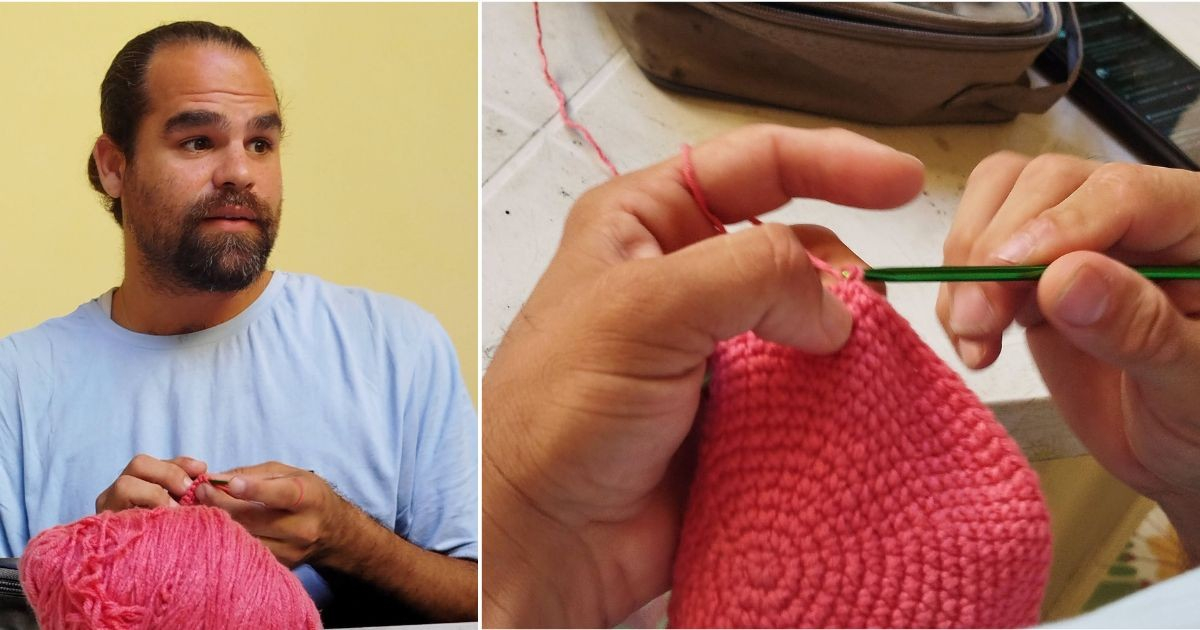
Ricardo de Miranda Rodríguez, a 34-year-old radio professional and Social Communication student, defies stereotypes in Camagüey with his passion for crochet. He can often be found at the Hotel Santa María, needle in hand, weaving intricate designs while onlookers curiously observe.
Ricardo's journey with crochet began during the COVID-19 lockdown when he sought a productive way to fill the long hours at home. Initially, he tried embroidery with a gifted hoop and some small linens, but it didn't captivate him. Discovering crochet through YouTube tutorials, he taught himself with a mismatched hook and thread.
"From the very start, I was enchanted and hooked," he recalls.
Ironically, Ricardo describes himself as restless and impatient. Despite having dabbled in making vinegar, pasta from scratch, and numerous other projects, crochet offered him a discipline that demanded focus and patience. "It has taught me to be patient, to step away from problems, to concentrate on a specific project rather than starting many and abandoning them," he explains.
The Role of Crochet in Challenging Norms
Since April 2026, Ricardo has been part of Las Hormigas Locas workshop, meeting Tuesdays and Thursdays at the Casa de la Diversidad Cultural Camagüeyana. Progressing from beginner to advanced, he remains the sole male participant, initially anxious about his reception.
In Camagüey, few men crochet openly. He's familiar with the skepticism: "A man crocheting?" Yet, for Ricardo, it's about more than stitches and yarn; it's about breaking barriers. "Everyone should know it's for everyone," he asserts.
As a Social Communication student, Ricardo helps manage the Facebook page for Las Hormigas Locas, believing that promoting male involvement in manual crafts challenges the traditional gender roles of "men's work" versus "women's work."
In Cuba, women overwhelmingly handle domestic duties, with crafts like crochet traditionally seen as feminine.
Ricardo's Creations and Aspirations
While Ricardo hasn't sold any of his creations, he has gifted scarves to radio colleagues, made a small backpack for a coworker, and is crafting a purse for his mother's birthday in September. He plans to showcase these pieces at the final exhibition of the Cuban Association of Artisans and Artists.
"I have imposter syndrome. I don't yet believe my work is good enough to sell," he admits.
Outside the workshop, Ricardo has spent two years at Radio Cadena Agramonte, hosting the news magazine Camagüey al día, Monday to Friday from six to eight in the morning. On Saturdays, he leads Camino a la plaza, a historical program, and also directs Ritmo joven and created Notas al aire, focusing on instrumental music.
With his commitments to radio, university, research, and crochet, he barely finds time to rest, reserving Sundays as his only day off.
As August draws to a close, the workshop members are preparing for a fashion show, with Ricardo crafting accessories. He's working on a pompom bag for the event.
"I never imagined finding such a community in the course, which means much more to me than crochet itself," he reflects, having overcome his initial fears to discover, stitch by stitch, something unexpected.
Exploring Crochet and Breaking Stereotypes in Camagüey
How did Ricardo start crocheting?
Ricardo began crocheting during the COVID-19 lockdown, seeking a productive activity to occupy his time. He discovered crochet through YouTube tutorials and taught himself using a borrowed hook and mismatched thread.
What impact does Ricardo hope to have with his crochet work?
Ricardo aims to challenge traditional gender roles by promoting the visibility of men in manual crafts like crochet, showing that such activities are for everyone regardless of gender.
What are Ricardo's future plans with crochet?
Ricardo plans to present his crochet pieces at the Cuban Association of Artisans and Artists exhibition and continues to craft unique items, aiming to overcome his imposter syndrome and possibly sell his work in the future.