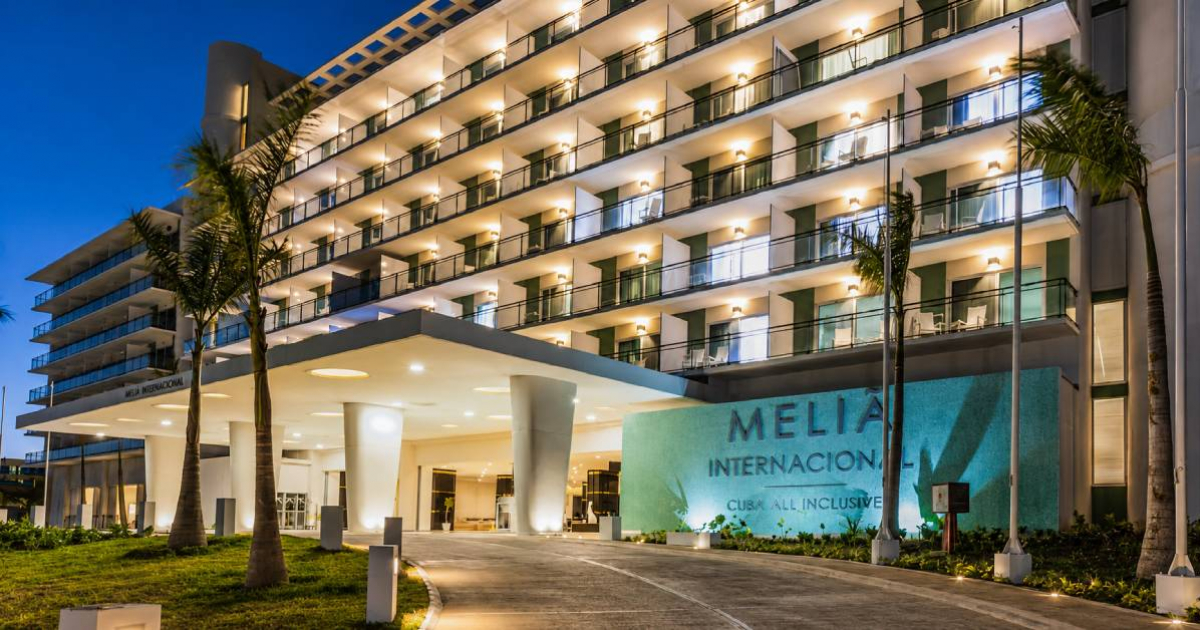
In the world of finance, a company's value hinges not only on its earnings but also on the risks it undertakes. By choosing to exit Cuba, Meliá Hotels International has garnered approval from several major European banks, which view this move as a step that enhances the company's appeal to investors.
Industry portal Reportur highlighted insights from experts and reports from leading banks, affirming that Meliá's withdrawal from Cuba boosts the Spanish hotel's valuation.
Deutsche Bank stands as the most positive among its peers, recommending Meliá as a prime investment choice, setting a target price of 13 euros per share. This endorsement positions Meliá as the sole buy recommendation among European hotel chains monitored by the bank.
The Market's Perspective on Meliá's Decision
Banco Sabadell has gone a step further, clearly delineating why leaving the island is beneficial for the Spanish firm. Analysts have noted that Meliá's operations in Cuba represented a significant uncertainty, which had been adversely affecting the group for years. Projections for 2026 had already suggested negligible contributions to the company's earnings from its Cuban operations.
Bloomberg's market consensus supports this view, predicting a 12% rise in Meliá's share value from its current standing of approximately 10 euros per share. Analysts have issued 60% buy recommendations, with only two advising to sell among about fifteen experts tracking the stock.
Economic and Political Pressures
Sabadell has also indicated it is “assessing the financial impact, which could involve a writedown of its Cuban assets,” with further details expected when Meliá reports its first-half 2026 earnings, scheduled for release after the market closes on July 30.
The economic crisis, frequent power outages, food and supply shortages, criticism of poor hotel services, and a sustained decline in tourism had already been a drain on Meliá's operations in Cuba. However, the pivotal moment was the Trump administration's Executive Order 14404, issued on May 1, 2026.
The U.S. government formally sanctioned GAESA—the Cuban military conglomerate controlling tourism through Gaviota—setting a June 5 deadline for foreign businesses to sever ties with the regime. On July 13, additional U.S. Treasury sanctions targeted Cuba's Ministry of Tourism, effectively closing the legal loopholes for firms operating with entities like Cubanacán and Gran Caribe.
Impact on Spanish Hoteliers
As a result of these pressures, major Spanish hotel chains such as Iberostar and Barceló followed Meliá's lead, exiting Cuba in a mass withdrawal during June and July 2026. Iberostar relinquished its 18 hotels affiliated with Gaviota, and Barceló shuttered its operations in Varadero. The estimated financial losses for these Spanish companies range from 80 to 100 million euros.
After 36 years in Cuba, where it managed 34 hotels with 14,053 rooms, Meliá announced on Tuesday its complete withdrawal, effective this Friday. By the first quarter of 2026, it was operating at only 50% capacity on the island, with an average occupancy rate of 34.1%, making the business unsustainable even before the sanctions permanently sealed its fate.
This strategic pivot in market perception is telling. What was once a robust hotel network in Cuba for Meliá had, in recent years, become a regulatory, operational, and financial burden.
Future Prospects: U.S. Hotel Chains Eye Cuba
The departure of Spanish hoteliers leaves a void in Cuba's tourism management, shifting focus to potential U.S. operators. Industry players like Marriott, Hilton, Hyatt, and Wyndham are seen as potential entrants if the political and regulatory landscape changes, as reported by specialized media.
History suggests this could happen again: Marriott managed the Four Points by Sheraton in Havana from 2016 to 2020 until its license was revoked by the U.S. Treasury.
While this scenario may unfold if Washington's policy towards Cuba shifts in the coming months, air connectivity remains a critical topic of discussion. Travel from Europe to Cuba has decreased, yet airlines like Air Europa continue to operate flights to the island, and Iberia is considering resuming its routes in the fall, indicating that commercial interest persists, even as the control of the hotel industry might eventually pass to U.S. hands.
Understanding Meliá's Exit from Cuba
Why did Meliá decide to leave Cuba?
Meliá chose to exit Cuba due to a combination of economic challenges, declining tourism, and increased political pressure from U.S. sanctions targeting Cuban tourism entities.
How might Meliá's exit affect its market value?
Analysts predict a potential 12% increase in Meliá's market value, as leaving Cuba removes a significant risk factor that had been impacting the company's financial prospects.
Could U.S. hotel chains enter the Cuban market?
There is potential for U.S. chains like Marriott and Hilton to enter the Cuban market if political and regulatory conditions permit. Past experiences suggest this could be a viable opportunity.