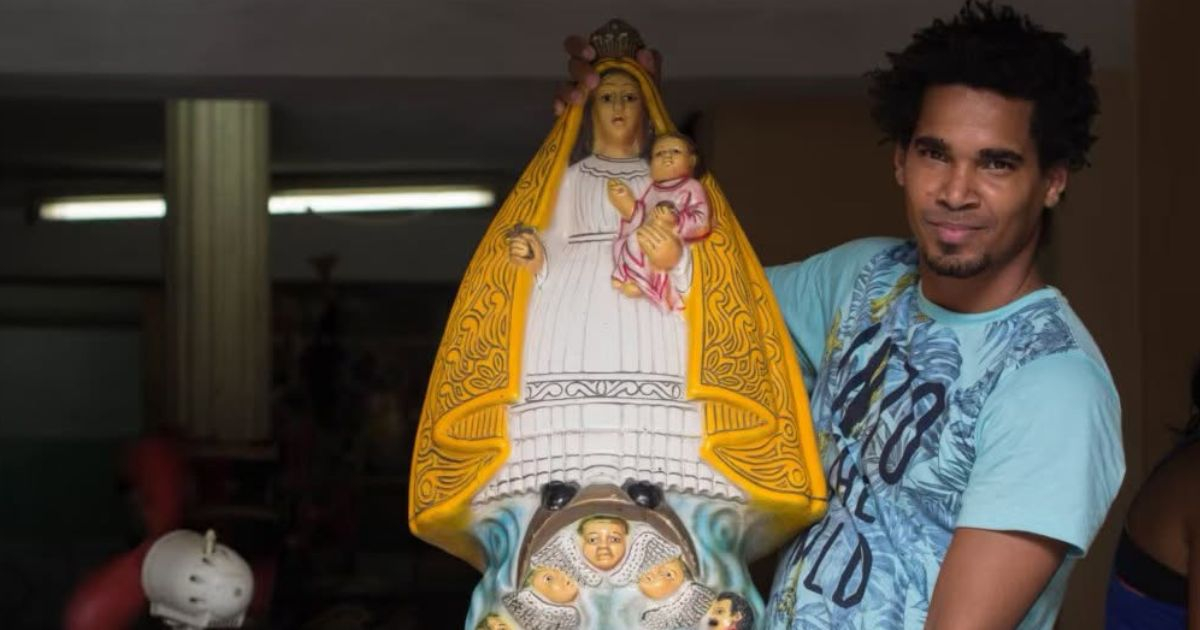
Luis Manuel Otero Alcántara, a leading figure and co-founder of the San Isidro Movement, was released this past Saturday after enduring five years of imprisonment. However, his freedom came at a significant price—permanent exile from Cuba.
In a statement shared on his Facebook page, the artist revealed that he had been held in a maximum-security prison, a move perceived as an effort to stifle his civic and political influence.
Prior to his release, a humanitarian parole application had been submitted to the United States on his behalf, described as his only viable path to regain freedom at that time.
The Path to Freedom
The journey leading to Otero Alcántara's liberation was fraught with uncertainty, marked by several days where his whereabouts were unknown—a situation condemned by human rights organizations as a forced disappearance.
On July 7, 2026, just days before his official sentence was set to end, State Security agents removed him from Guanajay Prison without notifying his family or legal representatives. His location remained a mystery for days.
Cubalex filed a habeas corpus petition, denouncing the arrest as illegal. The United Nations Committee on Enforced Disappearances launched an Urgent Action—AU No. 2357/2026—demanding that the Cuban state disclose his whereabouts by July 25. Amnesty International, which had recognized him as a prisoner of conscience since May 2021, also voiced its concerns.
A New Beginning in Exile
On July 17, U.S. authorities approved the humanitarian parole request that had been in the pipeline for weeks as the only feasible solution. The following day, Otero Alcántara arrived in Miami.
His arrest occurred on July 11, 2021, amidst the historic 11J protests. He was sentenced to five years in a closed trial for charges including contempt, public disorder, and disrespect to national symbols. He was neither granted reductions for good behavior nor included in presidential pardons in January 2025 or April 2026.
Upon arriving in Miami, his first act carried deep significance: visiting the Shrine of Our Lady of Charity to offer thanks. He brought a broken statue of the Virgin from Cuba, symbolizing the fractured state of the nation and its people. "Many of us are broken, as is Cuba," the statement read. "This gesture invites us to piece together what has been shattered and to hold onto hope for healing."
In the coming days, Otero Alcántara plans to engage with the media and exile organizations. The statement notes that "he arrives eager to explore the physical, human, and symbolic spaces of exile" and to "discuss Cuba's future and how we can collectively envision and build it."
Wider Implications and Continued Struggle
His release coincides with the fifth anniversary of 11J, a time when Cuba reports a historic high of 1,306 political prisoners, according to Prisoners Defenders. Among them is his partner, rapper Maykel Osorbo, who was taken from Kilo 8 Prison on July 10 without family notification and whose whereabouts remain unknown, sentenced to nine years in prison.
"Behind remain hundreds of political prisoners and an entire nation possibly enduring its darkest chapter. He hasn't forgotten, and neither have we," concludes the statement from Otero Alcántara's circle.
Key Questions About Luis Manuel Otero Alcántara's Release
What led to Luis Manuel Otero Alcántara's arrest in 2021?
Luis Manuel Otero Alcántara was arrested during the 11J protests on July 11, 2021, and sentenced to five years in prison for charges like contempt, public disorder, and disrespecting national symbols.
Why was Otero Alcántara released from prison?
Otero Alcántara was released after a humanitarian parole request was approved by U.S. authorities, seen as the only viable option for his release, but it required him to go into permanent exile from Cuba.
What actions did human rights organizations take during his detention?
Organizations like Cubalex filed a habeas corpus, while the UN Committee on Enforced Disappearances initiated an Urgent Action. Amnesty International also recognized him as a prisoner of conscience and advocated for his release.