The National Power Grid of Cuba experienced yet another complete blackout this Tuesday at 11:05 a.m., marking the fifth occurrence this year.
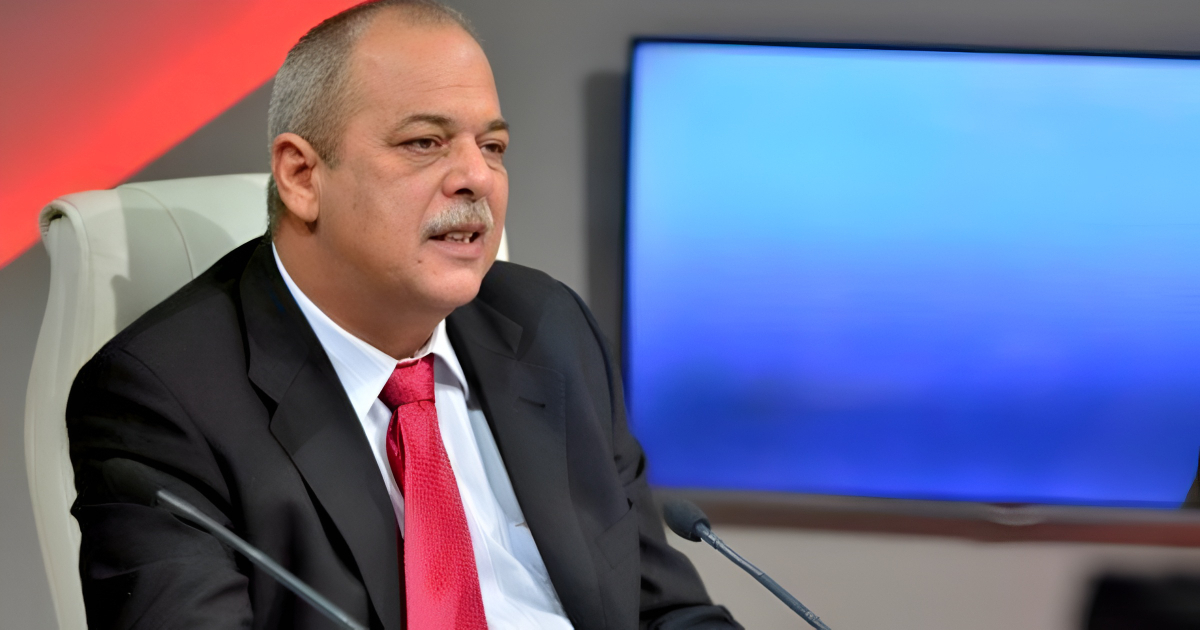
Following the shutdown, Energy and Mines Minister Vicente de la O Levy addressed the media to dismiss any human fault in the incident: "There have been no operational mistakes. The Electric Union possesses the technical expertise, dedication, and a strong sense of belonging. Our workers are tirelessly committed, and the system will be restored."
According to the minister, the outage was triggered by fluctuations within the national grid, which forced a generating unit offline, leading to a chain reaction that resulted in a total collapse.
Addressing Workforce Challenges
The minister also refuted claims that the exodus of workers in the sector was the root of the issue: "I have also heard that this situation is attributed to the exodus of workers. While it's true that, like any organization, we have staff turnover, it hasn't resulted in a loss of expertise."
This statement stands in contrast to sector data showing that between 2021 and 2022, around 15,000 workers left their positions in the electrical sector due to low wages.
Blaming External Factors
As in previous instances, De la O Levy attributed the crisis to a lack of fuel and restricted access to spare parts, linking them directly to policies from the Trump administration: "We reiterate: there is a complete absence of fuel, and we lack access to spare parts for both our thermal units and Energás."
The regime specifically blames two executive orders signed by Trump—14380 in January and 14404 in May—and sanctions imposed in June by Secretary of State Marco Rubio against the state-owned oil company CUPET.
Impact on Key Infrastructure
The collapse further exacerbated the condition of the Antonio Guiteras Thermoelectric Plant, the largest in the country, which already had pre-existing structural weaknesses.
The incident caused a leak in its boiler, the extent of which is still being assessed. "We need to wait for it to cool down before making a decision. At that point, the public will be informed if repairs will take two, three, four days, or however long necessary," the minister explained.
Guiteras has gone 16 years without major maintenance and has experienced at least 17 unscheduled shutdowns so far in 2026.
Efforts to Reconnect and Stabilize
At the time of the address, the reconnection process was advancing from Energás Boca de Jaruco to Santa Cruz del Norte and some areas of Havana. The plan includes reaching Varadero, Cienfuegos, Nuevitas, and Felton.
Meanwhile, the minister shared a concerning statistic about Havana's infrastructure: out of a sample of 1,500 transformers, 755 were overloaded by more than 7% of their capacity.
Extrapolated to the city's 33,000 transformers, it is estimated that about 13,000 are in a critical state.
To address this situation, 15 additional brigades from other provinces will arrive in the capital on Wednesday, and local transformer production is set to double.
Looking Towards Energy Sovereignty
The minister concluded his briefing with a warning about the immediate future: "This is the path of energy transition. We lack fuel and external support, but we are designing a path towards energy sovereignty. It's a long, arduous journey that requires great sacrifice."
Understanding Cuba's Energy Crisis
What caused the recent power grid collapse in Cuba?
The recent collapse was caused by fluctuations within the national grid, forcing a generating unit offline and triggering a cascade effect that led to a complete blackout.
Is the lack of personnel a factor in the energy crisis?
While workforce turnover is acknowledged, the minister insists it hasn't resulted in a loss of expertise crucial to operations.
How are external factors influencing Cuba's power outages?
The shortage of fuel and restricted access to spare parts, attributed to previous U.S. policies, are major contributors to the ongoing power issues.