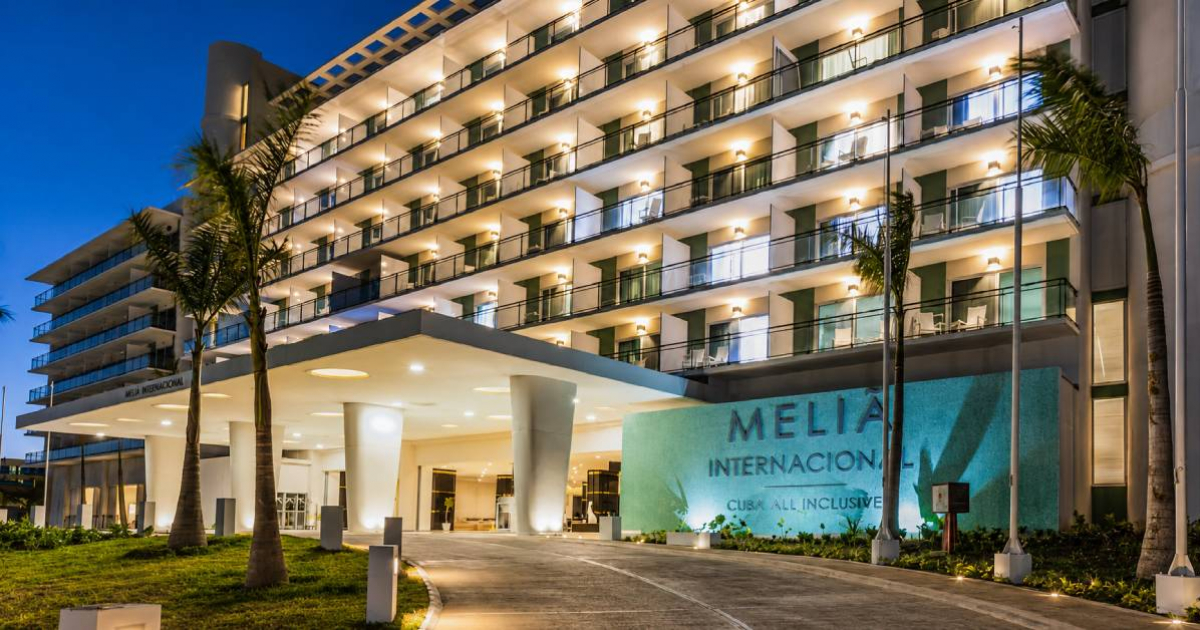
Gabriel Escarrer Jaume, the CEO of Meliá Hotels International, has publicly acknowledged that the Spanish hotel chain is uncertain about the fate of its properties in Cuba.
"I honestly don't know what's going to happen. We are adhering to the guidelines provided by the U.S. State Department," he stated during the opening of a new hotel in Estepona.
Despite the bleak outlook, Escarrer did not rule out a possible return to the Cuban market in the future.
When asked if Cuba still holds potential as a tourist destination, he confidently replied, "I believe so, without a doubt."
However, that potential future is currently contingent upon decisions made in Washington.
Escarrer's admission highlights the predicament of a company that, just six weeks prior, had been compelled to withdraw from managing 15 hotels on the island due to direct pressure from Washington.
The catalyst was Executive Order 14404, signed by then-President Donald Trump on May 1, 2026, which designated the Cuban military conglomerate GAESA as a sanctioned entity and set June 5 as the deadline for foreign companies to sever ties with the group.
On June 3, Meliá informed the Spanish National Securities Market Commission of its immediate cessation of operations in the 15 establishments, citing "unforeseen circumstances beyond management's control."
Among the abandoned hotels were some of Cuba's most iconic tourist destinations: Paradisus Varadero, Paradisus Río de Oro, Gran Hotel Bristol in Old Havana, and Meliá Cayo Santa María, among others.
Following this partial exit, the chain still operates approximately 19 properties in Cuba that are not directly linked to GAESA, although most are functioning at minimal occupancy or are temporarily closed.
By July 2026, only four or five hotels were still operational, including Meliá Habana, Meliá Cohiba, Meliá Varadero, Meliá Las Américas, and Sol Palmeras, which reopened on July 1 after a four-month closure.
This uncertainty hits at a particularly challenging time for Cuban tourism. In 2025, the island welcomed only 1.81 million international visitors, the lowest figure since 2002—excluding the pandemic years—marking a 62% drop from the 4.7 million tourists in 2018.
Cuba's hotel occupancy rate plummeted to a historic low of 18.9% that year.
Meliá's financial situation in Cuba is also precarious. The company closed the first quarter of 2026 operating at 50% capacity, with an average occupancy of 34.1% and a 68% decline in net profit. Losses in Cuba during 2024 amounted to 4 million euros.
The Cuban regime, for its part, tried to portray the withdrawal as an external imposition.
Miguel Díaz-Canel asserted that Meliá and Iberostar were leaving "against their will" due to Trump's pressures, and the government threatened legal action for breach of contract. Meliá defends its position under the European Union's Blocking Statute, in effect since 1996.
The Spanish chain, which once managed up to 34 hotels in Cuba with nearly 14,000 rooms, was the leading foreign tourism operator on the island until recently.
Now, Meliá's international expansion priorities are shifting towards the Middle East, the United States, and Vietnam.
Understanding Meliá's Situation in Cuba
Why is Meliá uncertain about its hotels in Cuba?
Meliá is uncertain about its Cuban hotels due to the U.S. State Department's directives and the impact of Executive Order 14404, which sanctioned GAESA, a Cuban military conglomerate.
What prompted Meliá to cease operations in some Cuban hotels?
Meliá halted operations in 15 Cuban hotels following Executive Order 14404, which mandated foreign companies to end their associations with GAESA by June 5, 2026.
How has Cuban tourism been affected in recent years?
Cuban tourism has seen a significant decline with only 1.81 million international visitors in 2025, marking a 62% decrease from 2018, alongside a historic low hotel occupancy rate of 18.9%.