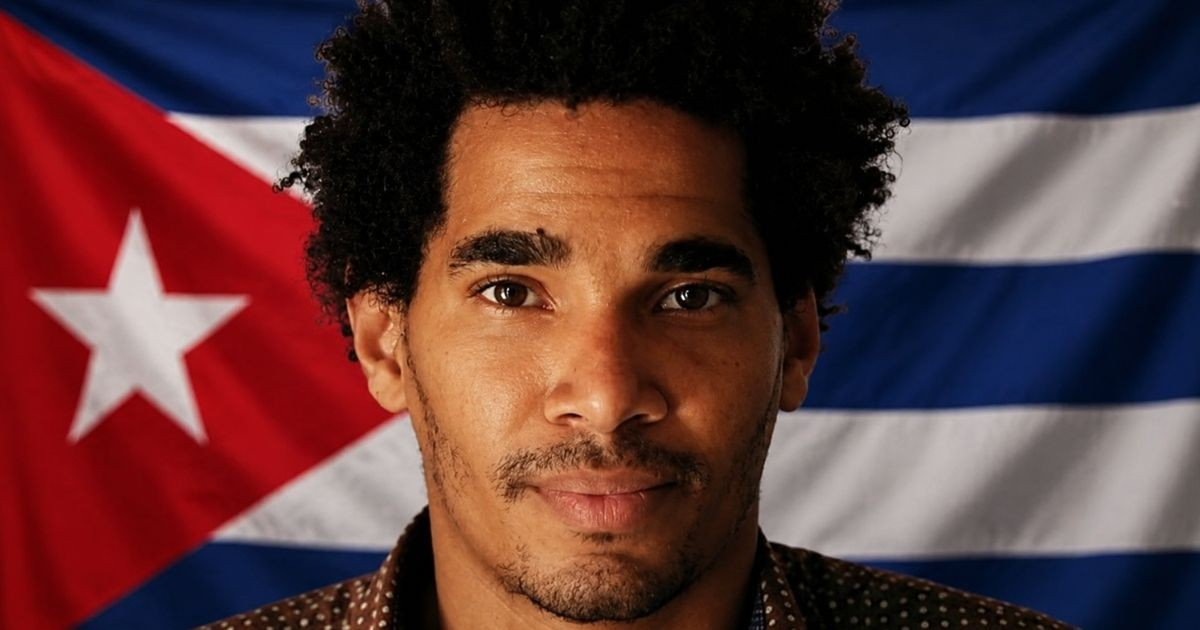
The Provincial People's Court of Havana, including the street where it's located, and the Supreme People's Court were shut down on Friday, July 11, despite it being a workday. This closure prevented a habeas corpus petition from being filed on behalf of artist and political prisoner Luis Manuel Otero Alcántara, according to a report released by the organization Cubalex on Monday.
However, the closure was not the sole barrier. An activist attempting to deliver the petition was detained and held for two days.
Obstacles Persist for Activists Seeking Justice
Activist Anamely Ramos voiced her concerns during a live broadcast this Monday, highlighting that this issue is not isolated. "It seems they no longer work on Fridays, which means Cubans only have from Monday to Thursday to file habeas corpus or any other legal actions," she remarked.
Due to the inability to physically access the court, the petition was emailed to both judicial bodies. Yet, Cubalex has documented that the email addresses set up by authorities to receive citizen complaints are either inactive or block incoming messages.
The organization warned, "The absence of official information regarding Luis Manuel Otero Alcántara's whereabouts, coupled with the barriers to accessing effective legal remedies, heightens the risk to his personal safety and constitutes a severe breach of due process and the right to effective judicial protection."
International Intervention as a Last Resort
Ramos declared her intent to reach out to diplomats from democratic countries accredited in Cuba, seeking their assistance in submitting the petition, given the direct reprisals activists in the country face for attempting such actions.
"The situation in Cuba has deteriorated to the point where even filing a habeas corpus requires a diplomat's intervention. Note the level of repression, the extent of the complete breakdown in that country," she asserted.
Otero Alcántara was extracted from Guanajay prison on July 7 by State Security agents and military forces in a raid, two days before his five-year sentence was officially due to end, set for July 9, 2026, according to Supreme People's Court's Order No. 10/2026.
Since then, Cuban authorities have refused to inform his family of his whereabouts, keeping him incommunicado, in what amounts to a forced disappearance, despite having fully served his sentence.
UN and Amnesty International Condemn Forced Disappearance
The only known contact occurred on that same July 9, when the artist called Ramos from a State Security phone, on speaker, and under agent supervision. According to the activist, the agents made it clear that Otero Alcántara will remain detained while awaiting the outcome of a parole request for potential relocation to the United States.
"Since Thursday, we have heard nothing from Luis Manuel, apart from that call he made to me from a State Security phone, which was on speaker, meaning they were listening to everything we discussed," highlighted Ramos.
The activist summarized the regime’s stance harshly: "The Cuban state cynically makes it clear once again that the options are silence, imprisonment, or exile."
The UN Committee on Enforced Disappearances activated an Urgent Action last week, registered under reference AU No. 2357/2026, at Cubalex’s request. They granted the Cuban regime an unextendable deadline until July 25, 2026, to submit an official report on the artist's situation.
Amnesty International also deemed the case an enforced disappearance.
Understanding the Legal Blockades Faced by Cuban Activists
What challenges do activists face when filing legal actions in Cuba?
Activists often encounter closed courts, detentions, and inactive communication channels, making it difficult to file legal actions.
Why is international intervention necessary in Cuba's legal system?
Due to the high level of repression and risk of direct reprisals, international diplomats' involvement can help ensure petitions reach their intended destinations.