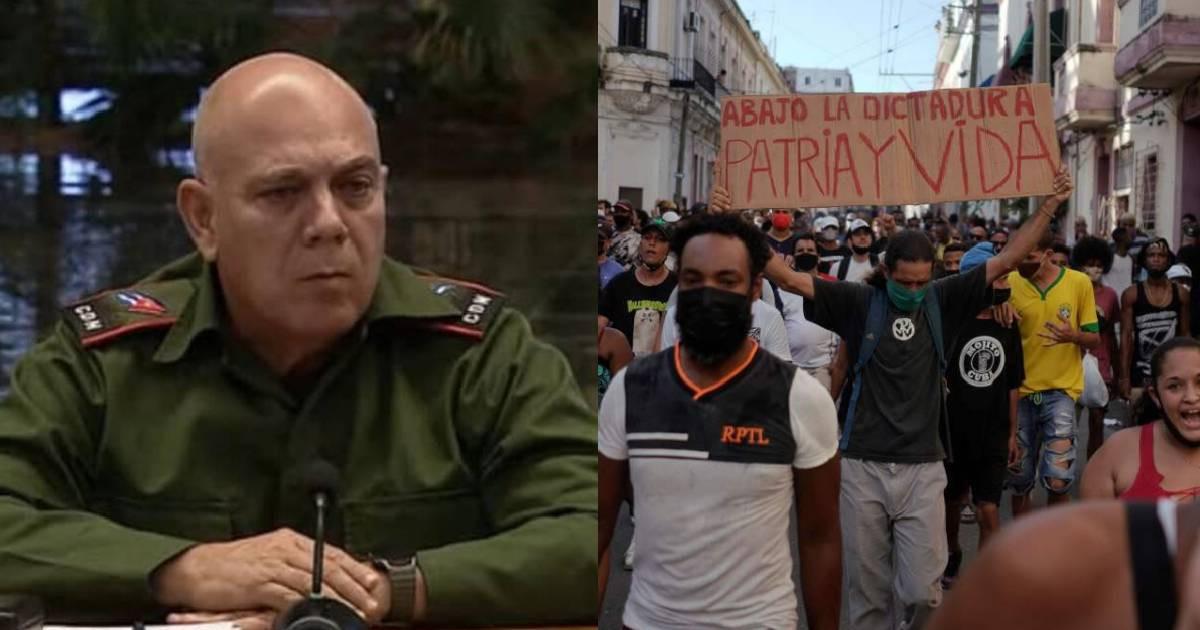
Roberto Morales Ojeda, a key figure in the Communist Party of Cuba's Central Committee, ignited a firestorm on social media this past Saturday. He controversially labeled the regime's reaction to the significant July 11, 2021 protests as a "people's victory."
"Five years after the people's victory on July 11, 2021, we reaffirm that #CubaStandsFirm and we will always defend it. We will never deny this right to the revolutionaries! #DefendTheHomeland," Morales Ojeda declared on his X account, sharing an image of the Cuban flag.
Far from reinforcing the official narrative, this statement triggered a wave of critical responses, primarily from users who reject the government's version of events surrounding July 11.
"You have no shame, there are no revolutionaries in Cuba, just privileged criminals under a dictatorship," one user fired back.
Another questioned the use of the word "victory": "Is it a victory to beat and imprison a hungry people asking for freedom and a dignified life?"
Some also recalled the visit of Morales Ojeda and President Miguel Díaz-Canel to San Antonio de los Baños, the epicenter of the protests, where they were met with bottles and shouts from the crowd. "Free Cuba awaits you. No forgetfulness, no forgiveness," commented another user.
A further response encapsulated the widespread rejection of the regime's actions during those days: "Day of victory where we saw the worst of you, witnessed how you didn't hesitate to massacre an unarmed people to stay in power, but that won't last forever."
Unprecedented Protests and Brutal Crackdown
The events of July 11, 2021, marked the largest protest wave in Cuba in over 60 years. Demonstrations began in San Antonio de los Baños, Artemisa province, and quickly spread to more than 40 cities and towns. The unrest was fueled by frustration over shortages, power outages, and a lack of freedoms.
The regime's response was a sweeping crackdown. President Díaz-Canel urged "revolutionaries" to take to the streets and confront the demonstrators, as security forces and shock groups violently repressed the protests.
Tragically, the young Diubis Laurencio Tejeda was killed by gunfire in La Güinera, and over 1,400 people were detained, many later sentenced to lengthy prison terms.
Continued Repression and International Condemnation
Five years on, the dictatorship maintains a stance of complete impunity, with at least 338 individuals still jailed for their involvement in the July 11 protests.
Moreover, an April pardon for over 2,000 inmates explicitly excluded those convicted of "crimes against authority."
According to Prisoners Defenders, Cuba has a record number of political prisoners, ranging from 1,260 to 1,306, including 40 minors who were detained as teenagers.
This anniversary is also marked by the case of Luis Manuel Otero Alcántara, leader of the San Isidro Movement. He was removed from Guanajay prison by state security on July 7 without notifying his family, despite his five-year sentence ending two days later.
Amnesty International labeled the incident as enforced disappearance, prompting the UN Committee on Enforced Disappearances to initiate an Urgent Action on July 9.
Additionally, a young woman detained during the July 11 protests in Camagüey broke her silence for the first time this Saturday. Ariadna Pérez recounted 96 hours of psychological torture and relentless interrogations. "I was detained for 96 hours, which taught me how the dictatorship operates," she stated.
While the regime celebrates an alleged "victory," Cuba's population has dwindled from over 11 million to around nine million in just five years, a reflection of the mass exodus caused by the ongoing crisis and repression.
Key Questions about Cuba's July 11 Protests
What sparked the protests on July 11, 2021, in Cuba?
The protests were sparked by widespread frustration over shortages, frequent power outages, and lack of freedoms in Cuba, beginning in San Antonio de los Baños and spreading to over 40 locations.
How did the Cuban government respond to the July 11 protests?
The Cuban government responded with a massive crackdown, involving security forces and calling on "revolutionaries" to confront protesters, resulting in violence, arrests, and the death of Diubis Laurencio Tejeda.
What is the current situation regarding political prisoners in Cuba?
There are currently between 1,260 and 1,306 political prisoners in Cuba, including minors. Many remain incarcerated following their involvement in the July 11 protests, despite a recent pardon that excluded these cases.