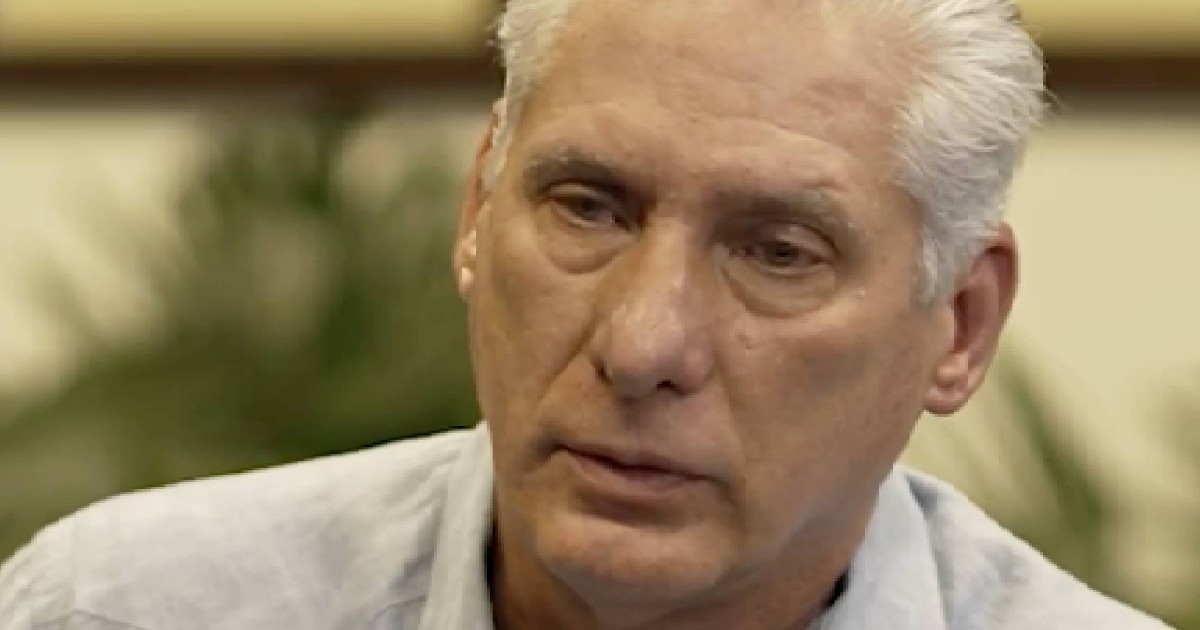
On Tuesday, Miguel Díaz-Canel took advantage of a special session at the UN General Assembly to broadcast a message of conciliation towards Washington, asserting that Cuba harbors no hostility towards any nation or people, including the United States.
In a social media post on Facebook and X, the Cuban leader echoed the sentiments of Foreign Minister Bruno Rodríguez Parrilla, who in his address to the multilateral body, labeled the U.S. embargo as an "act of genocide" and a "collective punishment."
"We are a nation that cherishes and defends peace, dialogue, and multilateralism. We pose no threat to anyone," Díaz-Canel wrote.
The accompanying video reinforced the regime's central argument: "Cuba is not a threat, the embargo is; the threatened nation is Cuba."
UN Assembly Session and Voting Outcome
Havana initiated the session under Agenda Item 38, focusing on the urgent need to end the economic, commercial, and financial embargo imposed by the United States. The debate concluded with 136 countries voting in favor, nine against, and 30 abstaining.
Among those opposing were the United States, Argentina, Israel, Costa Rica, the Czech Republic, North Macedonia, Morocco, Paraguay, and Ukraine. Despite the majority support, this marks a significant diplomatic setback for the regime. In the October 2025 annual vote, Cuba had garnered 165 votes in favor, the highest in decades. The drop to 136 votes represents the lowest support in over thirty years, reflecting the impact of the Trump administration's diplomatic campaign.
Economic and Political Repercussions
Rodríguez Parrilla quantified the embargo's damages at $8.103 billion between March 2025 and February 2026, accusing the U.S. of implementing an "energy blockade" akin to a naval siege.
During the session, the Cuban foreign minister attempted twice to interrupt U.S. Ambassador Mike Waltz with points of order, even calling him a "liar," but the Assembly's presidency dismissed both objections.
Waltz stood his ground. "Truth offends, and truth is not disrespect," the U.S. diplomat retorted.
Contrasting Messages from the Cuban Regime
The peaceful tone of Díaz-Canel sharply contrasts with his own statements from just five days earlier. In a July 2 interview with Sky News, the Cuban leader declared, "We will not surrender our sovereignty... we are prepared to fight to the last drop of blood."
This dual narrative—presenting as a victim of the embargo to the world while maintaining a heroic resistance stance internally—defines the regime's communication strategy amid escalating tensions with Washington.
Since January 2026, the Trump administration has imposed over 240 sanctions against Cuba, including personal measures against Díaz-Canel, his wife Lis Cuesta Peraza, and Alejandro Castro Espín.
The nation is also grappling with its most severe energy crisis, experiencing power outages exceeding 20 hours daily and a power generation deficit of up to 2,174 MW, worsened by the cessation of Venezuelan oil shipments following Nicolás Maduro's capture and the suspension of Mexican sales due to fear of U.S. reprisals.
Uganda spoke on behalf of the 121 Non-Aligned Movement states, demanding the embargo's lifting, while the Cuban regime attempted to portray the voting outcome as a diplomatic victory, which, numerically, tells a different story.
Understanding the Cuban Embargo and Its Implications
Why does the United States impose an embargo on Cuba?
The United States enforces an embargo on Cuba due to longstanding political disagreements, human rights concerns, and Cuba's government policies that conflict with U.S. interests.
How does the embargo affect the Cuban economy?
The embargo severely impacts the Cuban economy by restricting trade, limiting access to international markets, and causing significant financial losses estimated in billions of dollars annually.
What are the diplomatic efforts to lift the embargo?
Diplomatic efforts to lift the embargo involve international appeals, UN resolutions, and negotiations between Cuba and various global entities, but face resistance primarily from the U.S. government.