The Venezuelan government has mandated that schools in areas unaffected by the June 24 earthquakes reopen this Monday. This decision has been met with strong opposition from the Venezuelan Teachers' Federation, which deems it a direct threat to the safety of both students and teachers, as reported by EFE.
On Friday, the Ministry of Popular Power for Education declared that classes would resume on July 6 in states and institutions with no visible structural damage, while educational activities would remain suspended in municipalities such as Aragua, Caracas, Miranda, Baruta, Sucre, Carabobo, Falcón, and La Guaira.
The Venezuelan Teachers' Federation (FVM) issued a statement demanding that "no school activities be resumed or continued without a thorough technical, structural, and pathological assessment of the buildings."
The educators' union criticized the decision to restart activities in spaces lacking formal habitability certification from engineers, technicians, and civil protection agencies, warning that such a move "poses an imminent risk to children, adolescents, and teaching staff."
The FVM further warned that should any incidents occur in operational educational centers, "legal, civil, and criminal responsibility will fall directly on the Minister of Education and the authorities who enforced the return to classrooms without proper safeguards."
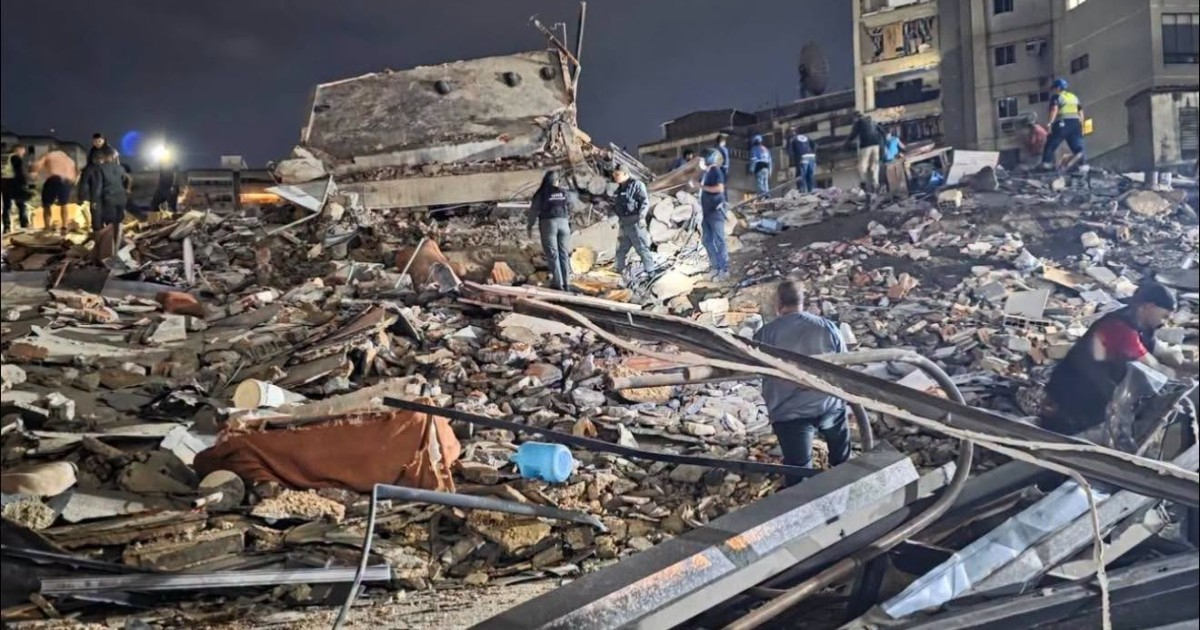
The underlying issue is of significant concern: the twin earthquakes on June 24, with magnitudes of 7.2 and 7.5 and an epicenter near Morón in Yaracuy state, represent the most powerful seismic event recorded in Venezuela since 1900. The official toll reports 3,342 fatalities and 16,740 injuries.
The United Nations estimates up to 50,000 people missing and 6.76 million affected, while UNICEF highlights that over 680,000 children urgently need humanitarian aid.
More than 432 schools in the Capital District were damaged, and the ongoing structural risk was underscored last Friday when the Agustiniano San Judas Tadeo School in La Pastora, Caracas, partially collapsed nine days after the earthquakes, impacting nearby residences and injuring at least one person.
NASA identified up to 58,870 potentially damaged or destroyed buildings in the affected area, and the UNDP assessed direct damages at $6.7 billion, equating to 6% of Venezuela's GDP.
The FVM also criticized the unilateral alteration of the school calendar, stating it violates articles 54 and 56 of the educational law and infringes on the labor rights of teachers, administrative staff, and workers.
The union condemned the state's response as merely a "technical and administrative adjustment of the school calendar" and emphasized that "the current crisis goes beyond closing reports and classroom planning; it is a matter of national security and life preservation."
The 2025-2026 school year is scheduled to end on July 31, with the third term concluding on the 17th of that month, leaving only a few weeks for the government and teachers to resolve a conflict that endangers the safety of hundreds of thousands of children.
Key Concerns About School Reopening in Venezuela
Why are teachers opposing the reopening of schools in Venezuela?
Teachers are opposing the reopening of schools because they believe it poses a direct threat to the safety of students and teachers due to potential structural damages from recent earthquakes that have not been properly assessed.
What are the potential risks involved in reopening schools?
The potential risks include the danger of structural failures in school buildings that have not been certified as safe, which could lead to serious injuries or fatalities in the event of another seismic event or structural collapse.
How have recent earthquakes impacted Venezuela's infrastructure?
The recent earthquakes have caused significant damage, with estimates of over 58,870 buildings potentially harmed or destroyed, and damages amounting to $6.7 billion. Schools and other infrastructures remain vulnerable, posing ongoing risks.