Father Alberto Reyes Pías, the parish priest at the Church of Esmeralda in Camagüey, shared his 164th weekly column on Facebook, candidly expressing his deep concerns about Cuba's pressing issues: escalating youth illiteracy, child labor, the spread of drugs, unpaid wages, elderly citizens receiving a mere two dollars after standing in long bank lines, and unchecked street violence.
Reyes Pías, a prominent critical voice from the Cuban Catholic Church against the communist regime, begins his piece by reminding readers that behind abstract terms like "the people" or "society" are real individuals whose lost time can never be regained.
Education Crisis and Its Ramifications
In the realm of education, his assessment is stark: "For years, I've witnessed teenagers reading like beginners, unable to maintain a fluid reading pace or comprehend what they barely pronounce. Increasingly, I encounter adolescents who, quite literally, cannot read."
He attributes this decline to the Ministry of Education's mandates, which prohibit failing any student regardless of their knowledge, leading to artificial grade promotions without acquiring fundamental skills.
Additionally, there's a widespread practice where teachers dictate exam answers right after distributing them, and a decision in the 2025-2026 school year to eliminate final exams altogether.
This critique aligns with a well-documented educational crisis: the Ministry advanced the school year's end to June 15-30 due to the energy crisis, halved school hours since February, and the system faces a shortage of approximately 26,000 teachers.
The Burden of Child Labor
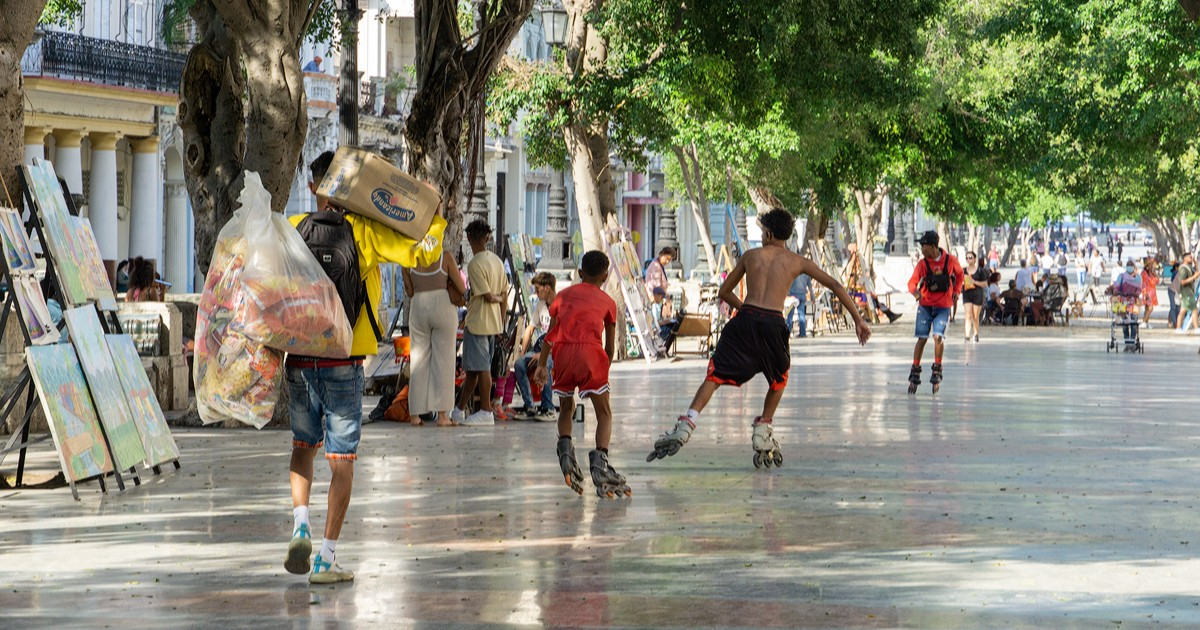
Regarding childhood, the priest highlights, "Children selling goods to support their parents or begging for money and food; teenagers making charcoal ovens and dodging forest authorities to avoid fines—lost and irretrievable childhoods amid need."
Child labor has surged in Cuba amid the crisis, a phenomenon President Díaz-Canel acknowledged in June 2024 as a "troubling social manifestation," despite the regime's prior claims of its eradication.
Drug Epidemic and Media Silence
In terms of drugs, Reyes Pías warns, "The media silence on this issue terrifies me, the taboo taking precedence over truth, political image prioritized over saving young lives."
This silence contrasts with data from the Ministry of the Interior: in 2025, over 800 people were admitted to emergency rooms in Havana alone due to intoxications from "the chemical," a synthetic cannabinoid mixed with fentanyl, sold for 250 Cuban pesos. Authorities recognized 46 new formulas circulating on the streets.
Escalating Violence and Economic Hardships
The priest points out that the police are "swift and efficient in taking action against public protesters but utterly incapable of ensuring public safety."
The Cuban Citizen Audit Observatory recorded 2,833 verified crimes in Cuba in 2025, a 115% increase from 2024 and a 337% rise compared to 2023.
Reyes Pías also condemns the issue of unpaid wages and the plight of the elderly forced to endure lengthy bank lines "with hopes of receiving a sum equivalent to just two dollars," often returning empty-handed due to lack of cash, electricity, or connectivity.
The priest, who was summoned by State Security in January and May 2026 under threat of judicial proceedings for allegedly being a "promoter of hate," concludes his column with a statement encapsulating his concern: "Yes, I care about my people, I am concerned about the present and future of the real individuals who make up this nation."
Key Issues Facing Cuba Today
What are the main concerns of Father Alberto Reyes about Cuba?
Father Alberto Reyes is deeply concerned about youth illiteracy, child labor, the spread of drugs, unpaid wages, and unchecked street violence in Cuba.
How does the educational system in Cuba contribute to youth illiteracy?
The Ministry of Education's policies, which prohibit failing students regardless of their knowledge, result in artificial grade promotions without acquiring basic skills, contributing to youth illiteracy.
What has been the government's response to child labor in Cuba?
Despite previously declaring child labor eradicated, President Díaz-Canel acknowledged it as a "troubling social manifestation" in June 2024, as it has risen amid the country's crisis.