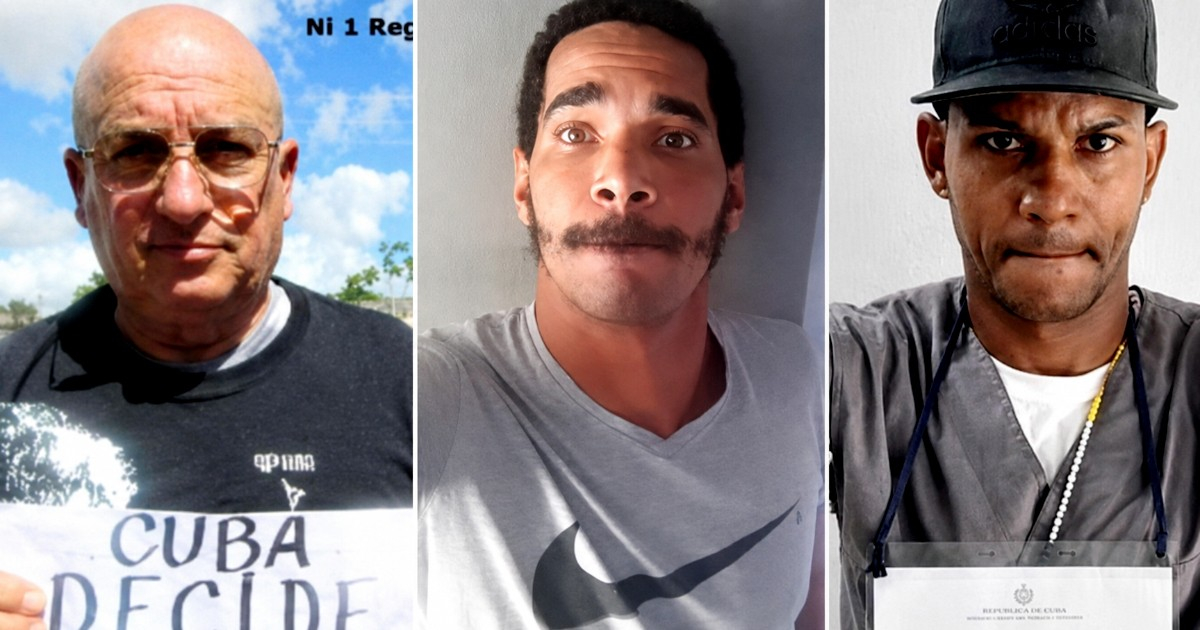
Félix Navarro, Luis Manuel Otero Alcántara, and Maykel Castillo Pérez (known as Maykel Osorbo) have been honored with the 2026 Democracy Award by the National Endowment for Democracy (NED). This award acknowledges their courage as political prisoners and dissident artists who have boldly challenged the Cuban regime's grip on public expression.
The announcement emphasized that these three Cubans have "inspired greater civic engagement and exposed the fear behind state censorship." The awards ceremony is set to take place in September at Mount Vernon, the historic home of George Washington, as part of the United States' 250th anniversary celebrations.
Honoring Defenders of Fundamental Freedoms
This year, the NED chose awardees who advocate for the fundamental freedoms enshrined in the First Amendment of the U.S. Constitution. "The yearning for freedom that gave birth to our nation 250 years ago remains one of the most powerful forces in the world," declared Peter Roskam, chairman of the NED Board of Directors. "This year's honorees embody the courage and persistence required to uphold these rights within their own communities."
The award, a replica of the Goddess of Democracy erected during the 1989 Tiananmen protests, has been presented annually since the NED was founded in 1983. In October 2025, fellow Cuban José Daniel Ferrer received the same recognition, highlighting Cuba's recurring presence among the laureates.
Key Figures in the July 11 Protests
The three activists are pivotal figures in the movement that emerged around the July 11, 2021, protests (known as 11J), the largest social upheaval in Cuba in decades. Maykel Osorbo co-authored "Patria y Vida," the anthem of these protests, which won two Latin Grammys in 2021. He was arrested on May 18 of that year and sentenced to nine years in prison in June 2022.
Osorbo serves his sentence at the maximum-security Kilo 8 prison in Pinar del Río, where he has undertaken hunger strikes and refused the regime's offer to emigrate in exchange for his freedom. "No one wants to be imprisoned," he stated in a 2025 interview, revealing that State Security agents offered him a choice between emigration or remaining incarcerated until 2030.
Otero Alcántara, leader of the San Isidro Movement, was detained on July 11, 2021, and sentenced to five years for "insulting patriotic symbols, contempt, and public disorder." He is currently imprisoned in the maximum-security facility in Guanajay, Artemisa.
His sentence is set to expire on July 9, 2026, a date confirmed by the People's Supreme Court in April, which denied appeals and confirmed no reductions for good behavior were applied. In December 2025, he began a voluntary fast from prison as a form of protest. Amnesty International recognizes him as a prisoner of conscience and calls for his immediate release.
Ongoing Struggle and Health Concerns
Félix Navarro, aged 72 and leader of the Pedro Luis Boitel Party for Democracy, was sentenced to nine years for his involvement in the 11J protests. Released in January 2025 following a dialogue between the regime and the Vatican, he was re-arrested on April 29, 2025, for allegedly violating his parole.
In April 2026, Navarro suffered a brutal beating in Agüica prison, Matanzas, and was placed in solitary confinement. He is experiencing severe physical decline, with respiratory symptoms, diabetes, and lung pain, without receiving appropriate medical care.
In May 2026, Navarro and his daughter Saylí rejected a proposal of forced exile made by an auxiliary bishop of Havana. Amnesty International recognizes all three as prisoners of conscience. With Otero Alcántara's release date looming on July 9, 2026, his situation is the most pressing of the three.
Frequently Asked Questions about the 2026 Democracy Awards
What is the Democracy Award?
The Democracy Award is an annual recognition presented by the National Endowment for Democracy to honor individuals and organizations that have demonstrated exceptional courage and commitment to democratic principles.
Who are the 2026 award recipients?
The 2026 recipients are Cuban political prisoners and dissidents Félix Navarro, Luis Manuel Otero Alcántara, and Maykel Castillo Pérez (Maykel Osorbo).
Why were these individuals chosen for the award?
They were selected for their bravery in challenging the Cuban regime's control over public expression and for inspiring greater civic engagement despite the risks of state censorship.
What are the current conditions of these prisoners?
The prisoners face harsh conditions, including solitary confinement and lack of medical attention. Otero Alcántara and Navarro have been recognized by Amnesty International as prisoners of conscience.