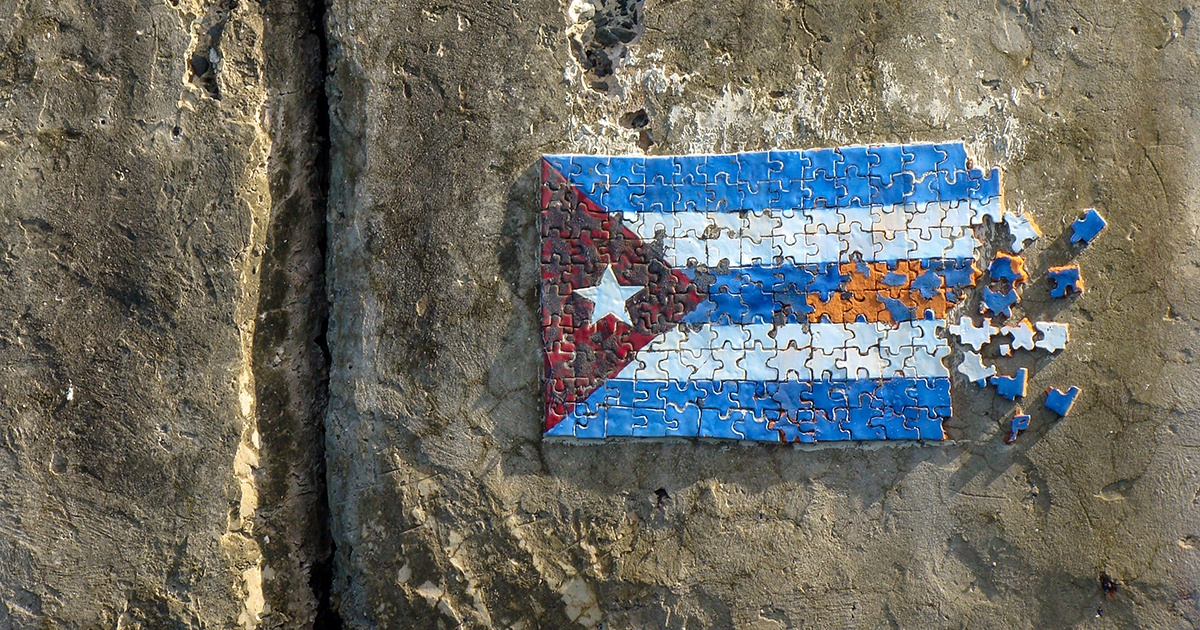
A team of five independent Cuban economists has been diligently crafting a comprehensive economic reform proposal for Cuba, operating outside the influence of the regime and without any connection to the advisory group recently assembled by Miguel Díaz-Canel to address the nation's crisis.
This initiative, known as Cuba Transformación, was unveiled on Monday by economist Pedro Monreal González on Substack and his social media account on platform X.
The group has been engaged in this project since March 2026. Besides Monreal, the team consists of Mauricio De Miranda Parrondo, Omar Everleny Pérez Villanueva, Ricardo Torres Pérez, and Pavel Vidal Alejandro.
Independence from Government Influence
Unlike the advisory panel convened by Díaz-Canel on June 17 to guide official reforms, Cuba Transformación maintains complete independence. Omar Everleny is involved in both groups, yet Cuba Transformación operates autonomously, utilizing its own methodologies to envision a scenario of institutional and political change.
"While we are aware—like everyone else—of the recent economic measures announced by the Cuban government, our proposal is not a direct assessment of these decisions nor does it derive from them," Monreal clarified in his announcement.
Differences with the Official Advisory Team
Díaz-Canel’s advisory committee was directly appointed from the leader's office, including critical economists like Juan Triana and Julio Carranza, as well as state figures such as José Luis Rodríguez García, a former Economy Minister, and José Carlos del Toro Ríos, head of the National Association of Economists. In contrast, Cuba Transformación emphasizes its intellectual independence and non-affiliation with any state entity.
A Three-Phase Transformation Strategy
The independent group's proposal envisions transformation through three phases:
- Stabilization and emergency measures
- Productive and institutional recovery
- Development of a medium- and long-term strategy
Currently, the effort is focused on the first phase, addressing urgent macroeconomic imbalances and the most pressing issues facing the populace.
The proposed horizon extends far beyond the regime's so-called reforms. "We believe a successful economic transformation requires a sequential order of changes leading to a social market economy, underpinned by a democratic state that balances economic growth, social inclusion, citizen rights protection, and institutional strengthening," Monreal wrote.
Context of Economic Hardship
This project emerges during one of Cuba's most severe economic downturns in decades, with GDP contracting over 23% since 2019 and further declines of 7.2% to 15% projected by 2026.
The nation endures power outages lasting up to 30 hours daily, severe shortages of food and medicine, runaway inflation, and a massive wave of emigration.
In response, the regime announced an economic program on June 12 with six pillars, followed by the approval of 176 measures during the National Assembly session on June 18 and 19.
Monreal criticized these reforms as "belated pragmatism" and "an outdated ruse," warning that "the numbers don’t add up, and the government wants to frame it as a matter of will rather than arithmetic."
The group emphasized that their proposal is not meant to be a closed or final answer. "We aspire for this work to contribute to a broader, more diverse, and responsible discussion about Cuba's economic future," they stated.
Frequently Asked Questions about Cuba's Economic Transformation
Who are the economists behind the Cuba Transformación project?
The project is led by economists Pedro Monreal González, Mauricio De Miranda Parrondo, Omar Everleny Pérez Villanueva, Ricardo Torres Pérez, and Pavel Vidal Alejandro.
What is the main goal of the Cuba Transformación proposal?
The goal is to propose a comprehensive economic transformation for Cuba, independent of the government, focusing on institutional and political change.
How does Cuba Transformación differ from the official advisory group?
Cuba Transformación operates independently from the government, using its own methodologies and not aligning with the official advisory group's assessments or measures.