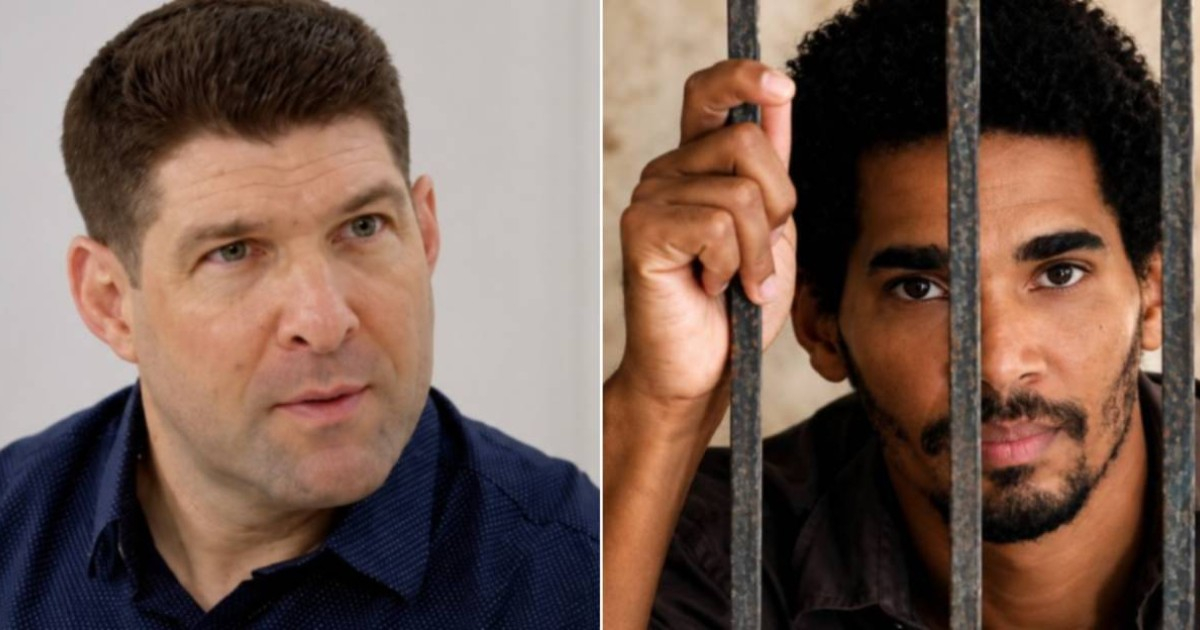
As the Cuban regime promotes emerging figures as representatives of a generation eager for change, two prominent young leaders of the opposition movement remain incarcerated for advocating political reforms in the country.
This contradiction was highlighted on Saturday by Cuban journalist Norges Rodríguez in a thread posted on the social media platform X. The context was the first public interview given by Raúl Guillermo Rodríguez Castro, known as "El Cangrejo" and the grandson of Raúl Castro, to the Emirati newspaper The National.
Rodríguez pointed out that the Emirati journalist emphasized presenting the interviewees as representatives of a new Cuban generation. "He stressed that they were young and the face of a Cuban generation eager to engage with the world," Rodríguez wrote.
Contrasting Realities Within the Same Generation
The interview featured Rodríguez Castro, 42, and Carlos Luis Jorge Méndez, 38, the Vice Minister of Foreign Trade and Foreign Investment. For Norges, the choice of these individuals was deliberate: to showcase "young faces ready for change."
However, he highlighted another revealing fact. "Maykel 'Osorbo' Castillo and Luis Manuel Otero Alcántara are also 42 and 38 years old, respectively," Norges recalled.
Both artists and activists have been imprisoned since 2021 after becoming some of the most visible figures in the anti-government protests and the San Isidro Movement.
The Price of Advocacy for Political Change
For Norges, the comparison reveals starkly different realities within the same generation of Cubans. While some are presented to the international community as credible voices for economic change, others remain behind bars for demanding political reforms and fundamental freedoms.
"Both have been in prison since 2021 for leading a movement that essentially called for an end to the servitude imposed on the Cuban people for almost 70 years," Norges stated.
The journalist also highlighted the roles Otero Alcántara and Maykel Castillo played in the cultural and political phenomenon that accompanied the protests of July 11, 2021.
"Otero and Castillo were the faces of Patria y Vida, the anthem of the 2021 rebellion. The plantation owners have not forgiven them," he wrote.
The Future of Political Prisoners in Cuba
The reflection concludes with a political analysis on the future of prisoners of conscience in Cuba and potential negotiations between Havana and Washington.
"Today, both remain in prison, and the regime keeps them, along with other political prisoners, as bargaining chips for potential negotiations with the U.S.," Norges asserted.
The comparison presented by Norges Rodríguez poses an uncomfortable question for Cuban authorities.
If the regime claims to support a generation open to the world and change, why do some of the young individuals who publicly demanded these transformations remain behind bars?
Examining Cuba's Political Divide
Who are Maykel 'Osorbo' Castillo and Luis Manuel Otero Alcántara?
Maykel 'Osorbo' Castillo and Luis Manuel Otero Alcántara are Cuban artists and activists who became prominent figures in the anti-government protests and the San Isidro Movement. They have been imprisoned since 2021.
What is the significance of the song 'Patria y Vida'?
'Patria y Vida' is an anthem of the 2021 Cuban rebellion, symbolizing resistance against the regime and advocating for freedom and change. It played a significant role in the cultural and political movement of that time.
Why are some young Cubans still imprisoned?
Despite the regime's claims of supporting a new generation open to change, young Cubans like Castillo and Otero remain imprisoned for advocating political reforms and fundamental freedoms, highlighting the regime's contradictory stance.