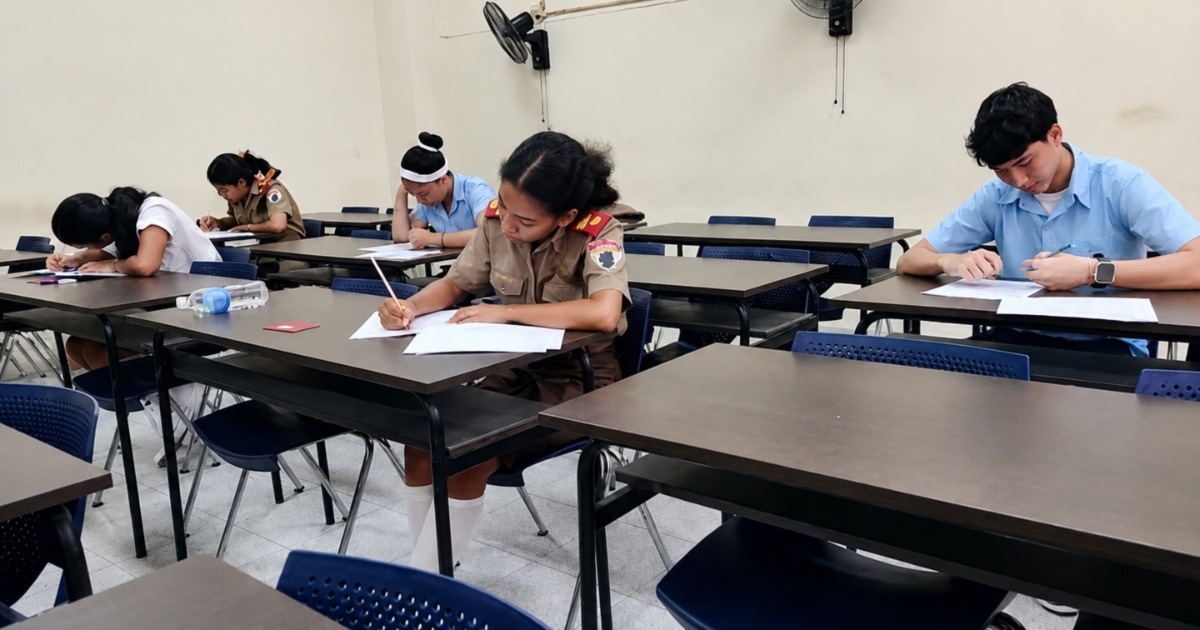
The University of Havana's Faculty of Communication has set the date for the second round of the Journalism aptitude test, scheduled for Thursday, May 28th. This test comes with a stipulation: applicants must have completed the General Military Service.
Eligible participants include 11th-grade students aiming to join the University College and 12th-grade students who wish to enter directly into the first year of the Journalism program. In both scenarios, completing military service is a non-negotiable prerequisite.
The aptitude test assesses writing skills, text comprehension, current events knowledge, and critical thinking. It is a mandatory step for those wishing to pursue this specialty, which historically has more applicants than available slots each academic cycle, according to the official announcement.
This second opportunity for the test is announced shortly after the initial test, which took place on May 21st. Registration for that round closed on May 4th in high schools across the country.
The requirement for military service to access the Journalism program is not new. Starting with the 2024-2025 academic year, women must serve one year of Mandatory Military Service to apply for this major, a requirement not commonly imposed on other university programs in Cuba. Analysts suggest this further discourages students from enrolling.
The Journalism field is experiencing a severe vocational crisis. In 2025, only two 11th-grade students took the aptitude test at the Manuel Ascunce Domenech campus of the University of Ciego de Ávila, and merely 49% of those enrolled manage to graduate, with most dropping out due to financial reasons.
The salary landscape partly explains this high dropout rate. In April 2026, Cubadebate advertised a job for web journalist-editors offering a base salary of 5,060 Cuban pesos per month, which is less than 10 dollars on the informal exchange market, sparking widespread ridicule and criticism on social media.
The environment for training future journalists is equally bleak. In 2026, Cuba ranked 160th out of 180 countries on the World Press Freedom Index by Reporters Without Borders, the lowest in Latin America. Independent journalists face arbitrary detentions, equipment seizures, and sentences of up to 10 years in prison.
Independent journalist Mónica Baró, an alumna of the University of Havana, encapsulates the situation with a statement the regime might prefer to ignore: "There is no real journalism education in Cuba focused on truth."
Frequently Asked Questions about Journalism Aptitude Test and Military Service in Cuba
Why is military service required for the Journalism program in Cuba?
The requirement for military service is a prerequisite for applicants to the Journalism program in Cuba as part of the country's regulations, which aim to ensure that all candidates have fulfilled their national service obligations.
How does the Journalism aptitude test in Cuba evaluate candidates?
The test evaluates candidates on their writing abilities, text comprehension, awareness of current events, and critical thinking skills. It is an essential component for admission into the Journalism program.
What challenges do journalism students face in Cuba?
Journalism students in Cuba face several challenges, including low graduation rates due to financial difficulties, poor salary prospects, and a restrictive press environment that limits freedom of expression.
What is the current state of press freedom in Cuba?
Cuba ranks very low in terms of press freedom, placing 160th out of 180 countries on the World Press Freedom Index. Independent journalists face significant risks, including detentions and equipment seizures.