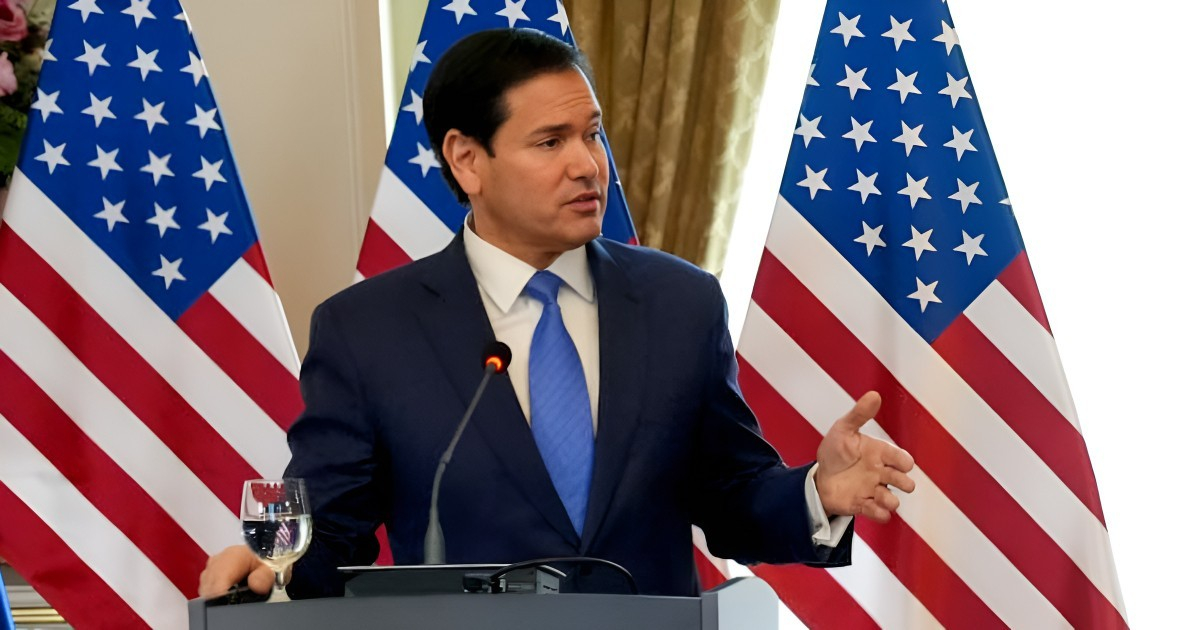
On Thursday, U.S. Secretary of State Marco Rubio expressed that Washington's top priority regarding the ongoing Ebola outbreak in the Democratic Republic of the Congo (DRC) is to prevent the virus from reaching American soil. He revealed that specific measures have already been implemented, including rerouting a flight initially headed for Detroit.
During an interview with C-SPAN, Rubio stated clearly, "We care about Ebola. We don't want anyone to die or be affected by Ebola, but our number one priority will always be to ensure it does not reach the United States. That is our primary obligation."
Prioritizing U.S. Safety Above All
Rubio outlined a clear set of objectives: "The first goal is to make sure Ebola never enters the United States. The second goal is to do what we can to assist the people of the DRC and neighboring countries to prevent its spread."
He noted that on Wednesday night, a flight bound for Detroit Metropolitan Airport was redirected due to existing entry restrictions. According to WXYZ News, the Air France flight from Paris was diverted to Montreal because it had a passenger from the DRC who should not have been permitted to board under current regulations. The passenger showed no symptoms and was removed in Montreal, allowing the remaining passengers to continue to Detroit.
CDC's Restrictive Measures and U.S. Support
The underlying measure is a directive from the Centers for Disease Control and Prevention (CDC) issued on May 18, suspending entry to the U.S. for 30 days for non-citizens and non-permanent residents who have been in the DRC, Uganda, or South Sudan in the previous 21 days.
Rubio also announced that the U.S. has offered to fund the first 50 clinics prepared to respond to the outbreak, acknowledging that the alert should have been raised sooner: "I wish we had started this two weeks ago, that the alert had come earlier."
Criticism of the World Health Organization
The Secretary of State reiterated his criticism of the World Health Organization (WHO), which he had previously accused of being "a bit slow" in identifying the strain of the outbreak: "The WHO, unfortunately, has not performed well globally. I think it failed miserably during COVID, covering up for China."
Nevertheless, he remained open to collaboration: "We will work with anyone who wants to fix that issue."
The WHO's Director-General, Tedros Adhanom Ghebreyesus, responded that Rubio's critique might stem from a "lack of understanding" of the International Health Regulations. Adhanom explained the organization was alerted on May 5 about an unknown illness in Mongbwalu (Ituri), with initial tests returning negative due to the strain's rarity. Confirmation came on May 14 after samples were sent to a laboratory in Kinshasa, 1,700 km away.
Escalating Outbreak and U.S. Travel Warnings
The outbreak, caused by the Bundibugyo strain—which lacks an approved vaccine or specific treatment and has a fatality rate between 25% and 40%—was officially declared on May 15 and elevated to a Public Health Emergency of International Concern on May 16.
Rubio estimated about 600 confirmed cases during his statements, although other reports suggest different figures. The virus has spread to Kinshasa, Goma, Kampala (Uganda), and border areas of South Sudan, with control efforts hampered by over 100 armed groups in Ituri and more than 273,000 internally displaced people, according to the United Nations.
On May 19, the U.S. issued Level 4 travel alerts—"Do Not Travel"—for the DRC, Uganda, and South Sudan, and Level 3 for Rwanda, as part of a response focused primarily on safeguarding the American public, as described by Rubio.
The WHO warned that the outbreak might be significantly larger than currently detected, assessing the risk as high at the national and regional levels, though it clarified it does not meet the "pandemic emergency" threshold.
Understanding the Ebola Outbreak and U.S. Response
What actions has the U.S. taken to prevent Ebola from entering the country?
The U.S. has implemented travel restrictions, rerouted flights, and issued a CDC directive suspending entry for certain travelers from affected areas. Additionally, the U.S. is funding clinics to respond to the outbreak.
How does the current Ebola strain differ from others?
The current outbreak involves the Bundibugyo strain, which is rare, lacks an approved vaccine or specific treatment, and has a fatality rate between 25% and 40%.
What criticism has Marco Rubio directed at the World Health Organization?
Rubio criticized the WHO for being slow to respond to the Ebola outbreak and previously accused it of failing during the COVID-19 pandemic by covering up for China.