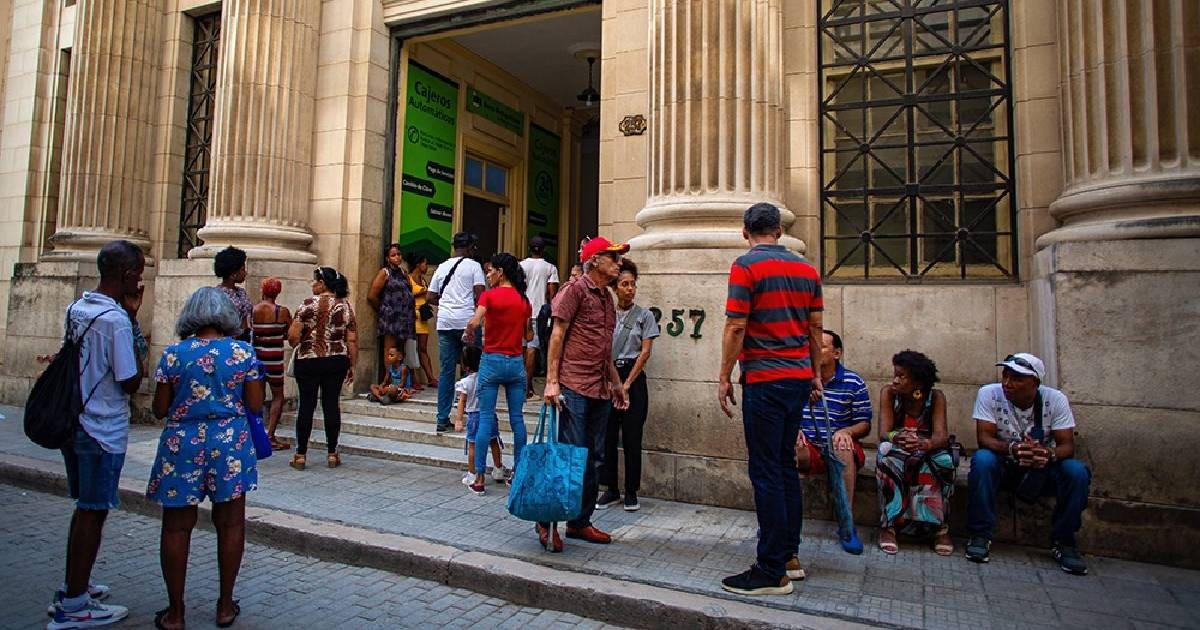
The Cuban Ministry of the Interior (MININT) has issued a new resolution empowering authorities to freeze bank accounts and other assets of individuals and entities "immediately and without prior notice." This regulation took effect with its publication in the Official Gazette No. 65 Ordinary of 2026.
Signed on May 16 by the Minister of the Interior, Army Corps General Lázaro Alberto Álvarez Casas, Resolution 6/2026 replaces the previous Resolution 16 dated August 25, 2022, on the same subject.
The regulation clearly outlines the chain of command: the General Directorate of Financial Operations Investigation of the Cuban Central Bank (DGIOF) is responsible for executing the freeze, while the General Directorate of Criminal Investigation (DGIC) of MININT acts as the competent authority overseeing and coordinating the process.
Above these entities, the MININT's Technical Directorate of Investigations (DTI) is appointed as the governing body, leading an Executive Group comprised of various ministerial enforcement organs.
Article 22 of the resolution explicitly states that the DGIC, upon including an individual in the national list, "issues the freeze order immediately and without prior notice, affecting the funds and assets of the designated individuals and entities."
The regulation defines "immediately" as "without delay or within hours following a designation by the UN Security Council or its Sanctions Committees," according to Article 18.1.
The scope of the freezing measures is extensive, covering bank accounts, checks, bonds, stocks, promissory notes, movable and immovable property, virtual assets, and any other financial instruments, whether tangible or intangible.
The affected party is notified only after the DGIOF confirms the execution of the freeze, as stated in Article 23.2.
While the regulation allows for appeals within 30 working days, Article 42.3 warns that "the filing of any appeal does not suspend or impede the effects of the administrative act."
The criteria for designating a person are equally broad and troubling. Article 6.1 allows actions based on "police or judicial information, intelligence, or any regulatory body," and clarifies that this can occur "without necessarily involving a criminal process."
Article 6.4 takes it further: it suffices for it to be "publicly and notoriously known" that the person is involved in activities related to terrorism.
In Cuba, the label of "terrorist" has historically been applied to dissidents, activists, and political opponents, rendering this regulation a tool for potentially limitless financial control.
The immediate trigger for this new regulation was Cuba's inclusion on the Financial Action Task Force's (FATF) blacklist in June 2025, mandating member countries to implement strengthened countermeasures in their dealings with the island.
The regime has responded with a series of regulations in 2026: the Ministry of Finance's Resolution 86/2026, requiring self-employed workers, small and medium enterprises (MIPYMES), and cooperatives to report suspicious transactions; the Central Bank's Resolution 45/2026, imposing similar freezing obligations on the financial system; and now, this MININT Resolution 6/2026.
The most telling precedent of these tools' political use occurred in May 2025, when the Ministry of Justice threatened to freeze the accounts of Cuban Freemasonry if they did not accept government-imposed leadership.
The resolution came into force on Monday, May 18, the date of its publication in the Official Gazette, and the array of regulations approved in 2026 grants the Cuban State—particularly MININT—powers to intervene in accounts and assets immediately, without prior procedural guarantees for those affected.
Understanding Cuba's New Financial Control Measures
What is the purpose of the new Cuban resolution regarding asset freezing?
The purpose of the new resolution is to allow Cuban authorities to freeze bank accounts and other assets immediately and without prior notice, as a response to Cuba's inclusion on the FATF blacklist, which requires enhanced countermeasures.
Who is affected by Resolution 6/2026 in Cuba?
Resolution 6/2026 affects individuals and entities designated by the Cuban authorities, potentially including dissidents, activists, and political opponents, under broad criteria related to terrorism.
What entities are responsible for carrying out the asset freezes in Cuba?
The General Directorate of Financial Operations Investigation (DGIOF) of the Cuban Central Bank executes the freeze, while the General Directorate of Criminal Investigation (DGIC) of MININT coordinates and oversees the process.
Can affected individuals appeal the asset freeze?
Yes, individuals can file an appeal within 30 working days, but the filing does not suspend or impede the effects of the asset freeze.