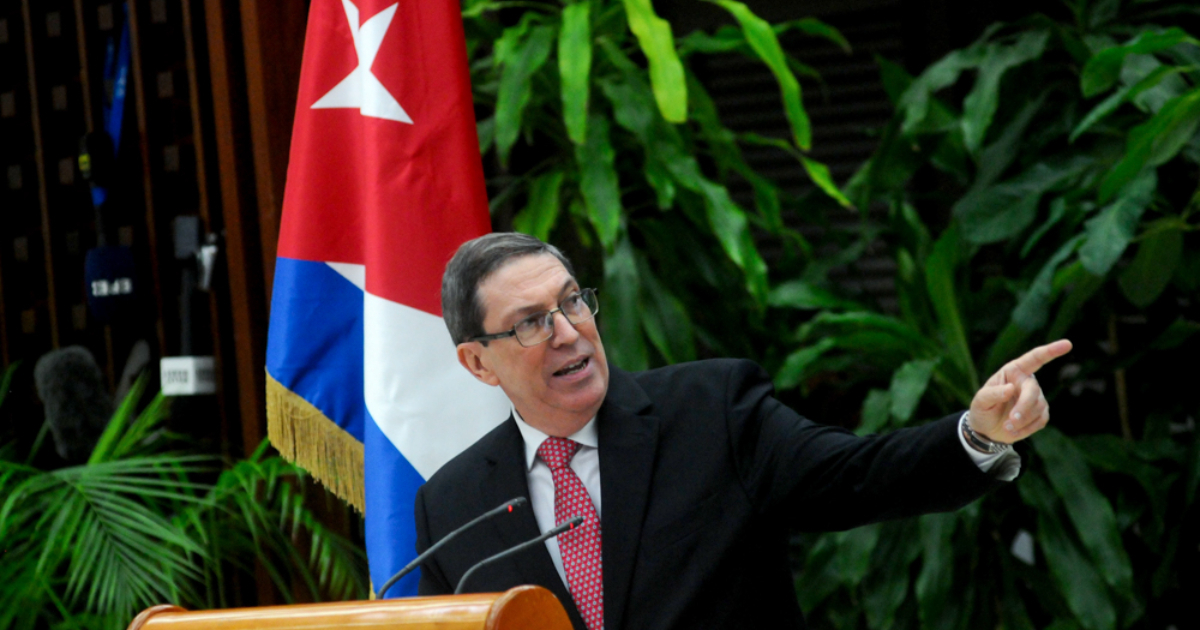
Cuban Foreign Minister Bruno Rodríguez Parrilla took to X on Sunday to accuse the United States of crafting a "fraudulent dossier to justify the ruthless economic war against the Cuban people and potential military aggression." Notably absent from his address was any mention of the same day's report on Cuban military drones.
The catalyst for Rodríguez's comments was an Axios report, based on classified intelligence, suggesting that since 2023, Cuba has acquired over 300 military drones from Russia and Iran. These drones are reportedly stored at strategic locations across the island.
According to the report, Cuban officials have allegedly discussed the possibility of using these drones against the Guantánamo Naval Base, U.S. military ships, and areas near Key West, Florida, which is roughly 90 miles from Havana.
Ignoring the Drone Allegations
Instead of addressing the report directly, Rodríguez focused his message on a broad accusation against Washington and the media. "Certain media outlets are playing along, promoting slanders and leaking insinuations from the U.S. government itself," he stated.
The Cuban regime also warned that the country is "ready and preparing to face external aggression, exercising the right to legitimate defense recognized by the UN Charter."
Responses and Reactions
Rodríguez's omission stands out as the Deputy Foreign Minister, Carlos Fernández de Cossío, did directly respond to the Axios report, accusing the U.S. of escalating a campaign to fabricate a pretext for military action against Cuba.
Intelligence sources cited by Axios clarified that Washington does not see a Cuban attack as imminent, though the report notes that Cuban officials have recently requested more drones and military equipment from Russia.
Cuban-American lawmakers like María Elvira Salazar, Mario Díaz-Balart, and Carlos Giménez have reacted to the report, warning of the Cuban regime's proximity threat to Florida.
Escalating Tensions and U.S. Sanctions
Rodríguez's message is part of a broader escalation of tensions between Havana and Washington, which intensified in early May. On May 1, Donald Trump signed an executive order expanding sanctions against Cuba and declared the country an "unusual and extraordinary threat" to U.S. national security, asserting that the U.S. could "take control of Cuba almost immediately."
On May 12, Defense Secretary Pete Hegseth told Congress that Cuba is a "national security threat" to the U.S. Earlier, on May 8, Rodríguez had warned that a U.S. attack could lead to a "humanitarian catastrophe" and a "bloodbath" involving Cuban and American lives, calling on BRICS for support on May 14 against what he described as a direct military aggression threat.
Since January 2026, the Trump administration has reportedly imposed over 240 sanctions on Cuba and intercepted at least seven tankers headed to the island.
Key Questions on Cuban Drones and U.S. Relations
What did the Axios report reveal about Cuban drones?
The Axios report revealed that Cuba has acquired over 300 military drones from Russia and Iran since 2023, with discussions on using them against U.S. military targets.
How has the Cuban government responded to the drone allegations?
Cuban Foreign Minister Bruno Rodríguez did not address the allegations directly, focusing instead on accusing the U.S. of creating pretexts for military aggression. Deputy Foreign Minister Carlos Fernández de Cossío did, however, directly respond by accusing the U.S. of fabricating a military threat.
What actions has the U.S. taken against Cuba recently?
The U.S. has intensified its actions against Cuba, including imposing over 240 sanctions and intercepting tankers headed to the island, following Trump's executive order expanding sanctions and labeling Cuba a security threat.