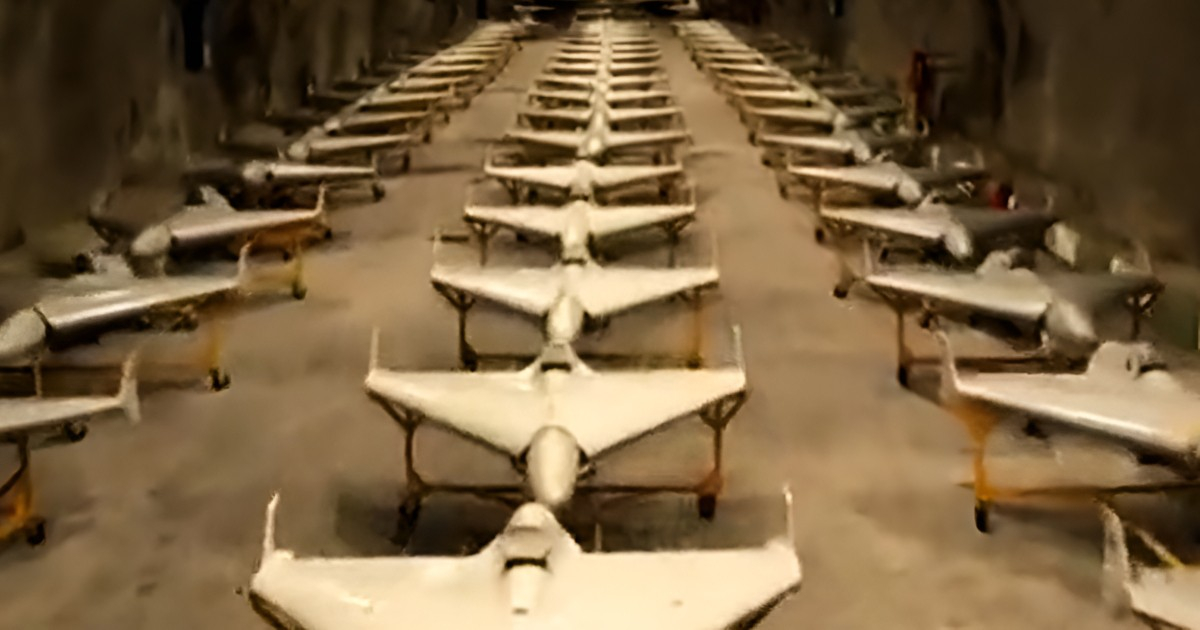
According to classified intelligence shared with Axios by U.S. government officials, Cuba has reportedly procured more than 300 attack drones from Russia and Iran. Discussions have allegedly begun regarding their potential use against the Guantanamo Bay Naval Base, U.S. military vessels, and even Key West, Florida.
This revelation emerges amid heightened tensions between Washington and Havana, just two days after CIA Director John Ratcliffe traveled to Cuba last Thursday to issue a direct warning to regime officials against any hostile actions.
Sources indicate that Cuba has been acquiring drones with "varying capabilities" since 2023, strategically storing them at locations throughout the island.
The Drone Program: A Military Alliance
In the past month, Cuban officials reportedly requested additional drones and military equipment from Russia. U.S. intelligence intercepts suggest that Cuban intelligence is "trying to learn how Iran has resisted us."
A senior U.S. official highlighted the seriousness of the situation, stating, "Considering such technologies so close to us, combined with various dangerous actors like terrorist groups, drug cartels, Iranians, and Russians, it is concerning. It represents a growing threat."
The intelligence could potentially serve as a basis for U.S. military action, reflecting how the Trump administration views Cuba as a threat amid the current drone warfare context and the presence of Iranian military advisors in Havana.
Diplomatic Tensions and Military Concerns
Ratcliffe's visit to Havana marked the first time a CIA director has been to Cuba in over a decade. An agency official noted that "Director Ratcliffe made it clear that Cuba cannot continue to serve as a platform for adversaries to advance hostile agendas in our hemisphere" and that "the Western Hemisphere cannot be our adversaries' playground."
He also urged the regime to dismantle its totalitarian system as a prerequisite for lifting U.S. sanctions.
The Cuban drone initiative is part of a broader military cooperation network involving Havana, Moscow, and Tehran. U.S. officials estimate that up to 5,000 Cuban soldiers have fought for Russia in Ukraine, with Moscow compensating the regime about $25,000 for each deployed soldier. Some have reportedly shared drone warfare knowledge with military leaders in Havana.
"They're part of Putin's meat grinder. They're learning Iranian tactics. It's something we need to plan for," the senior official remarked.
Potential Threats and Security Risks
Defense Secretary Pete Hegseth addressed the issue during a Congressional hearing last Tuesday: "We've long been concerned about a foreign adversary utilizing such a location so close to our shores, which is highly problematic."
Despite the severity of these revelations, U.S. officials clarify that they do not view Cuba as an immediate threat or believe it is actively planning attacks on U.S. interests.
Former CIA Director Robert Gates cautioned that Cuba's greatest security risk is not a direct military threat but rather the potential collapse of the regime leading to mass migration.
This week, the Department of Justice is poised to reveal an indictment against Raúl Castro, allegedly for ordering the downing of two Brothers to the Rescue planes on February 24, 1996, resulting in four deaths. Additionally, new sanctions against the island are anticipated.
"Nobody is worried about Cuban fighter jets. It's not even clear if they have one that can fly," said the senior official. "But it's worth noting how close they are: 90 miles. It's not a reality we're comfortable with."
U.S. Concerns Over Cuban Military Drones
What is the primary concern of the U.S. regarding Cuba's acquisition of drones?
The U.S. is primarily concerned about the proximity of advanced military technologies and the involvement of various dangerous actors, such as terrorist groups and foreign adversaries, which could pose a growing threat.
Why did CIA Director John Ratcliffe visit Cuba?
John Ratcliffe visited Cuba to directly warn regime officials against any hostile actions and to make it clear that Cuba cannot continue to serve as a platform for adversaries to advance hostile agendas in the Western Hemisphere.
How is Cuba's drone program linked to international cooperation?
Cuba's drone program is part of a broader military cooperation network involving Russia and Iran, with Cuban soldiers reportedly sharing drone warfare knowledge after fighting in Ukraine for Russia.