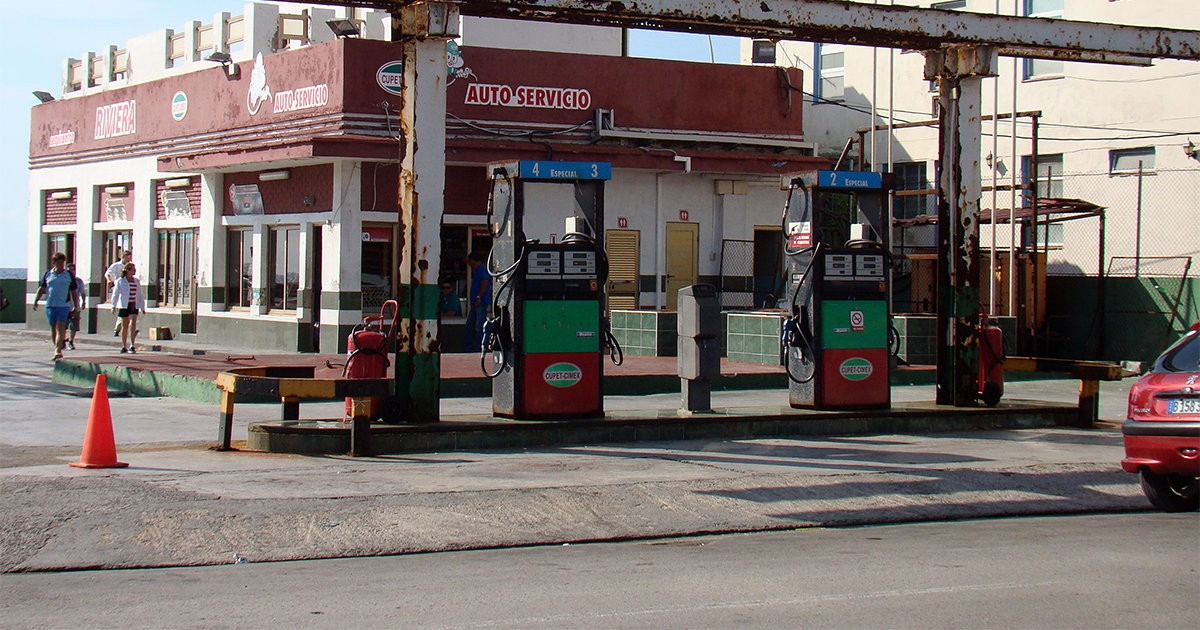
Manuel Viera, a Cuban activist living in exile and known online as "Porelcambio," posed a provocative question on Saturday that stirred social media: if the same CUPET truck—the Cuban state-owned petroleum company—is delivering the liquefied gas that platforms like Supermarket23 sell in dollars, who truly benefits from this operation?
This inquiry highlights a contradiction that many Cubans sense but few have articulated so clearly. The Cuban government is failing to uphold its domestic gas supply contracts in pesos, while its own vehicles and logistical infrastructure are used to distribute this resource in foreign currency to those lucky enough to receive remittances from abroad.
"Is it legal for an entity that is currently breaching millions of liquefied gas contracts with the Cuban people to simultaneously transport gas throughout Havana to be sold in a currency that wasn't agreed upon and isn't even Cuban?" Viera questioned.
The issue is far from rhetorical. Since early May, platforms like Katapulk and Supermarket23 have begun selling 10 kg gas cylinders at $29, with delivery limited to Havana.
Supermarket23's inventory was depleted within hours on Thursday, May 8. In the informal market, the same cylinders were being offered for up to 45,000 Cuban pesos, significantly higher than the approximately 15,660 pesos equivalent to the dollar price at the informal exchange rate.
On May 11, Supermarket23 announced it was reorganizing its logistics to resume service "as soon as possible," without specifying a date, claiming there was "sufficient availability."
The gas sold by these platforms is imported from the United States by small and medium-sized private Cuban enterprises under US government licenses. However, the Cuban regime mandates the obligatory involvement of intermediaries like QUIMIMPORT or MAPRINTER and charges a fee of $0.12 per liter through CUPET, inflating the final cost to over $2.50 per liter, ensuring they take a cut of this supposedly "private" business.
According to the US-Cuba Economic and Trade Council, Cuba imported over $11.6 million in fuel from the United States between January and March 2026, with 75.6% of it concentrated in March alone.
Cuban Theories on Gas Distribution
Responses to Viera's post suggest two prevailing theories among Cubans.
Some believe that companies simply lease the trucks from CUPET through contracts, which would ostensibly legitimize the arrangement. "Now companies rent the trucks and make contracts, it's that simple," one user commented.
Others argue that these agencies have direct dealings with the government or are effectively owned by those in power. "The businesses... ask GAESA, they know," another commenter noted, referring to the business conglomerate of the Cuban Armed Forces.
"There are a lot of front men here," another user added. "Most companies distributing food and other goods and supplies are state-owned with a facade of being private," another person concluded.
Worsening Structural Crisis in Cuba
The underlying issue is a deepening structural crisis.
Out of 1.7 million liquefied gas customers in Cuba, over 50% were unable to purchase their supply in April 2026. More than 109,000 households in Matanzas have been without regular supply since October 2024.
In January this year, the tanker Emilia returned empty from Jamaica due to the Cuban state's inability to pay.
Viera encapsulated the system's logic with a phrase that resonated with thousands: "They squeeze an already squeezed people, hold them hostage so that those abroad pay the ransom, and meanwhile profit from their misery by selling in dollars the food and gas they need."
As far back as March 2025, a corruption scandal was uncovered in Havana's Liquefied Gas Company involving CUPET executives. The scandal included bribery, resource misappropriation, and irregular contracts, alongside the arrest of a truck driver distributing gas cylinders—illustrating that the gas logistics chain has long been a hotbed of corruption, well before the dollar business came to light.
Understanding Cuba's Gas Supply Issues
Who is Manuel Viera?
Manuel Viera is a Cuban activist living in exile, known on social media under the pseudonym "Porelcambio". He is vocal about issues related to the Cuban government's policies.
What is the main concern regarding CUPET's gas distribution?
The primary concern is that CUPET, a state-owned company, is using its resources to distribute gas in foreign currency while failing to meet domestic supply contracts in pesos, raising questions about legality and fairness.