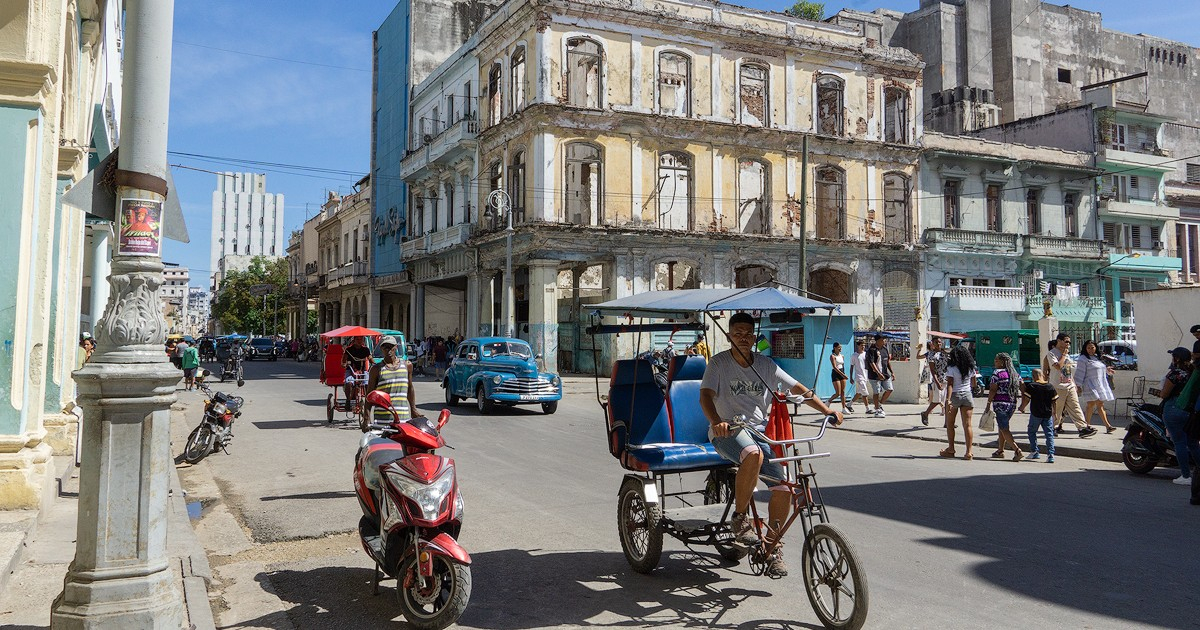
The unexpected visit of CIA Director John Ratcliffe to Havana on Thursday sparked a wave of skepticism, frustration, and mistrust among the Cuban populace.
The Cuban government acknowledged the meeting through an official statement, highlighting that "the leadership of the Revolution approved this visit and the meeting with counterparts from the Ministry of the Interior," aimed at fostering political dialogue between the two nations.
News of the visit first broke when the landing of flight SAM554, a Boeing C-40B Clipper from Andrews Air Force Base—a designation reserved for high-level U.S. government missions—was detected.
According to sources from the CIA cited by Axios, Ratcliffe held meetings with Raúl Guillermo Rodríguez Castro, known as "El Cangrejo" and grandson of Raúl Castro, as well as with the Minister of the Interior, Lázaro Álvarez Casas, and the head of intelligence, Ramón Romero Curbelo.
Ratcliffe conveyed a clear message from the Trump administration: the U.S. is willing to engage on economic and security issues, "but only if Cuba makes fundamental changes," including ceasing to be a haven for Washington's adversaries in the Western Hemisphere.
A senior Trump administration official bluntly assessed the regime's dire situation: "They have no fuel. They have no money. There's no one coming to their rescue. The regime has been stubborn since 1959, but even they realize it's time for change."
Public Reaction and Historical Irony
Cubans took to social media quickly, expressing a predominantly skeptical outlook.
"Who would have thought the head of the CIA would set foot in Cuba for dialogue?" wrote one user, capturing widespread astonishment at what would have been unthinkable just months ago.
Others voiced deep mistrust toward the regime: "Lots of dialogue and zero solutions. The people are still starving," "The U.S. is showing weakness and the dictatorship is buying time," and "This looks like an ultimatum."
The sentiment among many was summed up in a straightforward declaration: "The people must fight for their freedom."
Some noted the historical irony of the meeting: "Wasn't the CIA the enemy?" remarked a commentator, referencing decades of official propaganda depicting the agency as the Revolution's main threat.
Dire Conditions and Lingering Uncertainty
Others highlighted the dire internal situation as a backdrop: "The CIA director was horrified to see Havana destroyed without war," and "Everything's nice, but we're still without power."
The visit coincided with Cuba experiencing record-breaking power outages, with cuts lasting up to 20 hours a day and an electricity supply of just 636 megawatts against a demand of 2,420 megawatts.
On the same day, Sissi Abascal Zamora, a 27-year-old member of the Ladies in White sentenced to six years for the 11J protests, was released and traveled to Miami on a humanitarian visa from the State Department.
Some users expressed cautious hope: "I hope they discussed political prisoners," and "If true, something big is happening."
A CIA official warned, according to Axios, that the window of opportunity for dialogue "will not remain open indefinitely," signaling that Washington is not willing to wait endlessly for a response from the regime.
Understanding the Implications of the CIA's Visit
Why did the CIA Director visit Cuba?
The visit aimed to foster political dialogue between the U.S. and Cuba, with the U.S. expressing willingness to engage on economic and security issues if Cuba makes fundamental changes.
What was the Cuban public's reaction to the visit?
The Cuban public reacted with skepticism, frustration, and mistrust, expressing doubts about the effectiveness of the dialogue and the intentions of both parties.
What challenges is Cuba currently facing?
Cuba is facing severe challenges, including record-breaking power outages, a lack of fuel and financial resources, and a general sense of economic and social crisis.