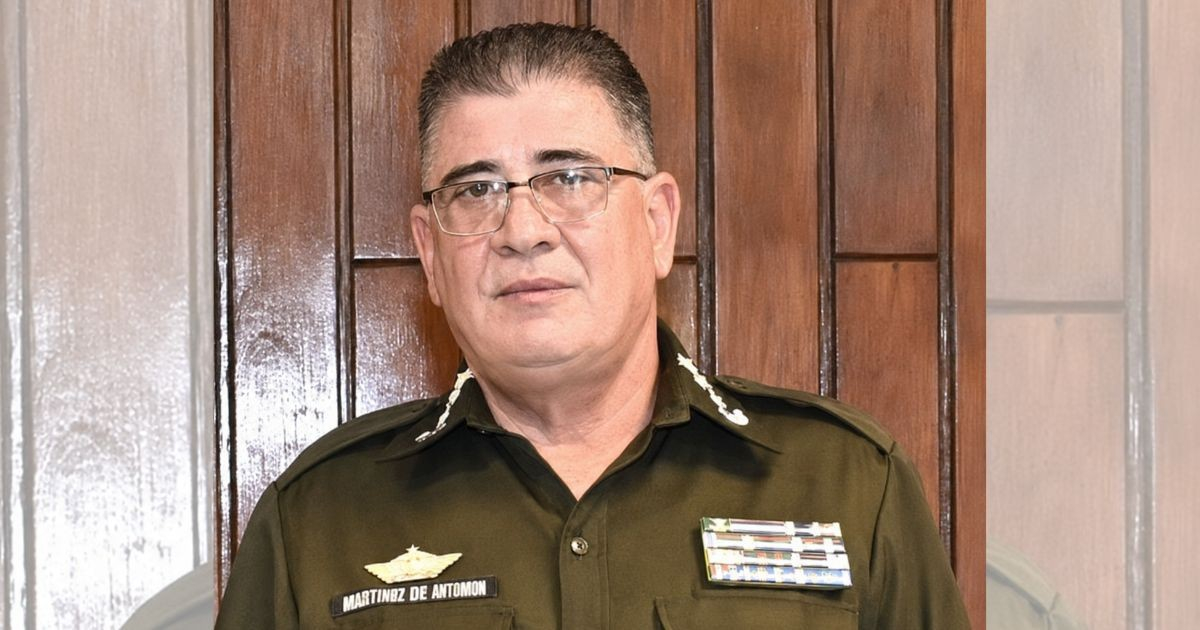
On Thursday, CIA Director John Ratcliffe met in Havana with Army Corps General Lázaro Alberto Álvarez Casas, Cuba's Minister of the Interior. This high-level meeting between the intelligence and security agencies of the United States and Cuba was confirmed by the Cuban regime through an official statement from the Communist Party of Cuba.
According to the statement released by the PCC, the visit was requested by Washington and approved by the so-called "Revolutionary Leadership," with Ratcliffe engaging directly with his counterpart from the Ministry of the Interior.
The statement emphasized that the meeting occurred "in a context marked by the complexity of bilateral relations, aiming to contribute to the political dialogue between the two nations."
The Significance of Álvarez Casas' Role
The choice of the Cuban interlocutor is far from insignificant. Álvarez Casas is not the foreign minister or the president; he is the head of State Security, a member of the Communist Party's Political Bureau, and notably, the first Cuban official sanctioned under the U.S. Magnitsky Act in January 2021 for "serious human rights abuses."
These sanctions were reiterated in July 2025, with a prohibition on his entry into the United States, along with his family members. Ratcliffe's meeting specifically with him — rather than a diplomat — underscores that the encounter was strictly focused on intelligence and security, bypassing formal diplomatic channels.
Cuba's Stance on National Security
The regime's statement clearly outlines Cuba's position: the island claims it "does not pose a threat to U.S. national security, nor are there legitimate reasons to include it on the list of countries allegedly sponsoring terrorism."
It further stated that Cuba "does not host, support, finance, or permit terrorist or extremist organizations" and that there are no foreign military or intelligence bases on its soil.
Both parties expressed, according to the statement, "an interest in developing bilateral cooperation between law enforcement agencies, in the interest of the security of both nations, regionally and internationally."
Current Tensions in U.S.-Cuba Relations
The meeting took place during one of the most strained periods in bilateral relations for decades. The Trump administration has pursued a policy of maximum pressure, imposing more than 240 new sanctions since January 2026, Executive Order 14380 declaring the Cuban regime an "extraordinary threat," and tariffs on countries supplying oil to Cuba, with at least seven tankers intercepted and a reduction in available fuel on the island of between 80% and 90%.
Meanwhile, since March 2026, conversations between the two governments have been ongoing, partially mediated by the Vatican. This process included the release of at least 20 political prisoners on March 13 and the announcement of the pardon of more than 2,000 inmates in April.
Ratcliffe's visit to Havana follows a pattern he established in January 2026, when he traveled to Caracas to meet with Delcy Rodríguez following the capture of Nicolás Maduro, marking him as the highest-ranking U.S. official to visit Venezuela in that context.
Álvarez Casas, 63, has been the Minister of the Interior since November 2020 and was promoted to Army Corps General in June 2025. His career has been entirely within the realms of Military Counterintelligence and MININT, the regime's internal repression apparatus.
The lingering question is whether this direct contact between the intelligence leadership of both countries will lead to any tangible changes regarding Cuba's status on the terrorism sponsors list, where it was re-added in May 2025 after being removed by Biden in January of that year.
Key Questions about U.S.-Cuba Relations
Why did John Ratcliffe meet with Álvarez Casas instead of a Cuban diplomat?
The meeting was focused strictly on intelligence and security issues, which is why Ratcliffe met with Álvarez Casas, the head of State Security, rather than a diplomat.
What is the significance of Cuba being on the U.S. terrorism sponsors list?
Being on the terrorism sponsors list subjects Cuba to economic sanctions, restrictions on U.S. foreign assistance, and various other financial and diplomatic constraints that impact its international relations and economic activities.
How has the Trump administration's policy affected Cuba?
The Trump administration's policy of maximum pressure has led to over 240 new sanctions, a declaration of Cuba as an extraordinary threat, and tariffs on countries supplying oil to Cuba, severely impacting the island's economy and fuel availability.