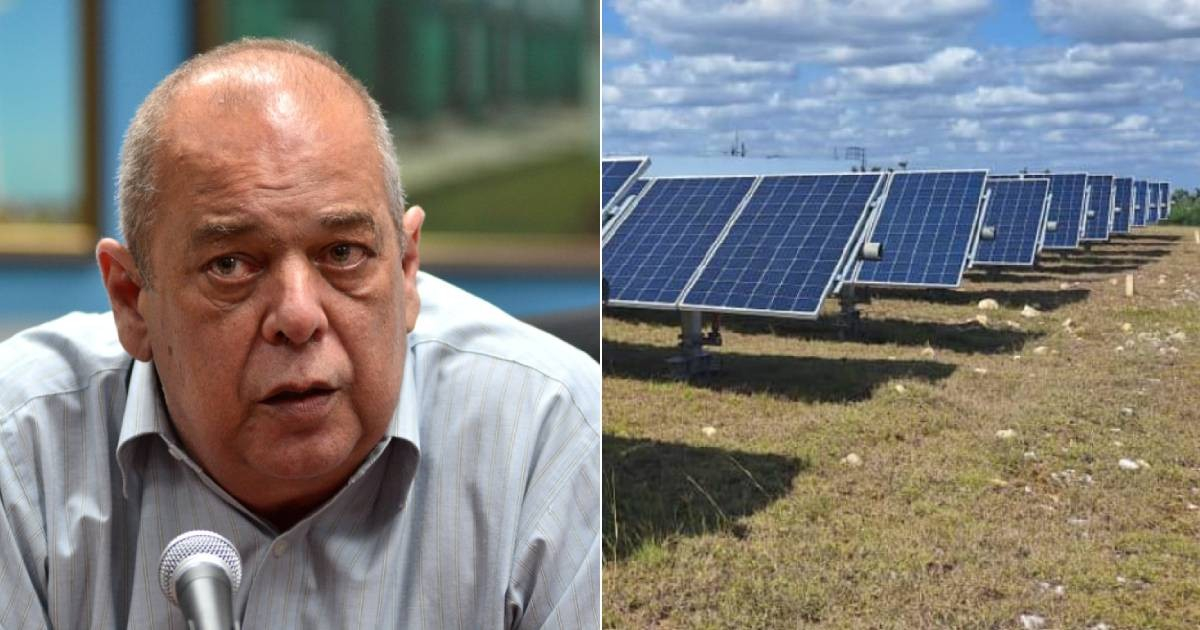
Despite having over 1,300 MW of installed solar photovoltaic capacity, Cuba continues to grapple with power outages. The primary issue, as acknowledged by Energy and Mines Minister Vicente de la O Levy during a press briefing on Wednesday, is the nation's lack of large-scale operational battery storage systems.
The state-run website Cubadebate reported that the minister highlighted a significant paradox facing Cuba's electrical grid: as the network becomes weaker, its ability to absorb solar energy diminishes, risking destabilization.
"The more fragile the national electro-energy system becomes, the more we need to regulate the solar photovoltaic parks, which is the new capacity we've integrated," stated de la O Levy.
Technical and Structural Challenges
The core of the issue lies in the technical and structural aspects of solar generation. Solar power fluctuates with cloud cover, rain, and weather conditions across provinces. When its contribution exceeds 50% of the grid, the system struggles to manage these fluctuations.
"The rest of the system is so weak that renewable energy's share surpasses 50%," the minister explained, suggesting that a stronger grid could better utilize the available solar photovoltaic power.
Lack of Storage Solutions
While energy storage batteries could provide a solution, Cuba currently lacks operational systems for this purpose. Although the government announced plans to install four 50 MW energy storage systems in Cotorro, CUJAE, Cueto, and Bayamo by August 2025, totaling 200 MW, their primary function is frequency regulation rather than storing energy for nighttime consumption, when outages are most severe.
Fuel Crisis Exacerbates the Situation
The ongoing fuel crisis further complicates the energy landscape. De la O Levy disclosed that from December 2025 until recently, no fuel shipments arrived in Cuba, except for a Russian donation of 100,000 tons of crude processed at the Cienfuegos refinery.
"This occurred nearly four months after no fuel ships docked in Cuba," emphasized the minister.
The Russian crude offered temporary relief, reducing blackout hours and allowing Havana to experience days without power cuts. However, the fuel ran out in early May as summer began, increasing demand. At the time of the conference, the minister described the system as operating "without any reserves."
Impact on Power Generation
Compounding the crisis, the Felton thermoelectric plant in Holguín, the largest in eastern Cuba, was taken offline for urgent maintenance due to a boiler leak and a broken bearing in the regenerative air heaters. The minister warned that failure to act would have severely damaged the unit.
The maximum outage recorded on Wednesday reached 2,113 MW at 8:40 PM, with only 1,230 MW available against a demand of 3,250 MW. In some provinces, power cuts have exceeded 15 hours daily.
Over the past 18 months, Cuba's electrical grid has experienced at least seven total collapses, including a nationwide blackout on March 16, 2026. In April, only one of the eight monthly fuel shipments essential for the system's operation arrived.
Frequently Asked Questions about Cuba's Energy Crisis
Why can't Cuba's solar power capacity resolve its power outages?
Cuba's solar power capacity is insufficient to resolve power outages because the country lacks large-scale battery storage systems to manage fluctuations and store energy for nighttime use.
What are the main technical challenges of integrating solar power into Cuba's grid?
The main challenges include managing fluctuations in solar power due to weather conditions and a weak grid that struggles to absorb solar energy when its contribution exceeds 50%.
How is the fuel crisis affecting Cuba's energy system?
The fuel crisis exacerbates the energy issues by limiting fuel availability for power generation, leading to increased power outages and reducing the ability to meet demand.