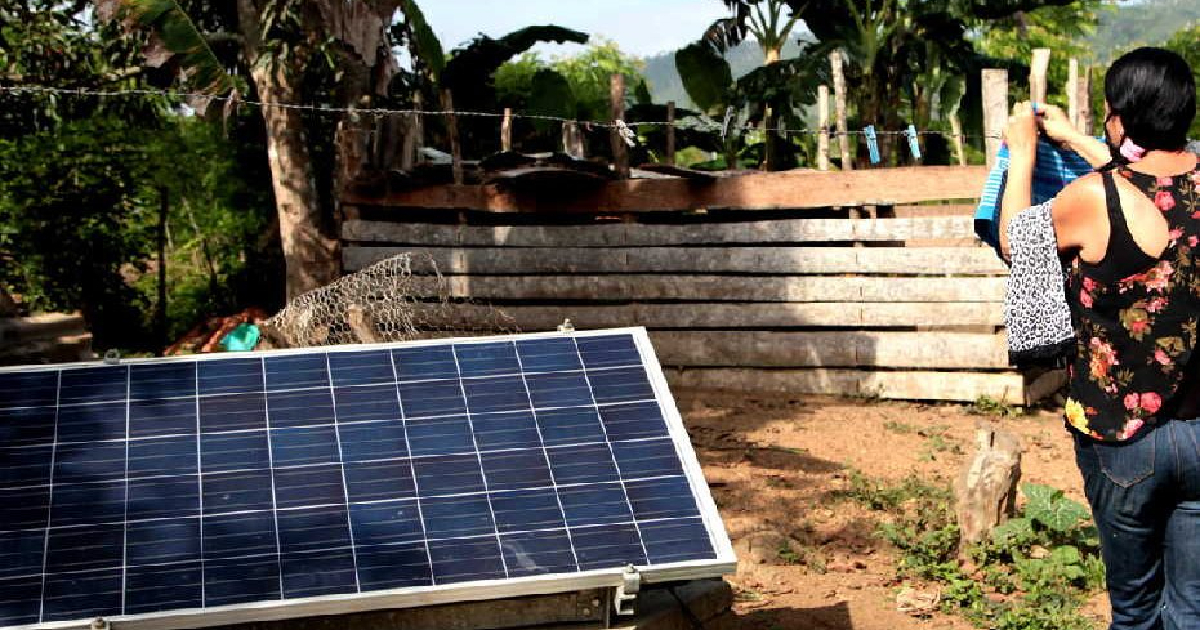
This Wednesday, CNN released an article portraying Cuba as a leader in one of the fastest-growing solar revolutions globally, fueled by substantial Chinese support amidst an unprecedented energy crisis exacerbated by policies from the Trump administration.
According to CNN's coverage of Cuba's solar expansion, the nation has managed to triple its photovoltaic capacity within just a year. The country's solar energy contribution to its electricity production increased from 5.8% at the beginning of 2025 to over 20% by February 2026.
The figures supporting this rapid growth are striking. By March 2026, Cuba operated 49 solar parks connected to the grid, with capacities ranging between 900 and 1,000 MW. This marks a significant jump from the 34 parks at the end of 2025, representing a 350% increase from 2024.
Beijing has been the financial powerhouse behind this solar expansion. Cuban imports of solar panels from China skyrocketed to $117 million in 2025, compared to $48 million in 2024 and a mere $5 million in 2023, based on data from energy analysis firm Ember, as cited by the Financial Times.
Imports of batteries from China also saw a dramatic rise, climbing from $7.3 million in 2024 to $56 million in 2025, with $15 million spent in January 2026 alone.
Chinese Ambassador Hua Xin further promised the construction of 92 solar parks in Cuba by 2028, with a total capacity of 2,000 MW, matching the island's current fossil fuel capacity. He estimated an annual fuel savings of "18,000 tons" thanks to the already donated parks.
On February 10 and 11, 2026, Cuba set records for photovoltaic generation, exceeding 900 MW. That month, solar energy accounted for 38% of daytime electricity generation.
The Harsh Reality Behind the Solar Success
Despite the narrative of a "solar revolution," the reality for Cubans tells a different story. The energy crisis worsened this week, with projected deficits reaching up to 1,985 MW and blackouts lasting between 12 to 20 hours daily across much of the country.
Jorge Piñón, an expert from the University of Texas, is unequivocal about the causes. "The inadequate design of thermoelectric interconnectivity is the sole reason for these collapses; there is no viable solution for 2026," he stated.
The national electric system has experienced at least seven total collapses in the past 18 months, including a nationwide blackout on March 16, 2026. While solar energy is expanding rapidly, it only meets daytime demand and doesn't solve the nighttime peak issues.
The human impact is severe. Approximately 80% of Cubans reported food spoilage due to power outages. People are unable to rest at night because they must complete household chores once electricity returns. Additionally, blackouts cause prolonged interruptions in potable water service.
CNN's article frames the solar expansion as a response to Trump's "oil blockade," echoing part of the official Cuban narrative that blames the crisis on the embargo rather than decades of underinvestment and poor management of energy infrastructure.
Cuba plans to add approximately 1,200 MW of additional solar capacity in 2026, aiming for 30-35% renewable energy by the year's end. However, experts caution that this goal won't resolve the blackouts unless the thermoelectric grid undergoes significant reforms.
Understanding Cuba's Energy Challenge
What is driving Cuba's rapid solar expansion?
Cuba's swift solar expansion is primarily driven by substantial financial and material support from China, which has significantly increased exports of solar panels and batteries to the island.
Why are energy blackouts still a problem in Cuba despite the solar growth?
Energy blackouts persist in Cuba because the solar energy expansion primarily addresses daytime electricity needs and does not alleviate the peak demand during nighttime. Additionally, the outdated thermoelectric infrastructure is a major factor in power outages.
How much solar capacity is Cuba planning to add in 2026?
Cuba aims to add about 1,200 MW of solar capacity in 2026, with the goal of achieving 30-35% renewable energy by the end of the year.