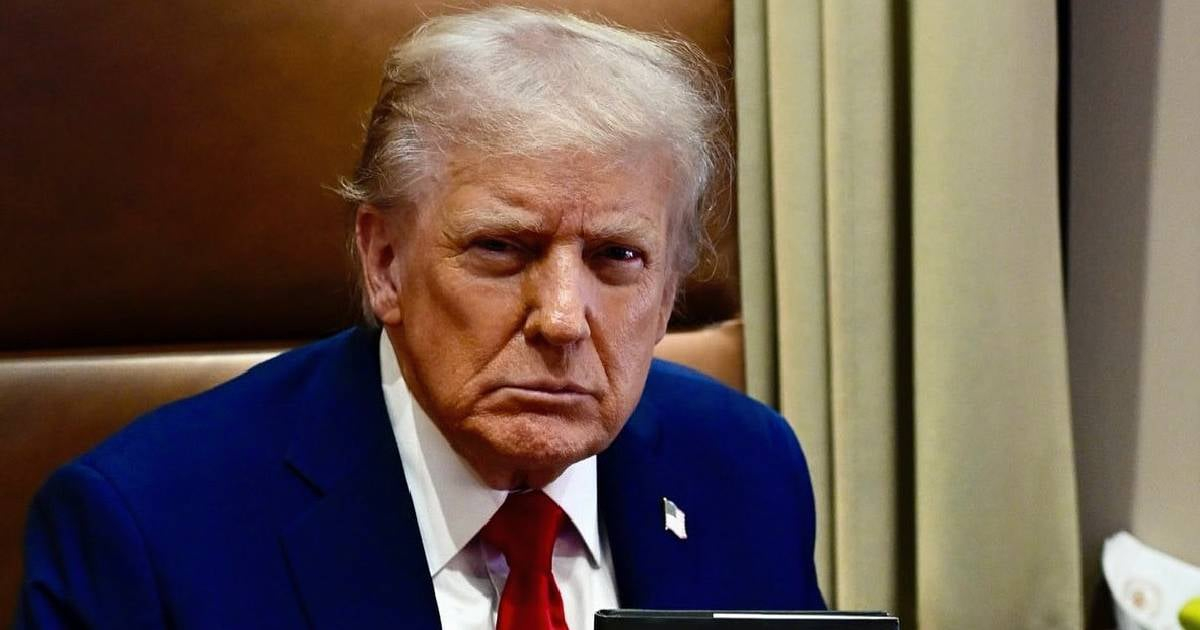
On Tuesday, President Donald Trump released a statement asserting that Cuba is "asking for help" and mentioned the possibility of future discussions, just before embarking on a state visit to China.
The full text of Trump's post on Truth Social reads, "No Republican has ever spoken to me about Cuba, a failed nation that only knows one direction—down! Cuba is asking for help, and we’ll talk! Meanwhile, I'm off to China! President DJT."
This announcement comes on the eve of his trip to Beijing, scheduled from May 13 to 15, marking the first visit by a U.S. president to China in nearly nine years.
The message follows months of dialogue between Washington and Havana, spearheaded by Secretary of State Marco Rubio.
Background on U.S.-Cuba Negotiations
Back on March 7, Trump had publicly disclosed that "Marco Rubio is talking to Cuba" and even hinted at the potential of striking a deal.
On April 10, an American delegation traveled to Havana aboard the first official U.S. aircraft to land on Cuban soil since 2016, as per leaked details of that clandestine meeting.
Despite these efforts, negotiations hit a roadblock due to the regime's refusal to meet Washington's demands.
Stalled Talks and Political Standoff
An ultimatum issued on April 20 demanded the release of political prisoners like Luis Manuel Otero Alcántara and Maykel Osorbo, along with political reforms. The deadline expired on April 24 without a favorable response.
Cuban leader Díaz-Canel made a firm stance: "political prisoners are not on the negotiating table" and "surrender is not an option."
Despite the deadlock, Trump has not entirely ruled out the possibility of an agreement.
Strategic Moves and Global Implications
On May 1, he signed an executive order imposing secondary sanctions on foreign banks and financial entities dealing with sanctioned Cuban entities, as part of a maximum pressure campaign that has already amassed over 240 sanctions since January 2026.
The impending trip to China adds a significant geopolitical layer to Trump's recent message.
On May 5, Beijing urged Washington to lift sanctions on Cuba, with the U.S. administration closely monitoring the growing Chinese and Russian influence on the island.
Trump's post, timed just before departing for Beijing, might indicate that the Cuban issue could also feature in discussions with Xi Jinping.
Meanwhile, Rubio delivered a straightforward message to the Cuban regime on May 5: "Things will change."
Trump's statement does not clarify what kind of talks might occur or their timeline, leaving uncertainty about whether negotiations will regain momentum or whether the regime will continue to reject Washington's conditions.
Key Questions on U.S.-Cuba Relations
What are the main demands of the U.S. in the negotiations with Cuba?
The U.S. has demanded the release of political prisoners, including Luis Manuel Otero Alcántara and Maykel Osorbo, as well as political reforms from the Cuban regime.
What is the significance of Trump's visit to China in relation to Cuba?
Trump's visit to China could involve discussions about Cuba, especially considering the increasing influence of China and Russia on the island. It adds a geopolitical dimension to the ongoing U.S.-Cuba relations.