A former U.S. Navy intelligence officer issued a warning on Monday about a noticeable increase in U.S. military intelligence operations in the waters and coastal regions of Cuba. These activities mirror patterns seen prior to American military actions in Venezuela and Iran.
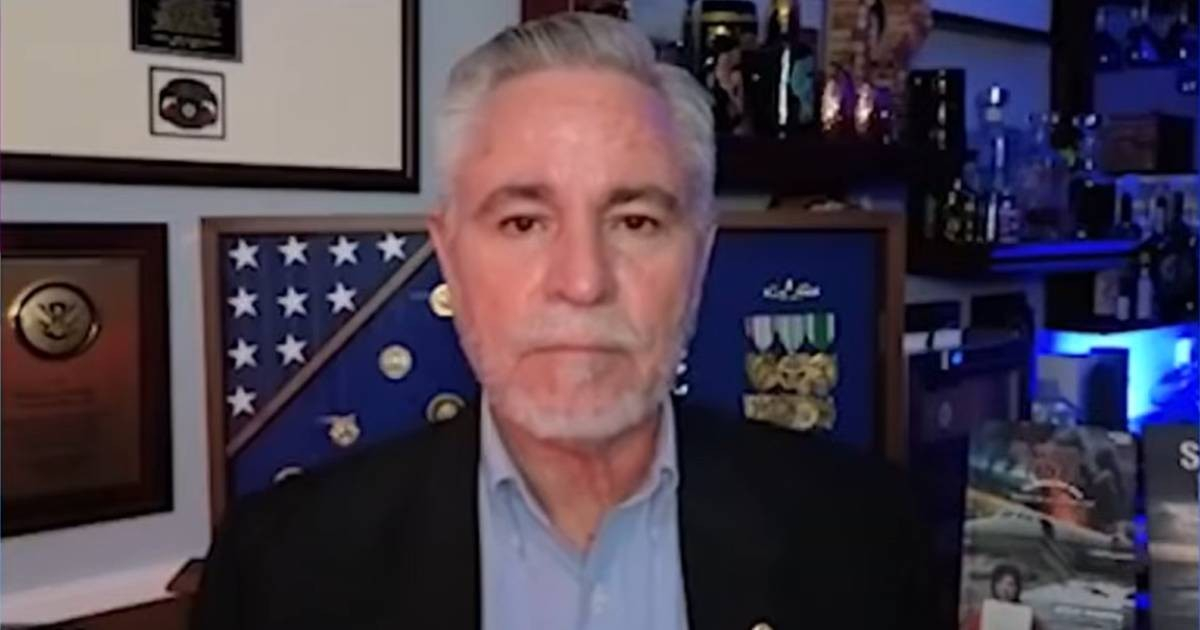
Commander Jesús Romero, who served for 37 years in the U.S. Army and was the former deputy director of intelligence for the naval forces of the Southern Command, shared his insights on NTN24's program "La Tarde." He discussed the accumulation of indicators suggesting a significant shift in U.S. hemispheric security policy towards Cuba.
Public aviation data reveals that since February 4, the U.S. Navy and Air Force have conducted at least 25 reconnaissance flights — using both manned aircraft and drones — near Havana and Santiago de Cuba.
"We're witnessing a proportional increase in intelligence-gathering flights," stated Romero. He further noted, "Since last year, when tensions between the U.S. and Venezuela escalated, most American military platforms have been focused on the Caribbean basin."
The immediate catalyst for this analysis was a photograph released by the Southern Command during the Chiefs of Mission Conference held from May 5 to 7 in Doral, Florida. The image featured Secretary of State Marco Rubio alongside General Francis L. Donovan, with a prominent map of Cuba and the slogan "Peace Through Strength" displayed in the background.
Romero emphasized that the presence of the Secretary of State at such a gathering — typically attended by ambassadors — is "not usual."
"When you see this level of meeting involving the Secretary of State, it indicates something of utmost importance for the U.S. government," the analyst remarked.
On May 6, Rubio acknowledged from the White House press podium that the meeting "pertained to Cuba" but declined to provide further specifics.
Romero also highlighted a historical contrast. An intelligence center in Norfolk, Virginia, which monitored Cuba and Haiti, was shut down years ago, leading to a period where "attention towards Cuba dwindled to almost nothing."
The Trump administration has reversed this neglect with a sustained escalation. On January 20, 2025, Cuba was reinstated on the list of State Sponsors of Terrorism. By January 29, 2026, the island was declared an "unusual and extraordinary threat" to national security, resulting in over 240 sanctions and the interception of at least seven tankers, slashing Cuban fuel imports by 80% to 90%.
The documented flights involved aircraft like the MQ-4C Triton drone, the RC-135V/W Rivet Joint signals intelligence plane, and the P-8A Poseidon maritime patrol aircraft, all visible on civilian aviation trackers such as Flightradar24 and ADS-B Exchange.
Amid rising tensions, the spy drone circled Cuba again last week, and on May 8, Rubio announced targeted sanctions against GAESA, the military conglomerate controlling 40% to 70% of Cuba's formal economy.
When asked if Cuba could face a scenario akin to Venezuela's, Romero was unequivocal: "I believe we will see some form of operation; I believe we will witness some U.S. action."
Despite the ex-official's statements pointing to increased military pressure on Cuba, the State Department assured on Monday that Donald Trump "would prefer a diplomatic solution" to the island's crisis. However, Washington cautioned that it would not allow Cuba "to deteriorate into an even greater threat to U.S. national security," according to statements released by Axios.
Understanding U.S. Military Actions Near Cuba
What has prompted the increase in U.S. military activity near Cuba?
The increase is linked to changes in U.S. hemispheric security policy, with patterns resembling those before military actions in Venezuela and Iran.
What kind of military operations are being conducted by the U.S. near Cuba?
The operations include reconnaissance flights using manned aircraft and drones, focusing on intelligence collection near Havana and Santiago de Cuba.
How has the U.S. administration's policy towards Cuba changed recently?
The U.S. has reinstated Cuba on the list of State Sponsors of Terrorism and declared it a national security threat, implementing over 240 sanctions.