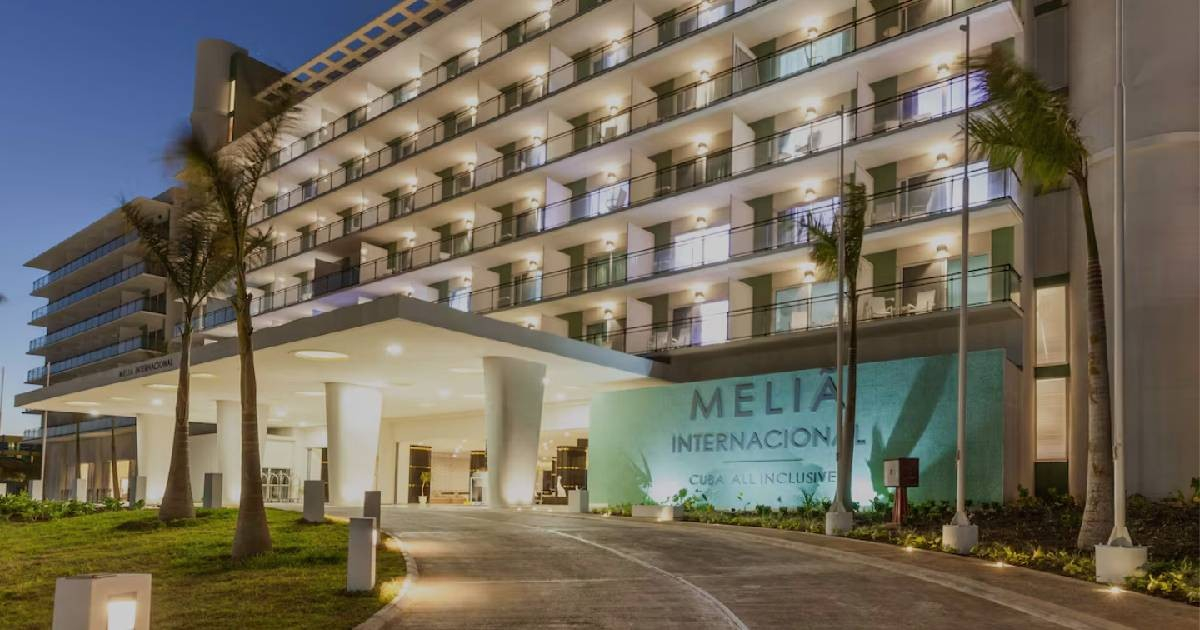
Meliá Hotels International concluded the first quarter of 2026 with only half of its hotel capacity operational in Cuba, as per the financial results released by the chain last Thursday.
The Spanish hotel group, which operates 34 properties with over 5,000 rooms on the island, acknowledges in its report an unprecedented collapse in its operations within the country.
The company attributes this downturn to the energy crisis triggered by sanctions from Washington.
Impact of Energy Crisis on Tourism
In its financial review, Meliá highlights that "this situation has resulted in unforeseen difficulties in obtaining fuel, which, combined with a strict trade blockade, has significantly impacted the tourism market." The report further notes that "the lack of aviation fuel led to the cancellation of numerous direct flights to the country, even from its main source market, Canada."
The decline was gradual. In February, Meliá temporarily closed three of its hotels in Cuba as an initial response to the crisis. By the end of March, the situation had escalated, affecting 50% of its total capacity, equating to more than 5,000 rooms being out of service.
Struggle to Attract International Visitors
The average occupancy rate for the hotels that remained open was a mere 34.1% between January and March, highlighting the sharp drop in international demand.
The chain acknowledges that Cuban tourists now make up "almost the entirety of bookings for the hotels that remain open," but warns that "this market is insufficient to offset the decline in international demand."
Financial Consequences and Broader Implications
The financial impact was severe. Meliá's consolidated net profit plummeted by 68% in the first quarter, falling from 10.5 million euros in the same period of 2025 to just 3.3 million euros.
The report states that performance "has been partly affected by the reduction of third-party fees from the management model due to the business conditions in Cuba."
Despite the setback in Cuba, the company's total revenues increased by 4.4% to 460.6 million euros, and the revenue per available room index rose by 8.3%, driven by strong performance in Spain, Europe, and the non-Cuban Caribbean.
Other hotel chains like Iberostar and Valentín followed Meliá's lead, also closing properties on the island amid the same crisis.
Escalating Sanctions and Future Uncertainty
The collapse of tourism in Cuba has had devastating consequences for the sector's workforce. Approximately 300,000 Cuban tourism workers have been left jobless since May 2026, while the island welcomed only 298,057 visitors in the first quarter of the year, a 48% decrease compared to the same period in 2025.
The situation is further complicated by the escalation of sanctions from Washington. Last Thursday, Secretary of State Marco Rubio formally designated GAESA under Executive Order 14404, the military conglomerate that controls Cuba’s hotel infrastructure through its subsidiary Gaviota S.A.
Foreign companies have until June 5 to cease operations with this entity under the threat of secondary sanctions, posing an existential dilemma for Meliá and other Spanish hotel chains with a presence on the island.
Meliá acknowledges in its report that "the region's evolution will largely depend on developments and a potential recovery of energy supplies," without offering a clear recovery timeline for its operations in Cuba.
Frequently Asked Questions about Meliá's Operations in Cuba
What caused the decline in Meliá's operations in Cuba?
The decline in Meliá's operations in Cuba was primarily caused by an energy crisis resulting from sanctions imposed by the United States, which led to difficulties in obtaining fuel and a reduction in international flights.
How has the tourism sector been affected in Cuba?
The tourism sector in Cuba has been severely impacted, with a significant drop in international visitors and high unemployment among Cuban tourism workers, as many hotels have closed or reduced their operations.
What are the broader implications of the sanctions on Cuba's hotel industry?
Sanctions have led to operational challenges for foreign hotel chains in Cuba, potentially forcing them to cease operations with entities like GAESA, further affecting the tourism infrastructure and economy.