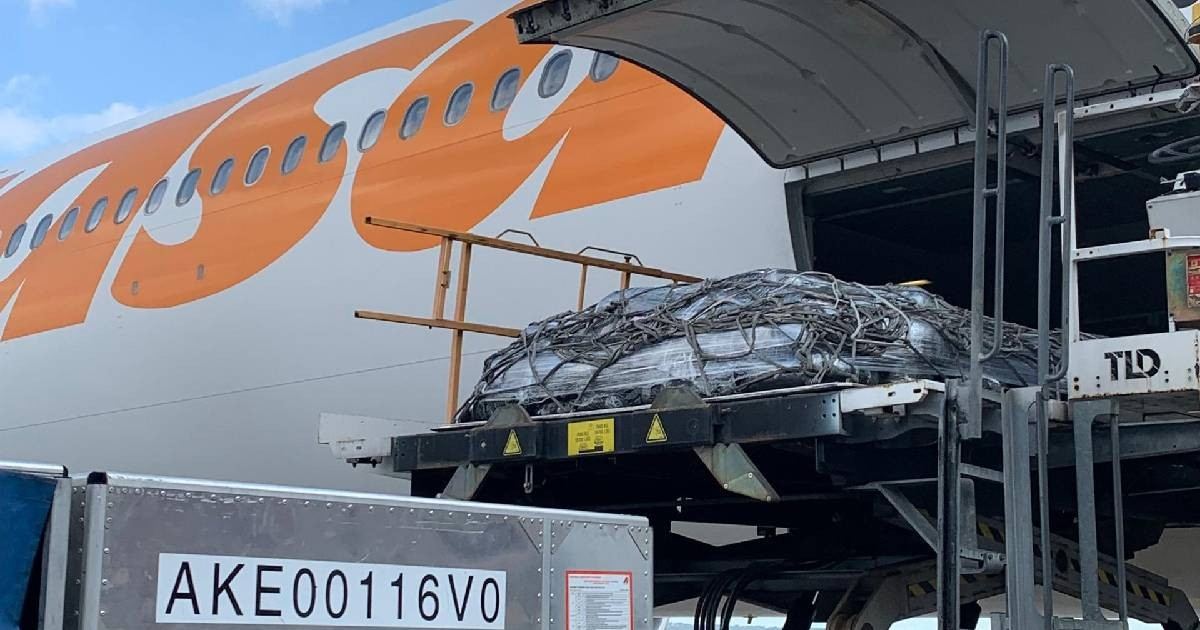
Last Wednesday, a shipment carrying close to six tons of food from Venezuela arrived in Havana as part of the solidarity campaign "Amor con Amor se Paga." This initiative is a collaborative effort between the Simón Bolívar Institute for Peace and Solidarity Among Peoples and the Venezuela-Cuba Friendship and Solidarity Movement.
This marks the sixth delivery since the campaign's launch on February 25, bringing the total to over 34 tons of food, medicines, and medical supplies sent to the island this year. Over 40 Venezuelan social and popular movements have joined the effort, according to the Venezuelan embassy in Havana.
The aid is primarily directed towards hospitals, medical clinics, and Cuban households, as reported by the Venezuelan Ministry of Foreign Affairs.
Growing Food Insecurity in Cuba
On April 26, another shipment of 25 tons of food and medicine also reached Cuba. These deliveries are organized through collection centers across Venezuela's 24 states and transported by the airline Conviasa.
These donations arrive amid an unprecedented food crisis in Cuba. A survey released on Tuesday highlighted that one in three Cuban households experienced hunger in 2025, reflecting a 9.3 percentage point increase from the previous year.
In April 2026, a staggering 96.91% of the population lacked adequate access to food, according to the Food Monitor Program. The provinces of Granma and Guantánamo have the highest levels of food insecurity, at 78.9% and 78.7% respectively, more than double the national average. Five provinces are currently at critical levels of food survival, based on recent reports.
International Aid and Responses
Venezuela is not the sole ally providing support to the regime. In April, Russia sent a donation of medicines, while Mexico delivered nearly 1,200 tons of food back in February. Meanwhile, the UN has initiated a $94.1 million emergency plan aimed at assisting two million people across 63 Cuban municipalities, though only $26.2 million had been raised by mid-April.
The Venezuelan government and campaign advocates attribute the crisis to the U.S. embargo, a stance echoed by the Cuban regime. However, independent organizations point to the structural failures of the communist dictatorship's economic model, imposed for over six decades, as the underlying cause.
Blanca Eekhout, president of the Simón Bolívar Institute, stated at the campaign's launch: "The descendants of Simón Bolívar will not abandon Cuba, as our America is united. The fate of one is the fate of all, and our destiny will be one of victory, unity, solidarity, and love."
Understanding the Current Food Crisis in Cuba
What is the "Amor con Amor se Paga" campaign?
The "Amor con Amor se Paga" campaign is a solidarity initiative coordinated by the Simón Bolívar Institute for Peace and Solidarity Among Peoples and the Venezuela-Cuba Friendship and Solidarity Movement, aimed at providing food, medicines, and medical supplies to Cuba.
How severe is the food crisis in Cuba?
The food crisis in Cuba is significant, with a report indicating that one in three households experienced hunger in 2025 and 96.91% of the population lacked adequate food access in April 2026.
What are the primary causes of Cuba's food crisis?
While the Cuban regime and its allies blame the U.S. embargo, independent organizations cite the structural issues of the communist economic model, which has been in place for over 60 years, as the main cause.